The opposition New Patriotic Party (NPP) has dismissed the government’s GH¢2-per-litre diesel relief as a temporary measure, insisting it should not be portrayed as an act of generosity because consumers have already borne the cost through fuel-related levies.
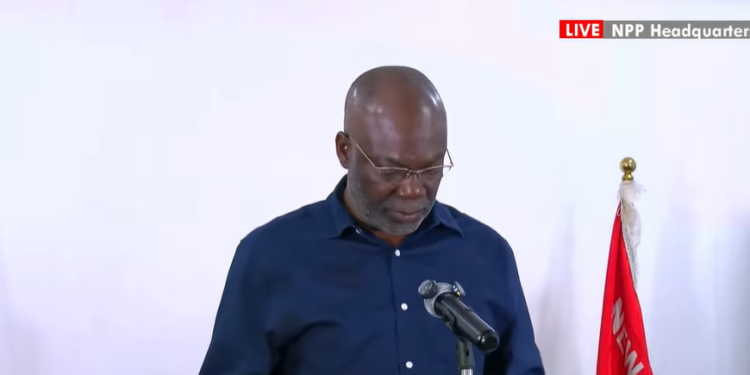
Addressing the media on Wednesday, August 5, Ranking Member on Parliament’s Energy Committee, George Kwame Aboagye, argued that the reduction only recovers a small portion of the higher fuel costs consumers have faced over the past 18 months.
“A two-cedi reduction is not generosity. It is a partial, temporary return of money already taken from consumers at midnight,” he said.
Mr Aboagye noted that even if the full GH¢2 reduction reaches consumers, diesel prices would still remain above January 2025 levels.
He said GOIL sold petrol at GH¢15.99 per litre and diesel at GH¢19.26 per litre on August 3, 2026, compared with about GH¢15.13 and GH¢15.49 respectively in January 2025.
“Petrol today is about 5.7 percent higher than in January 2025 and diesel is about 24.3 per cent higher. Even if the full two-cedi reduction is passed through to the public, diesel will still stand about 11.4 per cent above its January 2025 level,” he said.
He linked the current relief to the GH¢1-per-litre petroleum levy introduced in 2025, arguing that consumers have been paying the additional charge for more than a year.
“Consider the plain arithmetic: a consumer who has paid one cedi extra on every litre of petrol and diesel for more than a year now receives, at best, two cedis back on diesel for a single month and nothing at all on petrol,” he stated.
Mr Aboagye also questioned how the government intends to finance the relief, estimating that the one-month intervention could result in about GH¢400 million in foregone revenue.
“That distinction matters legally but not economically. Foregone revenue is still a cost,” he said.
“There is no free relief. The only question is who pays and when.”
He further raised concerns over recent petroleum levy adjustments and warned that unclear refund arrangements for industrial users could increase business costs and eventually be passed on to consumers.
“Ghana cannot solve a debt and arrears crisis by creating new hidden revenue losses,” he said.
Mr Aboagye urged the government to clearly explain how the diesel relief will be funded, whether it has been captured in the 2026 budget, and how it intends to ensure the benefits are reflected in transport fares and the prices of essential goods.