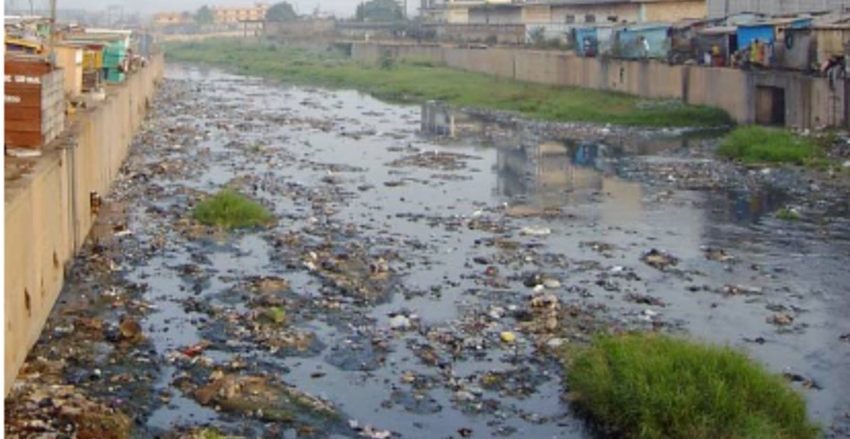
The government has been urged to take its time and undertake proper planning before proceeding with its proposed redevelopment of the Korle Lagoon enclave in Accra.
Associate Professor Isaac Arthur, Director of the Centre for Urban Management Studies at the University of Ghana, said the redevelopment of the area was necessary but warned that rushing into the proposed housing project could create new challenges in the future.
His comments follow an announcement by the Minister for Local Government, Chieftaincy and Religious Affairs, Mahama Ayariga, that the government intends to transform the settlement into an organised community featuring high-rise container housing.
The project is expected to follow the evacuation and clearing of the area’s dumpsite, alongside the dredging of the Korle Lagoon to address persistent flooding, sanitation and environmental problems.
Speaking during an interview on Friday, September 4, Prof. Arthur said extensive planning and engineering studies must first be conducted to determine whether the proposed development is suitable for the area.
He recalled that a planning scheme for the Accra-Korle Lagoon area developed in the 1970s had placed significant emphasis on creating green and recreational spaces as part of measures to manage flooding.
According to him, the original plan envisaged about 80 to 90 per cent of the area being green, with facilities for activities such as football and cricket.
Although he acknowledged that developing the waterfront could improve the appearance of Accra, Prof. Arthur questioned whether container housing was the most appropriate solution for the area.
He also raised concerns about the long-term sustainability of the project, particularly the ability of low-income residents to pay for essential services such as waste collection.
He noted that some of the existing sanitation problems were partly caused by residents’ inability to afford formal waste-management services, leading to the disposal of waste into the lagoon.
Prof. Arthur therefore urged the government to carefully study the area’s geography and topography and develop a sustainable plan before construction begins.
He stressed that while providing housing was important, alternative locations should also be considered to prevent future environmental or safety problems.