On some nights, when her three children have finally fallen asleep, Barikisu Amadu lies awake, weeping.
The 31-year-old widow from Bawku says darkness often brings back memories she wishes she could forget.
“My heart sinks and weeps anytime I think about the conflict. Every night brings tears, questions, and pain. I am still young, yet the conflict has made me a widow. The pain and loss will stay with me forever,” she said.
In 2023, her husband, a construction worker, left for work and never returned.
“He was just coming back home when he was shot and killed. I was three months pregnant with our last child.”
The killing shattered more than a family. It destroyed the small economic foundation they had built together. The provisions shop her husband had established for her collapsed.
“After the demise of my husband, I lost everything,” she said softly. “Sometimes, even getting one cedi for myself was like a miracle. My children’s school fees were a problem. What they would eat before school and when they returned was a problem,” she recalls.
Across Bawku, stories like Barikisu’s have become painfully familiar.
The Bawku chieftaincy conflict, a long-standing dispute between the Kusasi and Mamprusi ethnic groups in Ghana’s Upper East Region, has caused widespread loss of life, displacement, economic hardship, and social division.
Since violence resurfaced in late 2021, over 300 people are estimated to have been killed, including women and children, with many casualties going officially unrecorded.
The conflict has also disrupted education, healthcare, trade, and livelihoods across the municipality.
Yet amid the uncertainty, a quiet movement led by women is helping families survive.
At the centre of this change is Sakina Mumuni, the Queen Mother of Kpalwega, known traditionally as Poa-Naab Tengbon-Kogangbuudi. She has become an unlikely lifeline for dozens of women.
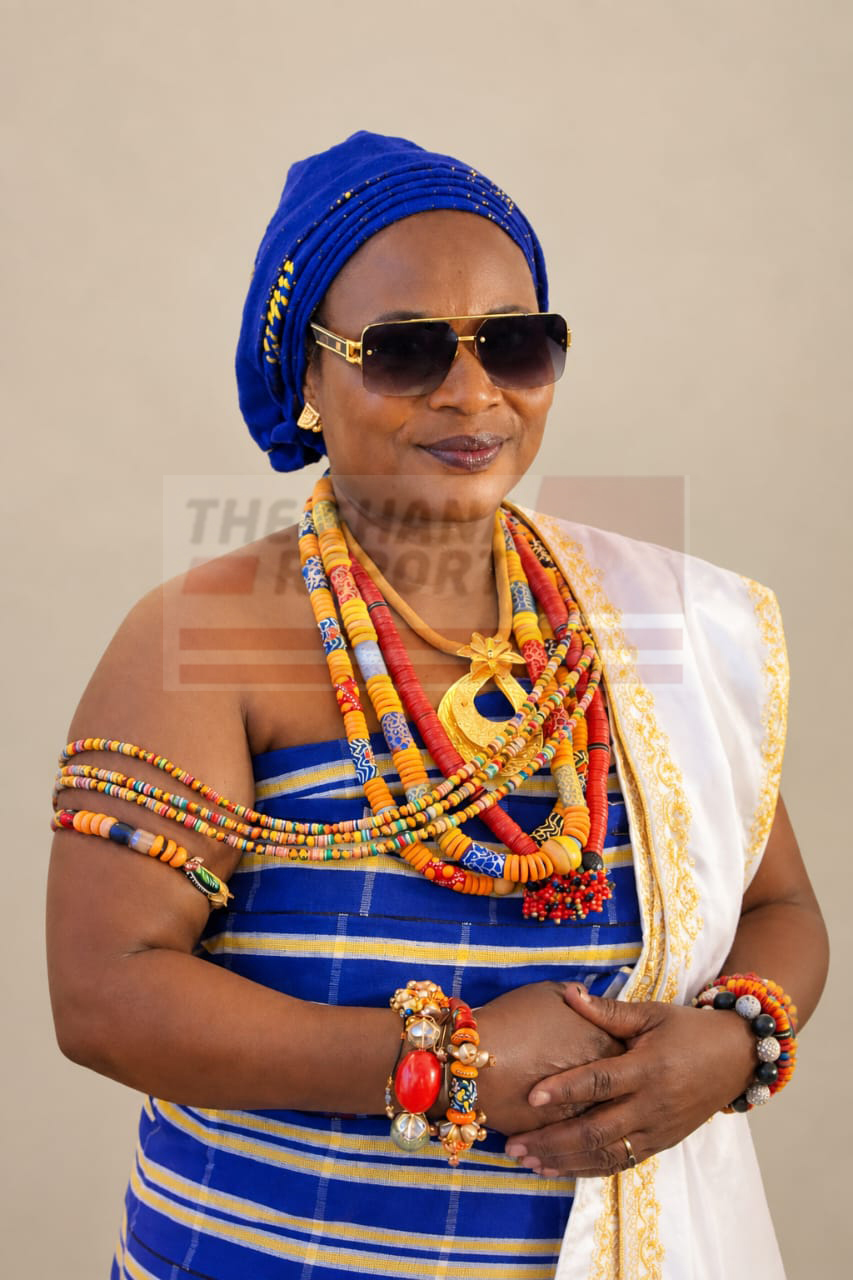
A farmer, trader and volunteer Agric trainer, Sakina witnessed conflict transform wives into widows and traders into dependants.
“The conflict in Bawku has caused a lot of women to become widows, even younger women with two or three children,” she said.
Rather than wait for help, she created it.
“I saw how difficult life had become for women,” she recalled. “Some could not pay their children’s school fees. Others could not get loans because banks demanded guarantors. I knew we had to find our own solution.”
That solution became the Asungim Women Group.
What began as a simple Village Savings and Loans Association (VSLA), locally called “daaka daaka,” has grown into a lifeline for many women from diverse ethnic backgrounds.
The group meets every Saturday. Members save small amounts, lend to one another, and repay with modest interest. For women in a conflict zone where formal banking feels distant and unsafe, the model has become a financial refuge.
But the initiative did not stop there.
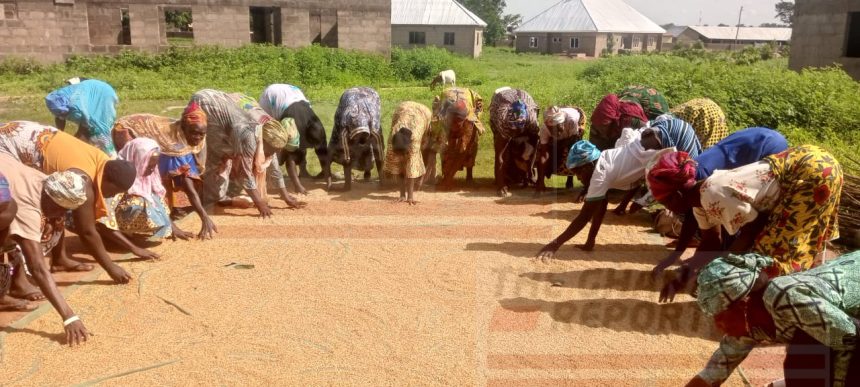
Sakina used her own farm produce to train women in rice parboiling, peanut oil extraction, “kulikuli” (a crunchy snack from peanut dough) making, groundnut paste production, shea butter processing, soap making and shampoo production. She supplied raw materials herself, often without asking beneficiaries to repay her.
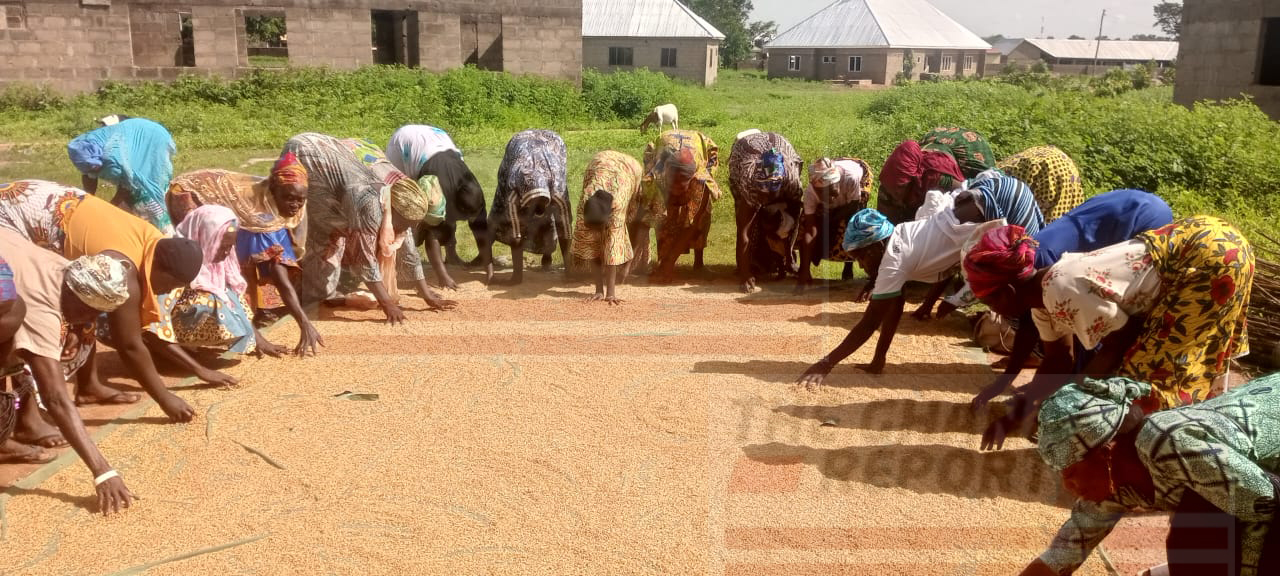
More than 50 women have benefited directly. Many now pay school fees, support households and help one another survive.
From widowhood to dignity
For Barikisu, the group became the bridge between despair and possibility.
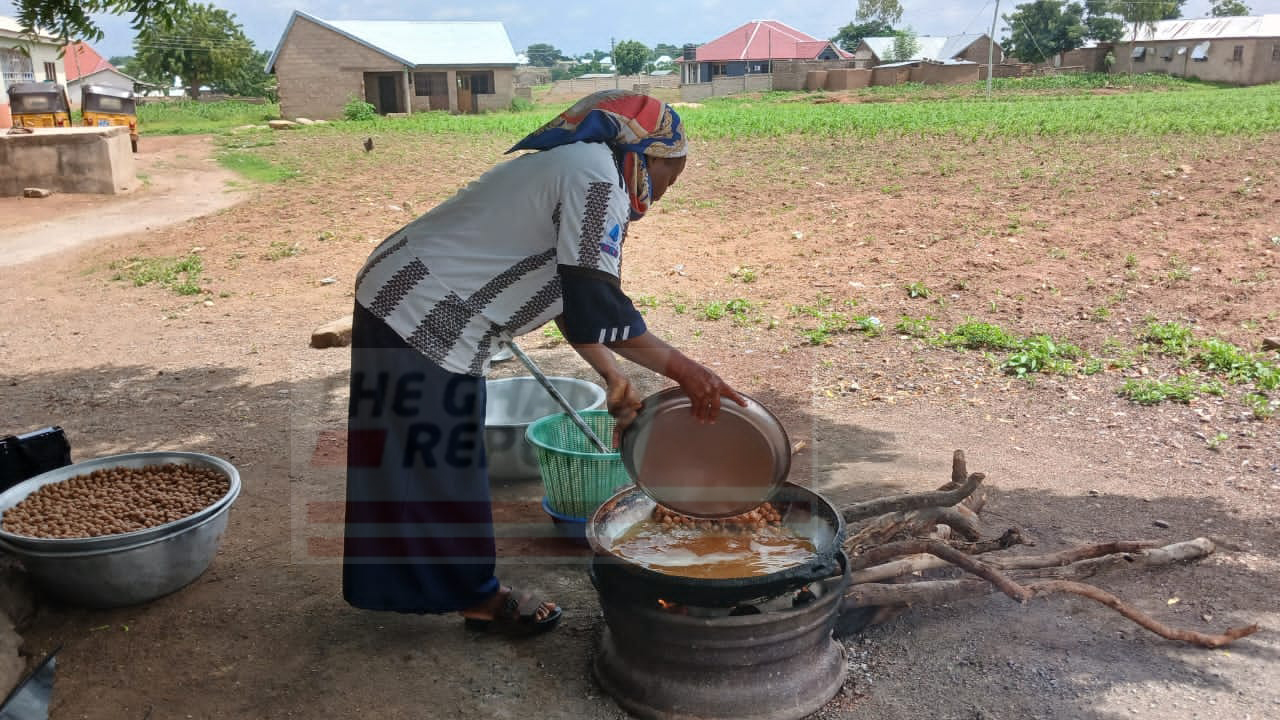
After joining, she received training in kulikuli production and groundnut oil extraction. Sakina provided the equipment and raw materials free of charge.
She began with a single bowl of groundnuts. “Queen Mother provided everything,” Barikisu said. “After the training, I started with one bowl of groundnuts. Today I’m doing five or six bowls sometimes.”
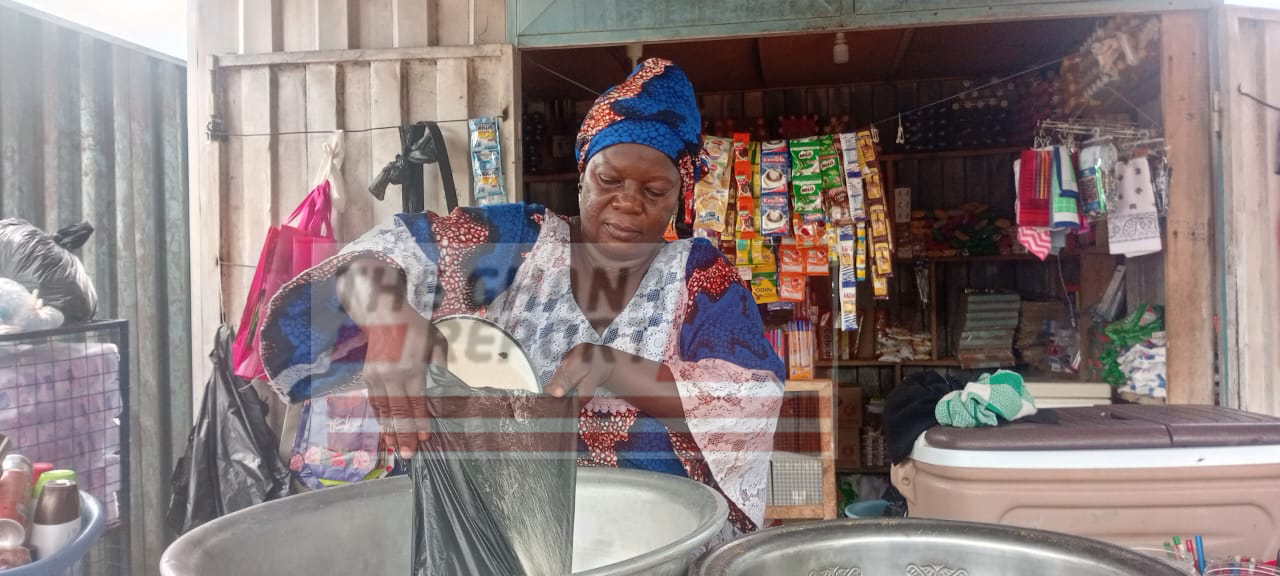
Her voice carried both gratitude and grief. The transformation is visible not only in her finances but in her confidence. “I’m now able to buy clothes for my children,” she says. “I’m able to take care of their daily needs. My children are happy with me now.”
Yet grief remains.
Any mention of her husband causes her voice to tremble.
“If my husband were alive, this wouldn’t have been my situation. I’m still young to be called a widow.”
Yet her greatest dream is not personal wealth.
“My wish is to grow this business and one day train other women and girls just as I was trained.”
When Women Earn, Families Survive
The impact of the initiative is visible beyond the women themselves.
For James Akuka, whose wife, Vida, is a member of the group, the benefits are felt every day at home.
Before his wife joined the programme, the burden of supporting their children rested almost entirely on him.
Today, that has changed.
“If I get two cedis and she adds one cedi, our child goes to school with a stable mind,” he said.
When their daughter gained admission to Bawku Senior High School, and he struggled to raise money for the admission requirement, it was his wife’s earnings from rice processing and trading that bridged the gap.
He has also watched her extend support to neighbours and widows.
“Sometimes she brings rice and groundnut paste home. She helps people who are in need… “She now buys pants for my children. When I ask who bought them, they say, ‘Mama,'” he said with a smile.
For James, women’s empowerment is not merely about economics. “It helps the entire family.”
Reclaiming Dignity
The stories of Barikisu are echoed by many others.
Barikisu Fusheine says joining the group gave her financial independence and confidence. Before joining, even attending social gatherings was difficult because she often lacked transport fare.
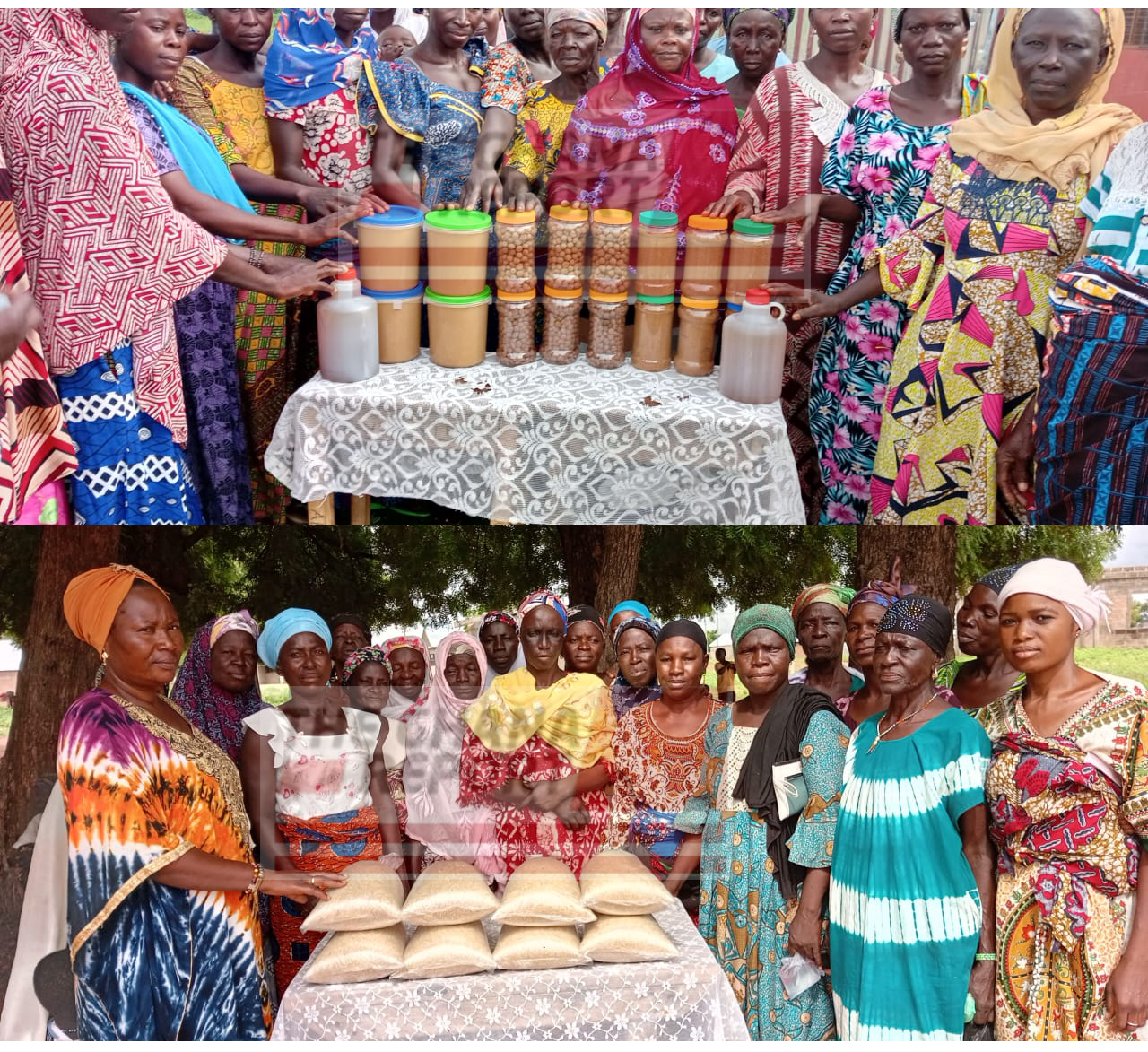
Today, she contributes to household expenses, pays her children’s educational costs and runs her own small trading activities.
“At first, I was just walking like any other person, …I now have a skill and something I can boast of,” she said.
Atoam Esther, who runs a small provision shop at Bawku Senior High School, says a GHC1,000 loan from the group helped her start her business.
A widow and survivor of past violence, Esther still lives with the physical scars of conflict.
“There was a day I was in the market, and they shouted we should run,” she recalls. “I ran and left everything.”
The pain in her leg still keeps her awake at night. Yet she continues. “I’m the woman and the man of the house,” she says. For Esther, like many others, stopping is not an option.
Women as peacebuilders
Peter Asaal, Executive Director of Belim Wusa Development Agency (BEWDA), said women are essential to peacebuilding in Bawku because they can reach the people who matter most.
“A woman’s husband can be an actor in the conflict. A woman’s son or daughter can be the actor,” he said. “Women are very critical… because they can have access to all those people that matter.”
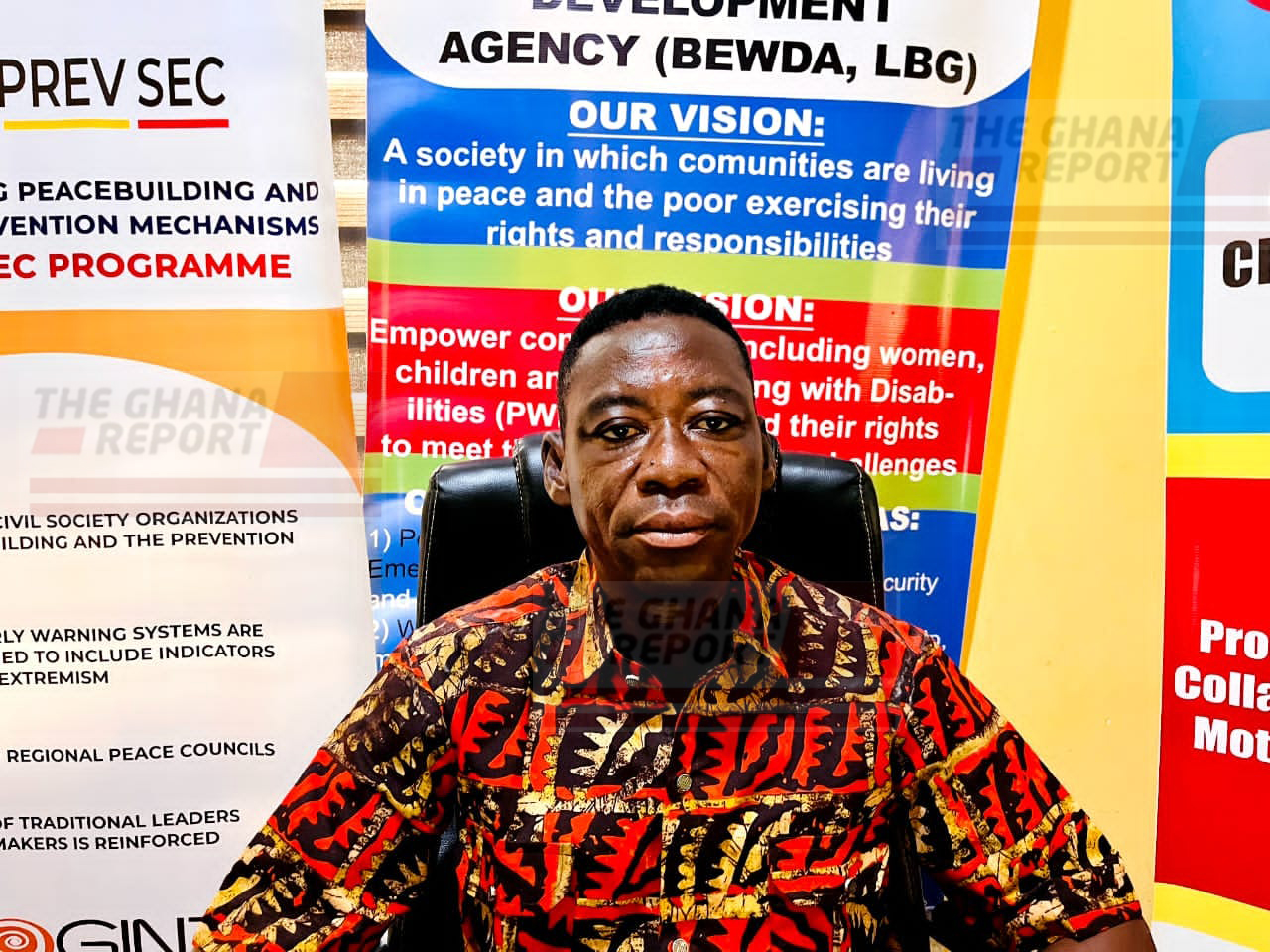
He said women’s savings groups also create rare spaces where divided communities can meet, talk and rebuild trust.
That is why Sakina’s group matters so much: not just because it feeds children, but because it brings people from different communities into one room, one circle, one shared future.
Asaal recalls periods during earlier phases of the Bawku conflict when women from opposing sides deliberately crossed perceived boundaries and entered areas considered unsafe. Their actions helped break barriers that men could not.
Lessons from Rwanda
The resilience of Kpalwega’s women mirrors stories seen elsewhere on the continent.
After the 1994 genocide in Rwanda, thousands of widows formed savings groups and cooperatives that helped rebuild families and communities. Studies by agencies including UN Women have shown that women-led economic initiatives became critical to restoring livelihoods and strengthening social cohesion in post-conflict communities.
The circumstances in Bawku are different, but the principle remains the same: when women gain economic independence, entire communities become more resilient.
Supporting Women, Supporting Peace
The Bawku Municipal Chief Executive, Isaac Azunaba, said initiatives like the Asungim Women Group are helping to strengthen the community and support peacebuilding.
“The Asungim Women Group are hardworking,” he said, noting that women in Bawku continue to show resilience despite the conflict’s impact on livelihoods.
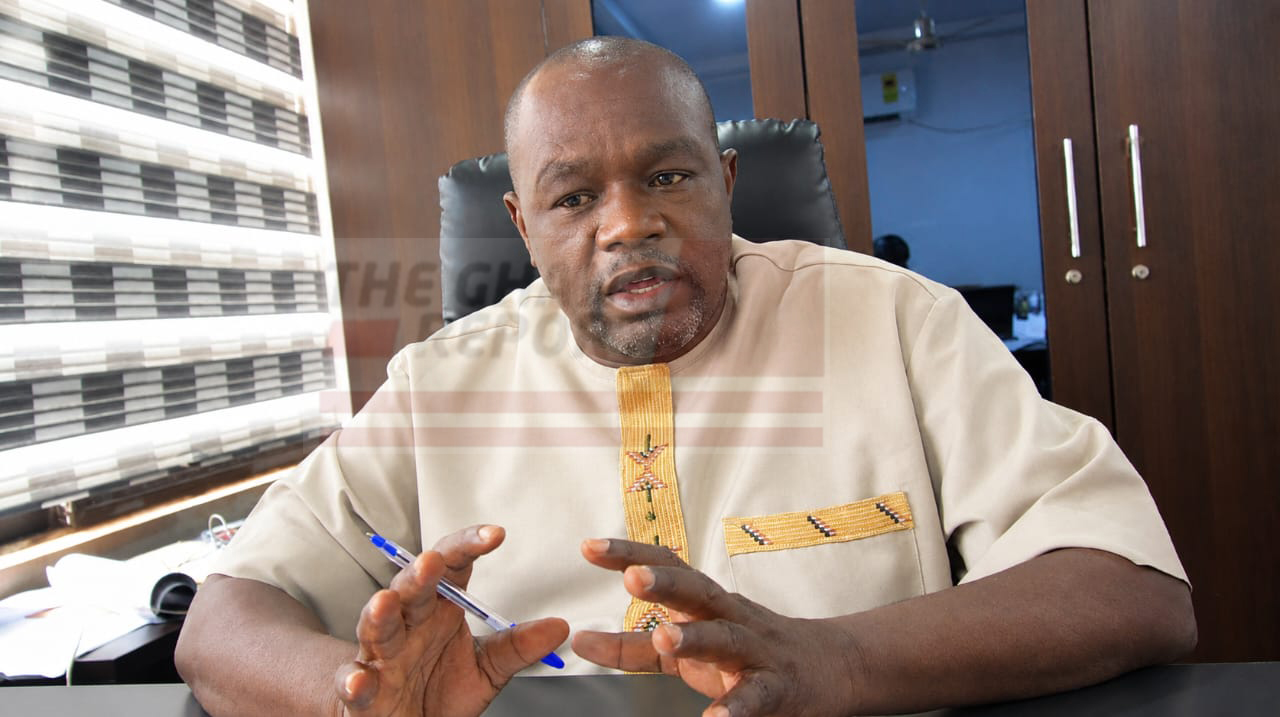
Azunaba said keeping people economically active contributes to peace. “If people are engaged and doing something productive, it helps the peace process,” he said.
He added that in 2025, the municipality supported more than 3,000 women with seed capital through MP Mahama Ayariga to help revive businesses affected by the conflict.
The MCE also highlighted government programmes such as Feed Ghana, the National Apprenticeship Programme, the proposed women’s bank, and the Adwumawura Programme.
“Empowering a woman is empowering a whole household,” he said.
Challenges and the Call for Support
Despite their resilience, the lack of modern processing machinery and the fear of violence make scaling up difficult. “We use calabashes to remove stones from rice,” Sakina laments. “It is tedious. If we had a milling machine, we could compete with foreign brands.”
The group’s struggle reflects a broader reality: while the women are winning the battle for survival, they are still waiting for the structural support that could turn their small initiatives into sustainable regional enterprises.
The stories from Bawku are a testament to the grit of Ghanaian women. In a town where headlines are dominated by tragedy, these women are drafting a different narrative, one of soap, rice, and small savings held together by trust.
In Bawku, peace may not yet have arrived, but every bag of processed rice, every bar of soap, and every coin saved by these women is a small investment in the future they hope to see.