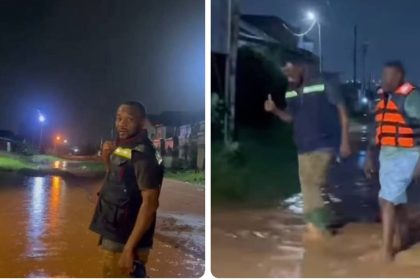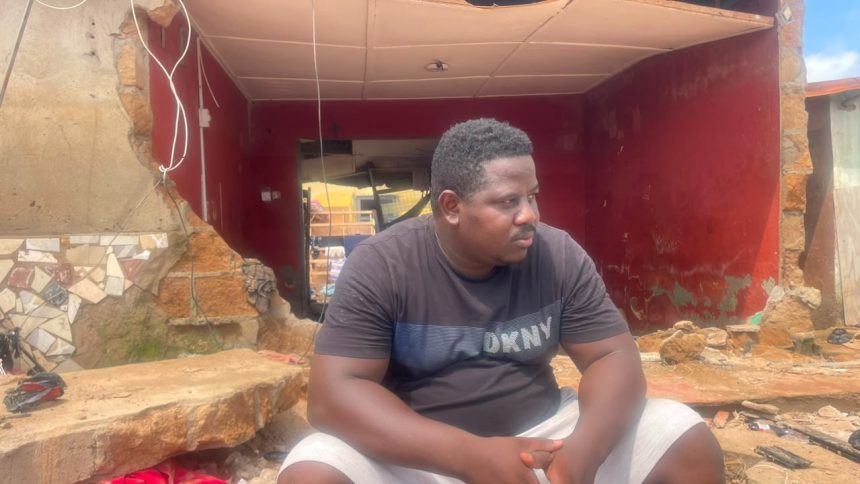
By the time the rain stopped, Ibrahim Mubarak had become a hero to his neighbours. He had carried an elderly woman to safety. He had hoisted his landlord onto his back and helped him escape the rushing waters.
He had joined other young men to rescue trapped residents, pulling children and adults from rooms that were rapidly filling with floodwater.
But when he finally returned home, there was nothing left to save.
His room had partially collapsed. His life’s savings had vanished. The GH¢14,000 he had collected from deliveries two days earlier was gone.
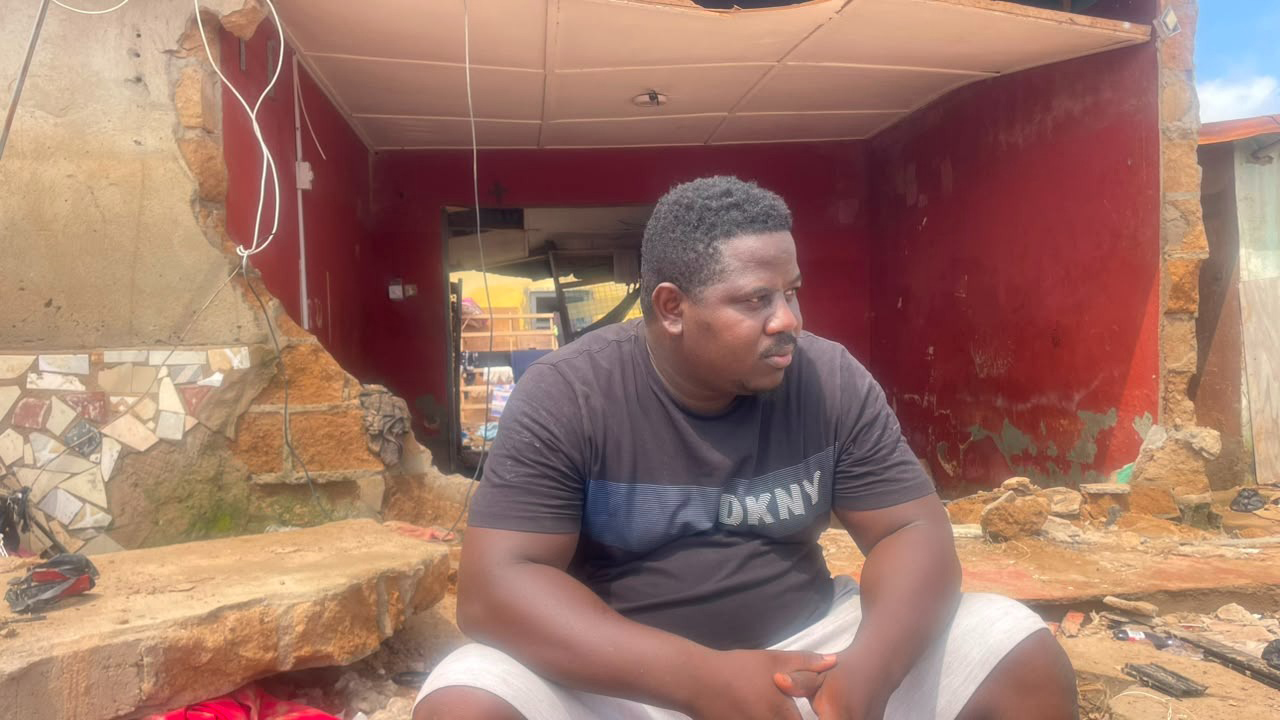
Two 50-inch television sets entrusted to him for Monday deliveries had disappeared beneath the muddy current. His daily savings box was washed away. The flood had swallowed every possession his family owned.
Then came the question he says he will never forget.
“After the water receded, I was sitting here when my daughter came and asked me, ‘Daddy, what are we going to eat?’ Before I realised it, tears were dropping. I was crying.”
That single question captures the hidden tragedy left behind by the June 29 floods that ravaged parts of Accra.
Beyond the statistics are families whose lives have been reduced to memories, parents unable to feed their children, and survivors who now sleep anywhere they can find shelter.
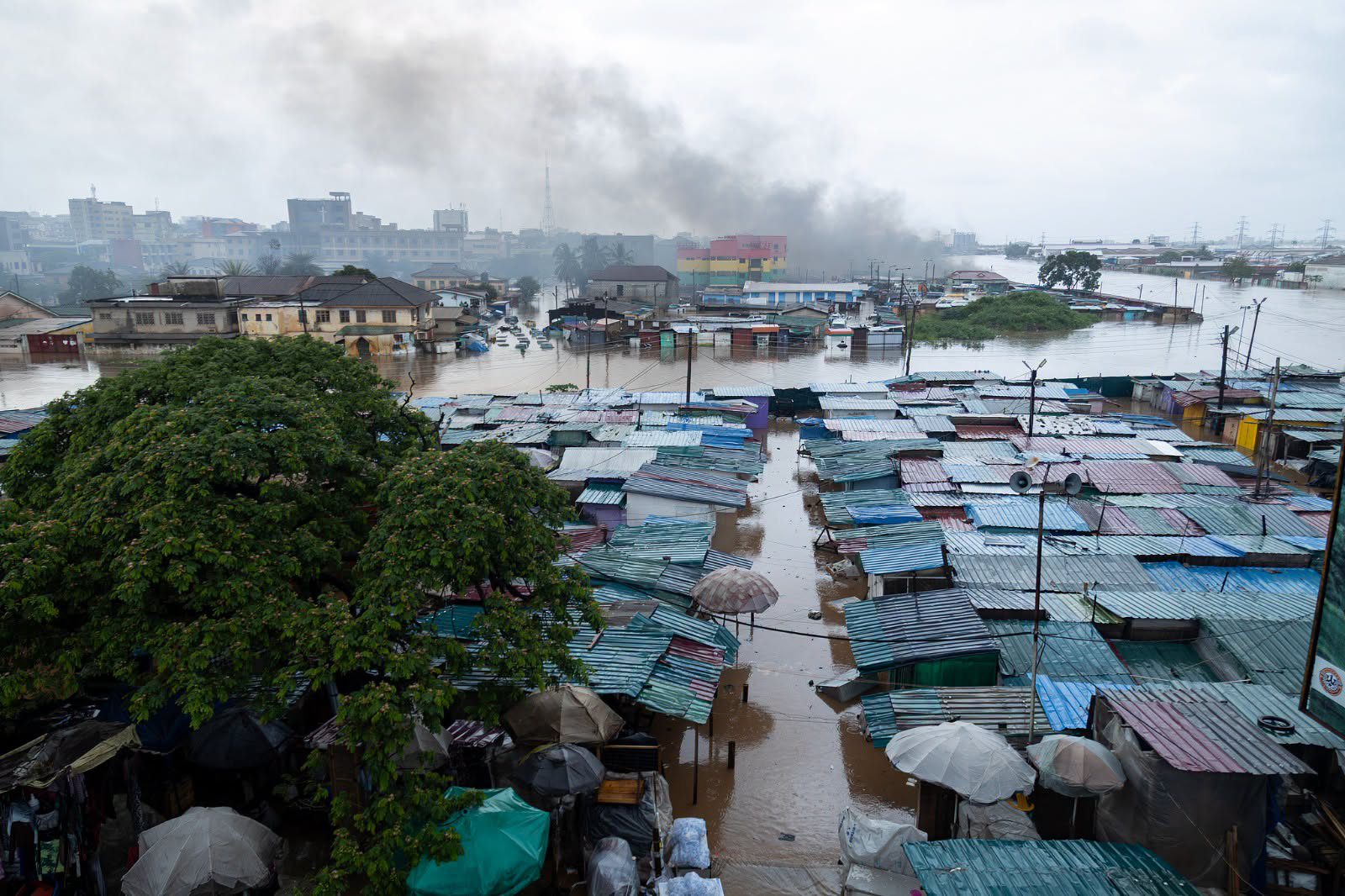
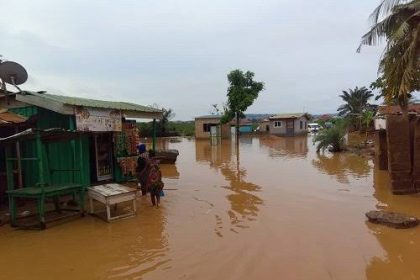
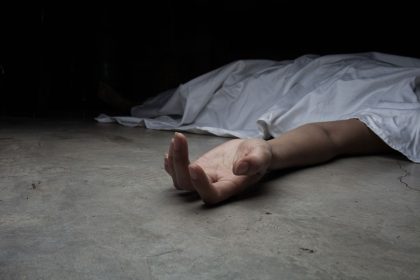
According to the National Disaster Management Organisation (NADMO), the June 29 floods devastated several communities across Greater Accra, displacing 56,022 people from 11,205 households, while 12 people lost their lives and six others were reported missing.
The disaster followed hours of torrential rainfall that overwhelmed drains, submerged homes and forced thousands to flee. NADMO has identified 16 of Greater Accra’s 29 Metropolitan, Municipal and District Assemblies as flood-prone.
The Ghana Meteorological Agency had earlier warned of widespread heavy rainfall, while NADMO says relief distribution and damage assessments for affected households are ongoing.
For Ibrahim, those national figures mean little.
Today, his wife is temporarily staying with someone else. His children have been shuffled between relatives because there is nowhere for them to sleep.
He often spends the night chatting with friends over cups of ataya until dawn before finding a place to rest after worshippers leave a nearby mosque.
“My immediate need is not even a mattress. I just need somewhere for my children to sleep. That is what worries me every day.”
The delivery rider says friends have become his only safety net.
“Sometimes they call and ask whether the children have eaten. When I say no, they bring food or send GH¢50 or GH¢100. That is how we are surviving.”
Yet, despite losing almost everything, Ibrahim refuses to blame only the government.
He believes residents also have a responsibility.
“Some people see that it is raining and still dump refuse into the gutters. If we don’t keep our surroundings clean, the floods will keep coming.”
In Alajo, he says residents have introduced community rules under which anyone caught dumping refuse into drains is handed over to the police.
A Mother’s Greatest Fear
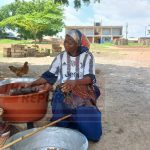
A few houses away, Georgina Adjowoda sits quietly beside dozens of waterlogged schoolbooks spread across rusted metal sheets under the afternoon sun.
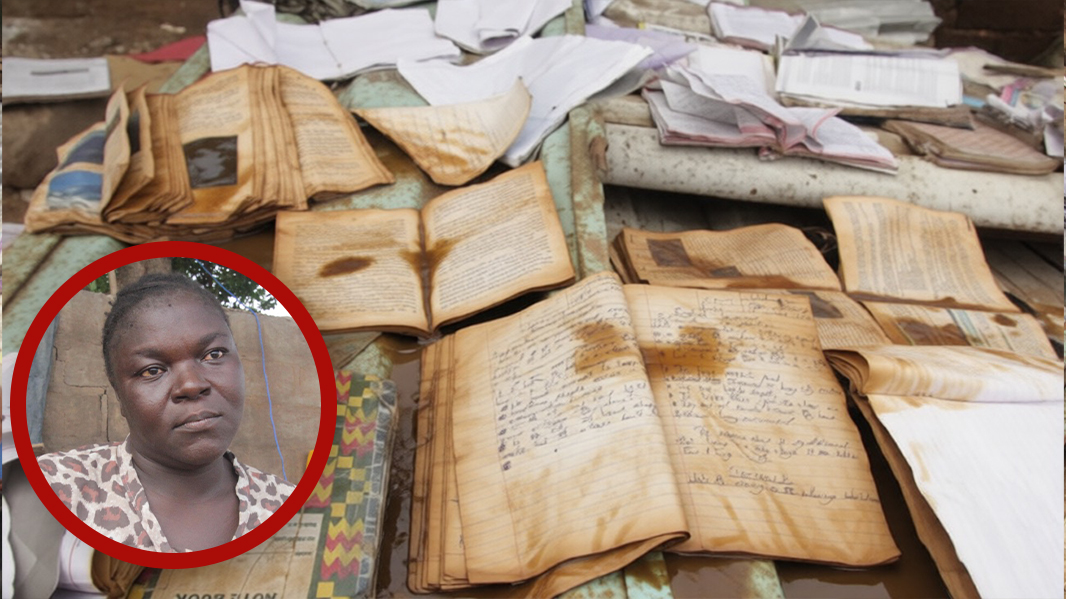
Every few moments, she leans forward to turn their soaked pages gently, hoping the breeze will do what the flood could not undo.
The pages are swollen, stained brown with muddy water, their ink bleeding into one another. She knows most of them will never be usable again, but she keeps turning them anyway.
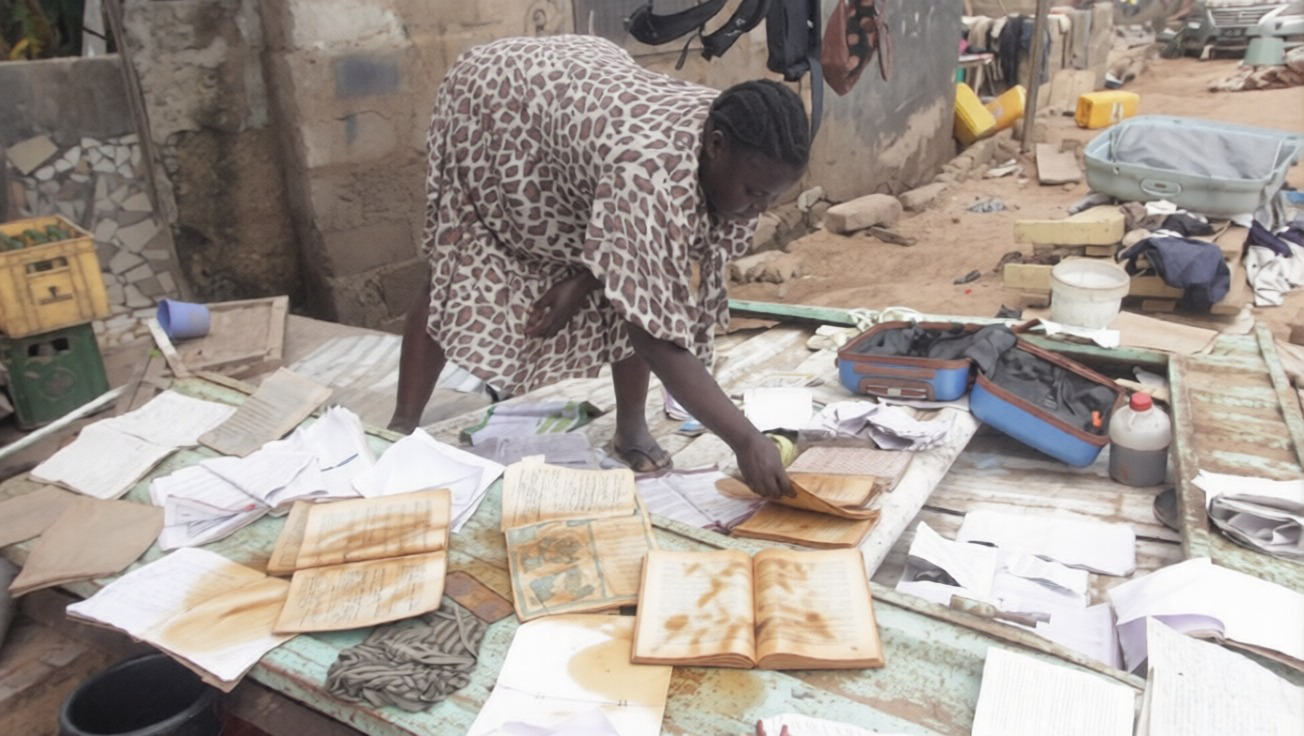
For her, these are not just books drying in the sun; they are a desperate attempt to rescue her children’s future.
She already knows most of them cannot be saved. Yet she keeps turning the pages.
The flood swept away her family’s single room, destroying her deep freezer, business equipment, cooking utensils, mattresses and nearly everything her four children owned.
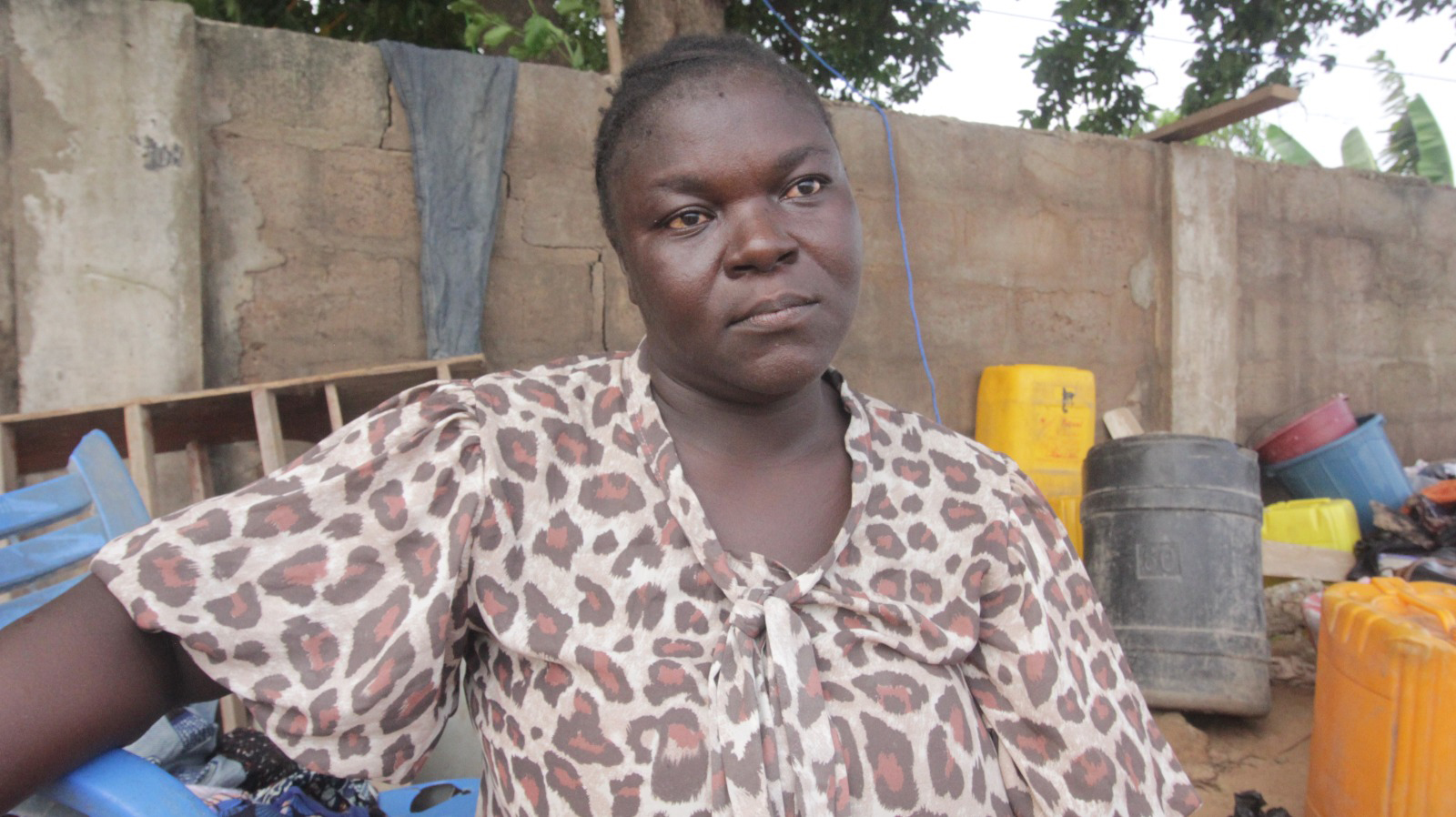
But it is not the household items keeping her awake at night. It is her daughter’s future.
The teenager, who dreams of becoming a nurse, was due to return to senior high school only days after the flood. Her Home Economics textbooks, practical materials, notebooks, cooking equipment and food and nutrition supplies, worth about GH¢3,000, were all destroyed.
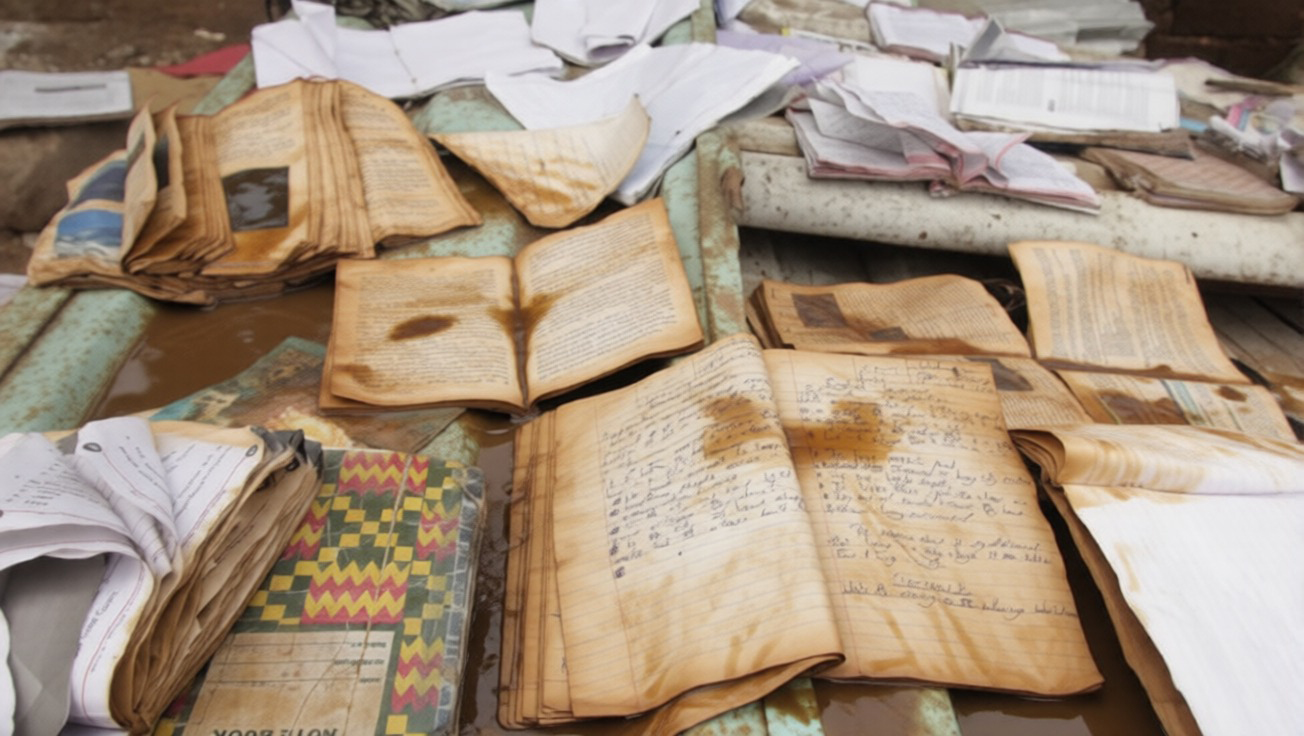
Since school reopened, her classmates have resumed lessons. She remains at home.
“If I cannot support her, it means the flood has stolen my child’s future.”
Her voice trembles as she speaks about watching her daughter’s dream slowly slipping away.
“She dreams of becoming a nurse. It’s the future she has always imagined for herself. But if she cannot return to school, how will she ever make that dream a reality?”
The family’s struggles extend beyond education. Part of their house has collapsed. Curtains now cover the broken walls where concrete once stood.
They sleep on plastic floor mats because every mattress was ruined. Her husband has only recently returned to work after the disaster, while she has lost the business that supported the household.
For days after the flood, even food was scarce.
“It was only today that somebody brought us food. Even feeding the children has become difficult.”
Adding to her fears is the growing pile of debris surrounding their damaged home.
With a toddler in the house and stagnant waste nearby, she worries about disease outbreaks.
“We fear cholera and diarrhoea. The rubbish is still around us. We need help to clear it before our children become sick.”
The family has an unfinished house at Amasaman but cannot relocate because they lack the money to complete basic washroom facilities.
“If somebody helps us finish that house, we will leave this place. We are tired of living beside the gutter.”
The Soldier Who Could Only Watch
In Tse Addo’s Zion neighbourhood, also battered by the June 29 floods, former Warrant Officer Class One Darko says decades of military service never prepared him for the disaster that unfolded in his own home.
Nothing prepared him for June 29.
Using his military training, he evacuated family members trapped by the flood before trying to save a mattress for them to sleep on after the rain.
He never made it back. The current became too strong. For hours, he remained stranded on a wall while floodwaters swirled around him.
“I was trapped on the wall throughout the rain. When I heard loud booms, I knew walls were collapsing.”
From his precarious position, he watched buildings crumble while praying that the wall beneath him would remain standing.
“I kept praying that my wall wouldn’t collapse. If it had, I don’t know how I would have survived.”
Like hundreds of others, he escaped with only the clothes he was wearing.
“The only thing I managed to save was my phone. Everything else, my son’s certificates, my passport, television and household items, is gone.”
The retired soldier says surviving the disaster has demanded a different kind of strength.
“As a man, I have to endure. People see me and think I am okay. But the problem is very big.”
He says the first helping hand came not from official institutions but from neighbours and friends.
“The first night, a friend brought me one shirt, one towel and one pair of trousers. Otherwise, I would have had nothing.”
NADMO: Relief Is Ongoing
The Greater Accra Regional Director of the National Disaster Management Organisation (NADMO), Dennis Nartey Adjannor, says relief operations remain ongoing, and that support is prioritised based on vulnerability assessments.
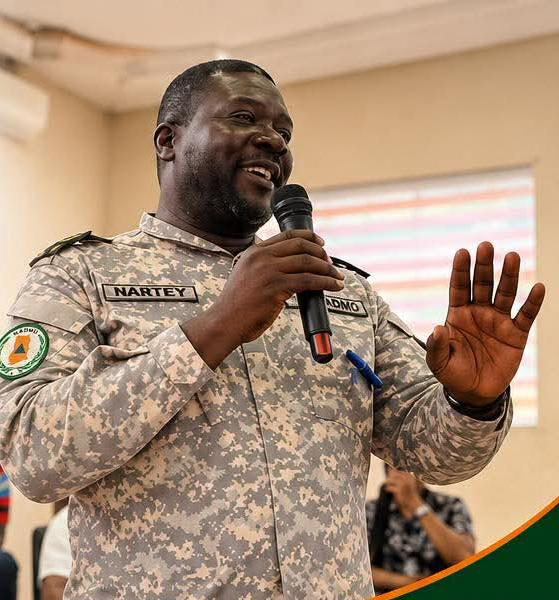
According to him, officers conduct household assessments after floods, recording the number of adults, children, pregnant women and the extent of damage before relief items are distributed.
“Everybody who is affected will be captured. If someone has not yet been assessed, they should report to their municipal assembly so officers can visit and assess the damage.”
He said the government has released funds to support affected victims while additional assessments are now focusing on businesses destroyed by the floods.
Adjannor also stressed that flood prevention requires public cooperation.
“Government alone cannot do it. People should stop dumping rubbish into drains because debris blocks waterways and causes floodwaters to back up into communities.”
He disclosed that 16 of Greater Accra’s 29 Metropolitan, Municipal and District Assemblies have been classified as flood-prone, with long-term interventions including dredging drains, expanding waterways and removing structures built in water retention areas.
When Heroes Need Saving
In disasters, heroes are often celebrated.
But in Alajo, many of those who risked their lives to save neighbours are themselves waiting to be rescued.
Ibrahim still searches for somewhere his children can sleep. Georgina still dries books that may never be usable again. In Tse Addo, Ex-WO1 Darko still waits for help to rebuild the life decades of work created.
The floodwaters have receded. For these families, however, the struggle is only beginning.
And for Ibrahim, one question continues to echo louder than the rain itself: “Daddy, what are we going to eat?”