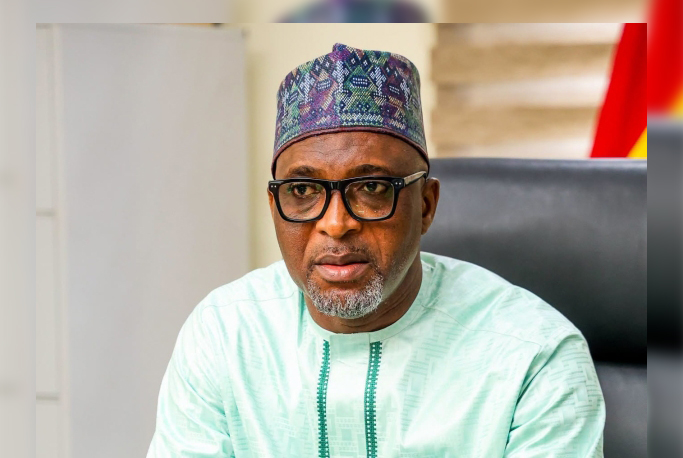
When Interior Minister Muntaka Mohammed-Mubarak announced the suspension of all active firearm licences and directed holders to undergo fresh mental health screening before renewal, many Ghanaians applauded the move as a bold step towards public safety.
According to the Minister, Ghana has recorded at least three firearm-related suicide cases involving affluent individuals within a short period, exposing glaring weaknesses in the country’s firearm licensing regime.
The government has therefore decided that licence holders must undergo psychiatric assessment, drug screening and practical firearm handling training before being allowed to possess firearms again.
The decision is welcome. But it also raises a difficult question: why has Ghana waited until now to address a weakness that should have been obvious all along?
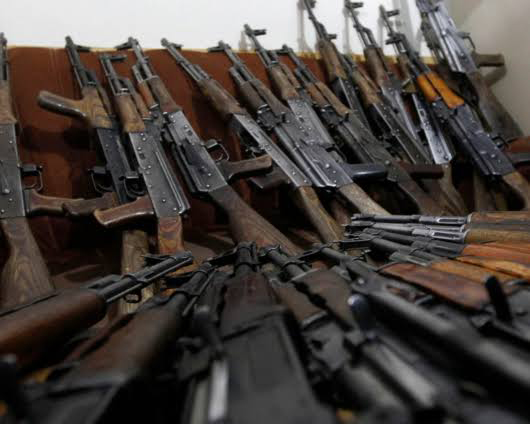
A firearm is not an ordinary possession. It is a lethal instrument capable of ending lives in seconds. Any system that permits citizens to own guns without periodic checks on their mental fitness is a system built on hope rather than responsibility.
Recent events suggest that hope is no longer enough.
The policy comes on the heels of the disturbing shooting incident linked to former Dome-Kwabenya Member of Parliament Sarah Adwoa Safo’s family residence at Kwabenya.
Police investigations led to the arrest of six private security guards and the retrieval of several weapons, including pump-action guns and a pistol loaded with ammunition.
Investigators are yet to establish the full facts of the case. Nonetheless, the incident served as a stark reminder that firearms are increasingly finding their way into situations that should never escalate into armed confrontations.
Whether the issue involves private security personnel, political actors, personal disputes or individuals struggling with emotional distress, the consequences become far more dangerous when guns enter the equation.
What makes the Interior Minister’s announcement particularly significant is that Ghana is not venturing into uncharted territory. Other countries have travelled this road before, often after learning painful lessons.
Following the 1996 Port Arthur massacre that claimed 35 lives, Australia embarked on one of the most comprehensive gun control reforms in modern history.
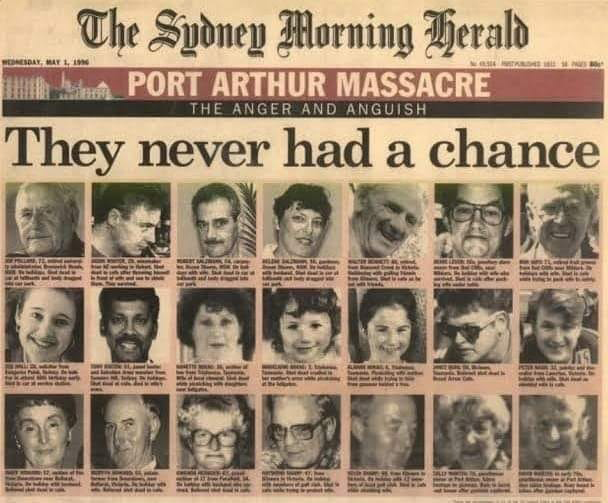
Authorities tightened licensing requirements, strengthened background checks, introduced a national firearms registry and restricted access to certain categories of weapons.
Firearm ownership ceased to be viewed as an automatic entitlement and became a privilege subject to strict oversight.
The results were significant. Studies conducted over subsequent decades found substantial reductions in firearm-related deaths and no recurrence of mass shootings on the scale witnessed before the reforms.
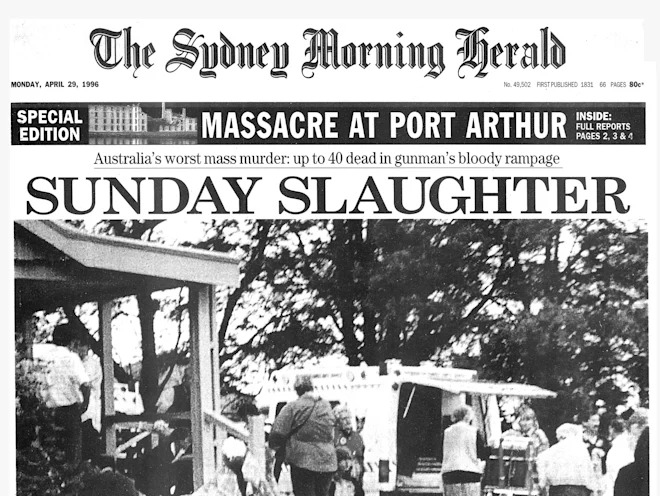
Australia’s experience demonstrated that robust licensing and accountability measures can save lives.
More recently, authorities in Western Australia moved a step further by introducing mandatory mental health assessments for firearm licence holders.
The reasoning was simple: a person’s psychological condition can change over time, and fitness to own a gun should not be assessed only once in a lifetime.
New Zealand drew similar conclusions after the 2019 Christchurch mosque attacks that killed 51 worshippers.
Investigations exposed shortcomings in the country’s firearms licensing system and prompted sweeping reforms, including tighter vetting procedures, stricter licensing requirements and the establishment of a national firearms register.
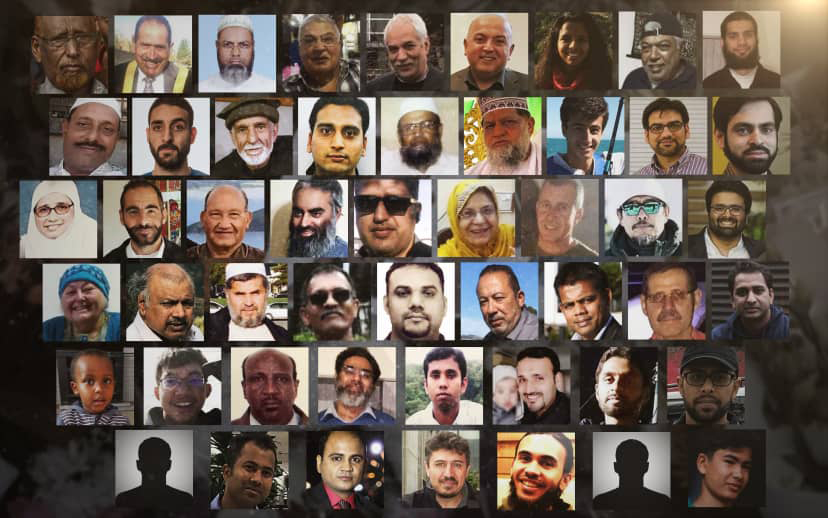
The lesson from these jurisdictions is not merely that stricter laws work. It is that governments must constantly evaluate whether the people entrusted with firearms remain fit to possess them.
That is where Ghana’s challenge begins.
Suspending licences may generate headlines, but implementation will determine whether the policy becomes meaningful reform or simply another administrative exercise.
Can the Mental Health Authority realistically conduct thousands of assessments without creating bottlenecks? Will the screening process be professional, independent and free from political interference?
Will influential individuals be subjected to the same scrutiny as ordinary citizens?
These questions matter because Ghana’s public institutions do not have a flawless record when it comes to enforcement.
More importantly, the Interior Minister’s decision addresses only one side of the problem.
Licensed firearms represent only a fraction of the weapons circulating in the country. Across parts of Ghana, illegal firearms continue to fuel armed robberies, chieftaincy disputes, land conflicts and communal violence.
The long-running conflict in Bawku has repeatedly highlighted the devastating consequences of illicit weapons in civilian hands.
A person who obtains a gun through illegal channels is unlikely to present himself for psychiatric evaluation.
This is why the government must resist the temptation to present the suspension of licences as a complete solution. Mental health screening is necessary, but it cannot substitute for a comprehensive national firearms strategy.
Ghana needs a fully digitised firearms database. It needs periodic licence reviews rather than lifetime approvals. It needs stronger oversight of private security companies. It needs better intelligence gathering to intercept illicit weapons. Above all, it needs consistency.
The uncomfortable truth is that the Interior Minister’s announcement is less a sign of a strong system than an admission that the existing one has serious gaps.
Still, acknowledging a problem is the first step towards solving it.
The danger now is complacency. Australia and New Zealand did not simply announce reforms; they institutionalised them.
Their experiences show that meaningful firearm regulation requires sustained political commitment, rigorous enforcement and continuous monitoring.
Ghana should not wait for a national tragedy to discover the urgency of the task before it.
The recent suicide cases, the Adwoa Safo shooting incident and growing concerns about firearms misuse should be treated as warning signals. They are telling us that the country’s firearm oversight framework is overdue for reform.
The Interior Minister has fired the opening shot. The real test is whether the government has the courage, resources and determination to finish the job.