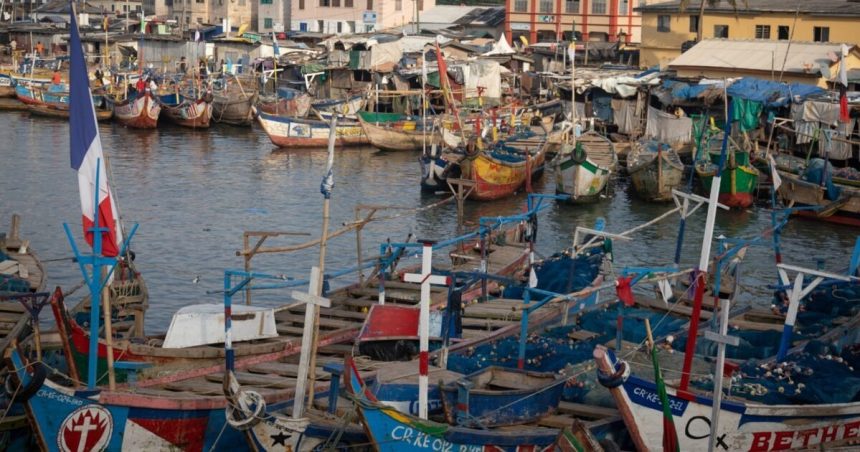
The Association of Artisanal Fishing Communities has called on President John Dramani Mahama and the government to revoke licences granted for offshore gold exploration, warning that the activities could threaten marine life, food security and the livelihoods of coastal residents.
The association, comprising chief fishermen, canoe owners, fishing crews, processors and traders, says communities that depend on the sea were not adequately consulted before reconnaissance licences were issued.
At a press conference in Accra on Tuesday, October 13, Kenneth Arthur, General Secretary of the Canoe and Fishing Gears Association of Ghana, said protecting the marine environment was essential to the survival of fishing communities.
He argued that the ocean was more than an economic resource, describing it as an ecosystem that had sustained generations of families through fishing and related activities.
“Our ocean is not a liquid desert waiting to be exploited,” Mr Arthur said, cautioning that offshore gold exploration could damage marine habitats, disrupt fish populations and restrict access to traditional fishing grounds.
He said the potential consequences would extend beyond fishermen to fish processors, traders and other businesses whose incomes depend on the fisheries value chain.
According to the association, any decline in fish stocks could undermine the livelihoods of coastal communities while threatening the availability of fish, an important source of food and income for many households.
Mr Arthur said fishing grounds represented a valuable inheritance that communities had a responsibility to preserve for future generations.
The association is therefore urging the government to go beyond suspending the exploration activities and take steps to cancel the licences and abandon plans for offshore gold exploration and exploitation in Ghana’s coastal waters.
It maintains that decisions concerning the country’s marine resources must take into account the concerns of fishing communities and the long-term sustainability of the ocean.
The group says protecting marine ecosystems is critical to ensuring that future generations can continue to depend on the sea for food, employment and economic survival.