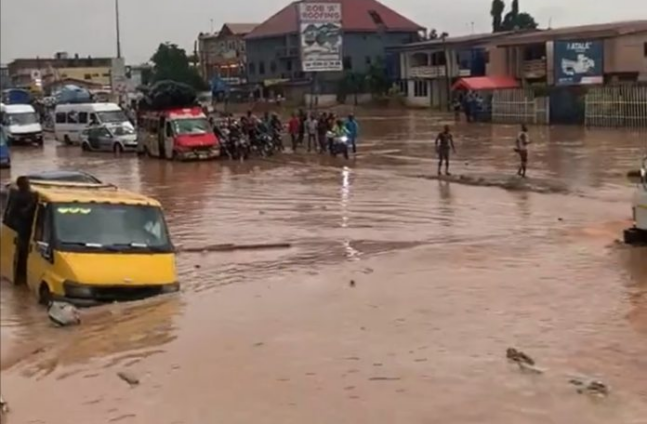
The President of the Ghana Institution of Engineers (GhIE), Ing. Ludwig Annang Hesse, says Accra’s worsening flood situation can now only be addressed through “upstream treatment” measures.
Speaking in an interview on Thursday, June 4, he blamed years of uncontrolled development, poor waste disposal, and the destruction of natural water retention areas for the city’s recurring floods.
“All the water retention areas in Accra have been compromised. So, we’ve brought this on ourselves,” he said.
According to him, drainage channels across the capital are heavily clogged with silt, rubbish, and plastic waste, reducing their ability to carry stormwater.
“The channels that we have downstream, that are now under capacity, are filled with silt, are filled with rubbish, are filled with polythene bags,” he said.
Ing. Hesse explained that previous flood control efforts focused mainly on expanding drains what engineers call downstream solutions but those measures have failed because wetlands and natural overflow zones continue to disappear.
“Previously, all the solutions that we’ve tried ourselves are what we call downstream solutions. We keep expanding the drainage systems, we keep putting money in, and we expand them,” he said.
He stressed that the city must now shift towards upstream treatment by retaining rainwater closer to where it falls before releasing it gradually into drains.
“Now, we have to go to upstream treatment,” he said.
He proposed that households and developers create water retention systems on their properties to reduce pressure on Accra’s drainage network.
“We have to insist that anybody who is developing any new building site will create retention areas on its properties so that it doesn’t add to the existing runoff,” he explained.
Ing. Hesse also urged owners of existing buildings to retrofit their homes to temporarily store rainwater.
“This is the option left for us. It’s the most difficult of the options left, but this is what we are left with,” he said.
He added that hydrological and hydraulic engineers would need to conduct detailed studies and modelling before authorities can determine the scale and timeline for implementing such interventions.