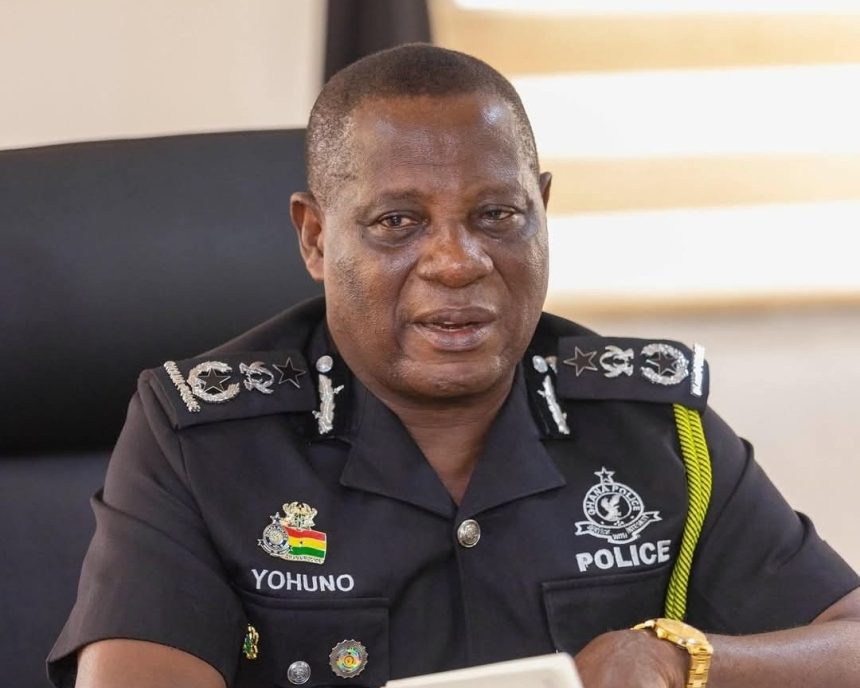
The Inspector General of Police, Christian Tetteh Yohuno, has significantly increased the number of officers admitted into the Police Academy for Cadet Officer Course 54.
This year, the academy will train more than 700 cadet officers, making it the largest intake in the institution’s history.
The sharp increase in admissions for Course 54 has forced the police administration to introduce both residential and non-residential training systems to accommodate the large number of cadets.
Sources within the police service said the decision aims to give more qualified Chief Inspectors the opportunity to progress into senior leadership roles.
Many officers, according to the sources, have remained at the same rank for years because of limited training space at the academy.
Although some critics have questioned the arrangement, police officials insist that the system is not new.
They explained that the service previously used similar methods whenever cadet numbers exceeded available accommodation.
According to the administration, former IGP Paul Tawiah Quaye adopted both residential and non-residential training models in 2011.
Former IGP P.K. Acheampong also distributed cadet officers across training centres in Accra, Winneba, and Pwalugu to reduce pressure on accommodation facilities, even though cadet numbers were lower at the time.
“The immediate past IGP (Dr George Akuffo Dampare) also employed both residential and non-residential models during cadet training exercises. So there is nothing strange about the current arrangement,” a source said.
The source added that criticism of the policy is misplaced. According to the source, many officers within the service have welcomed the decision and praised IGP Yohuno and the Police Management Board (POMAB) for expanding opportunities for deserving officers instead of allowing infrastructure challenges to block promotions.
“This administration believes opportunities must be created for qualified officers and not restricted because of accommodation limitations,” the source stressed.
The source further explained that many police institutions around the world are gradually moving away from fully residential training systems.
Officials noted that training for recruits focuses heavily on bonding, discipline, teamwork, and institutional culture.
However, career progression training for serving officers can effectively combine both residential and non-residential methods.
For the first time under the current administration, all 7,500 Chief Inspectors in the service were allowed to sit for the Police Academy Entrance Examination.
The move marked a major shift from previous systems, which many officers considered restrictive.
Following an amnesty granted by the President, officers who scored between 50 and 52 marks joined those who scored between 53 and 75 marks to qualify for admission. In total, 1,063 officers secured places for training.
The administration has also recommended additional officers for admission, including under-cadets and personnel who distinguished themselves through operational duties and crime-fighting activities.
Police authorities assured officers that every qualified candidate placed under Courses 54, 55, and 56 will eventually receive cadet training.
To support the large intake, the service has secured additional accommodation facilities in Accra. Officers living around the Police Depot and Tesano areas will also have the option to participate as non-residential cadets while fully taking part in all training programmes.
The administration said it is putting transportation and logistical systems in place to ensure officers face no difficulties during the training period.
In another move, IGP Yohuno has approved an increase in academy staff strength, including kitchen workers and support staff, to meet the welfare and operational needs of the expanded intake.
“Fully furnished lecture halls and training facilities have also been prepared to ensure effective instruction, discipline and a conducive learning environment throughout the six-to-nine-month programme.
“At the end of the day, we will not compromise standards as adequate preparations have been made to ensure efficiency, discipline and high-quality training delivery,” the administration added.