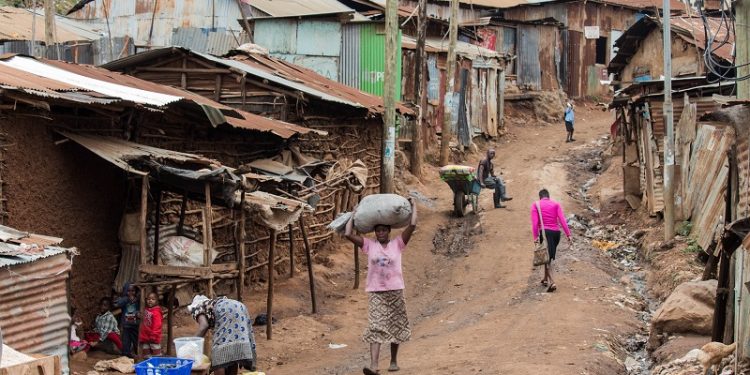
Ghana’s economy may be recovering, but the gains are yet to reach millions of citizens, with the World Bank revealing that 56.4 per cent of Ghanaians still live in poverty amid widening regional disparities.
The World Bank’s Division Director for Ghana, Liberia and Sierra Leone, Robert R. Taliercio, says the country’s strong economic growth has not translated into better living conditions for a large section of the population, underscoring the urgent need for growth that creates jobs and benefits more Ghanaians.
Speaking at the launch of the World Bank’s Tenth Ghana Economic Update in Accra, Mr Taliercio stressed the need for more inclusive growth that creates jobs and expands opportunities for more Ghanaians.
“56.4% of Ghanaians remain in poverty, and spatial disparities are widening,” he said.
According to him, there is a growing gap between Ghana’s headline economic growth and the realities faced by many households.
“There is a disconnect between the headline growth that is yet to reach most of the population,” Mr Taliercio said.
He said the situation is particularly worrying given Ghana’s growing youthful population and the need to create enough jobs for the increasing number of young people entering the labour market.
Mr Taliercio noted that Ghana’s economy grew by 6 per cent in 2025 and accelerated further to 6.4 per cent in the first quarter of 2026, reflecting a strong recovery in economic activity.
However, he cautioned that economic growth alone would not solve the country’s development challenges, especially if it continues to be driven by sectors with limited capacity to create jobs.
“Growth is led by sectors with limited employment absorption relative to its growing young population entering the labour market in the next decade,” he said.
He described the situation as a structural imbalance that requires urgent attention to ensure Ghana’s economic recovery benefits more people.
Mr Taliercio said Ghana must focus on policies that promote job creation, boost productivity and ensure that the benefits of economic growth are shared more widely across households and regions.
He stressed that making Ghana’s recovery inclusive, job-intensive and resilient would be crucial to sustaining the gains made in restoring macroeconomic stability.