
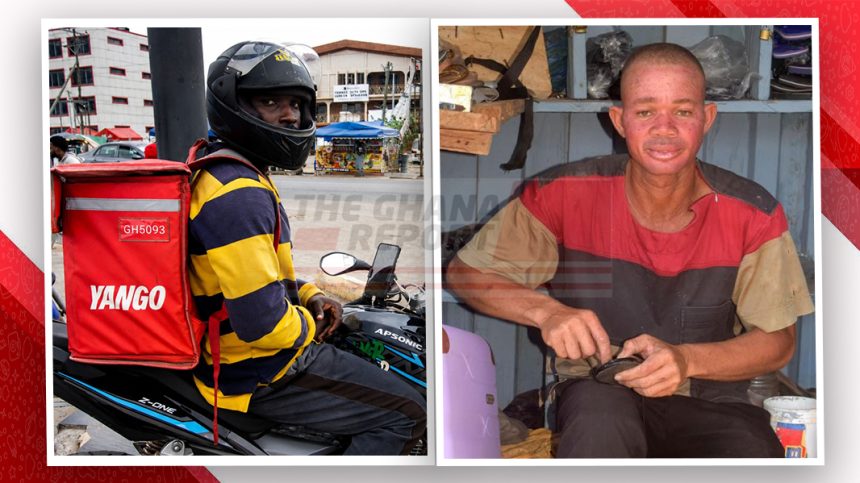
As International Youth Day 2026 puts dignity, opportunity and decent work at the centre of the global conversation, the stories of Ghanaian young people expose a harder truth: for some, the problem is not a lack of effort, but a lack of opportunity.
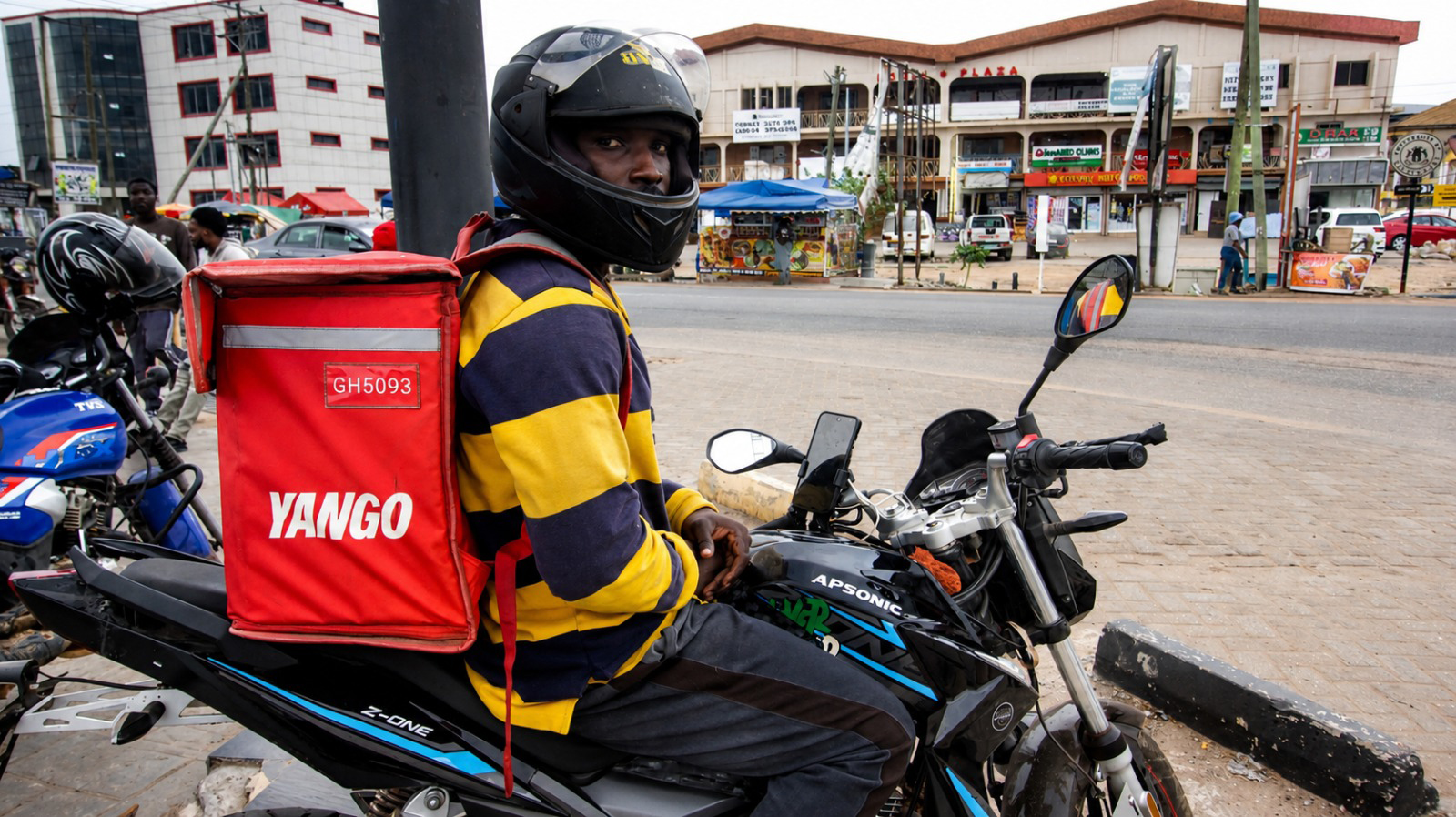
At first glance, Desmond Mbroh looks like another young Ghanaian trying to make ends meet in the informal economy.
At 29, he has a monthly-salaried job as a delivery driver. But after work, he mounts another motorcycle and goes online, waiting for orders.
It is not his dream job. It is his survival strategy.
“I can’t sit there for the month to end before someone pays me. Because the expenses are many. So, if I don’t take an additional job, it would be very difficult for me to survive. You know Ghana’s economy,” he told The Ghana Report.
On a good day, the delivery work earns him about GH¢60 to GH¢70.
For Mbroh, the motorcycle is not a career destination. He holds a certificate as a forklift operator and hopes to raise enough money to pursue that career, possibly outside Ghana.
His story exposes a painful contradiction at the heart of Ghana’s youth employment crisis: young people are working, but many are still unable to build secure and dignified lives from their work.
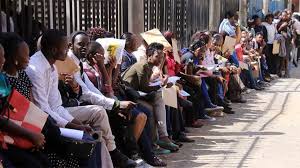
The Ghana Statistical Service data from the Quarterly Labour Force Survey show that unemployment among people aged 15–35 averaged 21.9% in the first three quarters of 2025, compared with a national average of 12.8%. Among those aged 15–24, unemployment averaged 32.5%.
The problem extends beyond those officially counted as unemployed.
Nearly two million young people aged 15–35, about 19.5% of the youth population, were not in employment, education or training (NEET) by the third quarter of 2025.
That represents millions of young people potentially losing years of skills acquisition, work experience and economic independence.
And Ghana’s youth population is not shrinking.
GSS says people aged 15–35 now constitute 36.9% of Ghana’s population.
The country is therefore sitting on an enormous demographic opportunity or a potentially dangerous demographic burden.
The difference depends largely on what happens next.
A certificate is not always enough
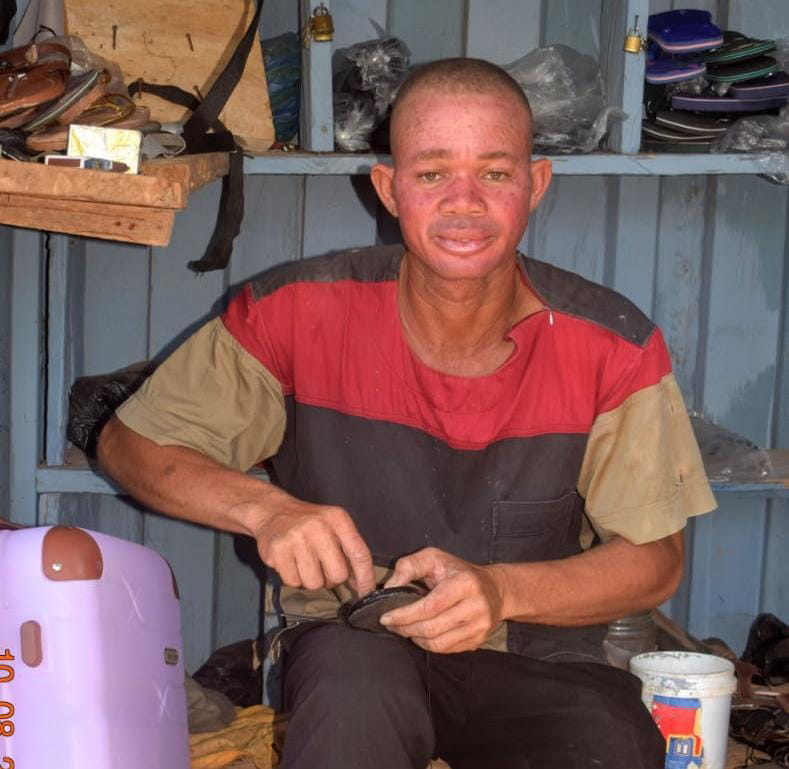
For Awambire Nyaaba Micuw, popularly known as Ayellow [a name once used to mock his skin colour, which he has since embraced and turned into a positive identity], the struggle for employment has been complicated by something he cannot change: his skin colour.
An albino and an HND Building and Construction graduate of Bolgatanga Technical University, Ayellow possesses skills in building, carpentry, painting, shoemaking and other crafts.
He expected his technical education to open doors.
Instead, he says some doors closed the moment employers saw his skin.
“There are some instances when they call me for work, and I get there. The person just looks at my skin colour and either says I shouldn’t do it again, or says there is no money or materials and asks me to come next time,” he says.
He believes the real problem is discrimination.
One of the most painful experiences came during a recruitment exercise for Community Police Assistants, commonly known as Zoom Police.
He says someone told him that, based on his appearance, he would not be able to do the job.
“I just said, no, this work is true that I cannot do it. So I have to pick my things and go.”
He also recounts a Fire Service recruitment exercise in which applicants were made to write examinations in the open sun.
For Ayellow, whose albinism makes prolonged exposure to sunlight particularly difficult, the experience became unbearable.
“When I write small time, my tears are coming,” he recalls. “And when I drew their attention to it, some of the people were laughing.”
He eventually abandoned the process.
Ayellow’s account is not isolated. According to the Ghana Federation of Persons with Disability, about 80% of persons with disabilities face unemployment or underemployment, often due to societal stigma and lack of inclusive policies.
This exclusion hampers SDG 8, Decent Work and Economic Growth, and undermines Ghana’s commitment to leave no one behind.
Since 2010, Ayellow has built a livelihood around shoe shine and leather-related work at Bolgatanga Girls Senior High School. He repairs sandals and bags, binds books, replaces zips, makes footwear and sells other items.
He also teaches Building and Construction voluntarily at Bolgatanga Central Technical Institute. He farms, growing millet, maize, rice and other crops. Some of his former students are now studying at tertiary institutions.
His life is a lesson in resilience. But it is also an indictment of a system that can force a trained young person to become extraordinarily resourceful simply to overcome barriers that should not exist.
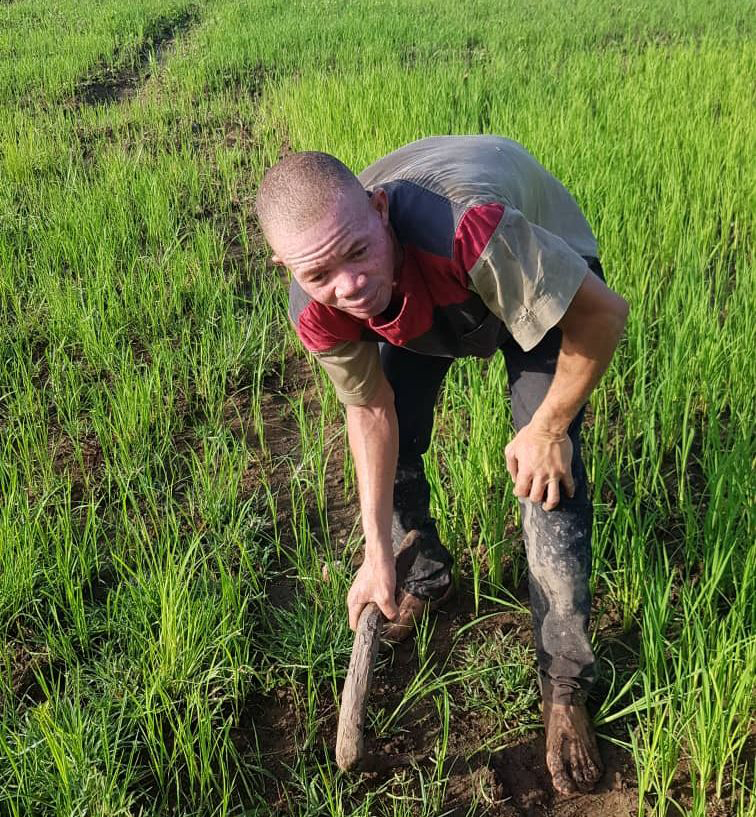
“I don’t want them to do their employment based on the physical appearance of people,” he says. “They should employ people based on their skills and what they can offer.”
The missing link
For John Nkaw, Country Director of ActionAid Ghana and Interim Executive Director of ActionAid International Kenya, the experiences of Mbroh and Ayellow reflect wider challenges facing Ghanaian youth.
“From where we sit, the biggest challenge is limited youth skills, limited employment opportunities, and even for those who are employed, we have complaints of underemployment,” he says, pointing to the mismatch between young people’s training and available jobs.
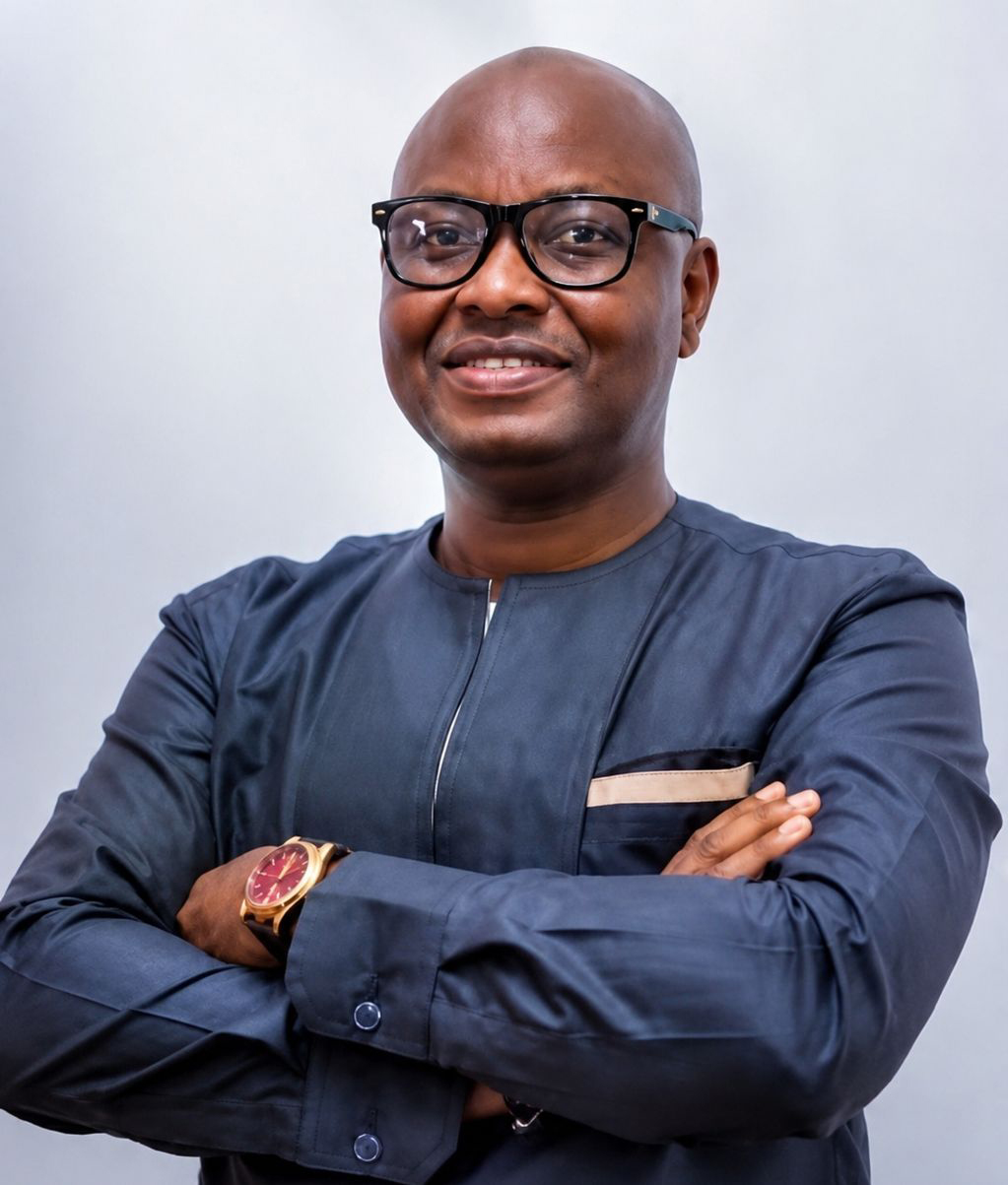
That mismatch is evident in Mbroh’s case, while Ayellow’s experience highlights the additional barriers faced by persons with disabilities.
Mr. Nkaw says government must deliberately target vulnerable groups through employment policies and affirmative action.
He also identifies limited access to capital as a major obstacle for young people seeking to create their own businesses.
“You may find a lot of very talented young people…who have the skills, who have the drive and the capacity to be able to start their own jobs, but then, of course, they are hit with the difficulties in mobilising capital for investment,” he says.
It is important to add that successive governments have not ignored the problem. The NPP government introduced interventions including NABCO and the National Entrepreneurship and Innovation Programme (NEIP), alongside programmes under the Youth Employment Agency.
The current NDC administration has also introduced initiatives, including Adwumawura, which aims to nurture 10,000 young entrepreneurs annually, as well as apprenticeship and skills programmes.
But Mr. Nkaw says the challenge is scale and sustainability.
“If you take the Adwumawura policy… they are targeting 10,000 youth-led businesses year on year,” he says. “This is quite low in the face of the teeming or high population of young people coming out.”
“There is a need for government to incrementally scale the total numbers up,” Mr. Nkaw argues, stressing that young people need opportunities to build sustainable livelihoods rather than simply find any job.
“We need to create the jobs in Ghana, and young people need to be self-employed, and then we can contribute towards national development as the years roll by,” he says.
That is the difficult test for Ghana’s youth policies: not how impressive they sound when launched, but how many young people still have sustainable livelihoods years later.
The Ghana Report sought the views of the National Youth Authority for this publication, particularly on youth unemployment, the effectiveness of current interventions, skills mismatch, inclusion and the Authority’s response to the concerns raised by the young people interviewed.
Despite efforts to secure an interview, the Authority did not speak to these issues before publication.





look at this site
changenow swap