
In the words of American humorist Evan Esar, “The only place where you can find equality is in the cemetery”.
Yet, in many cemeteries across Ghana, the reality appears to be quite different.
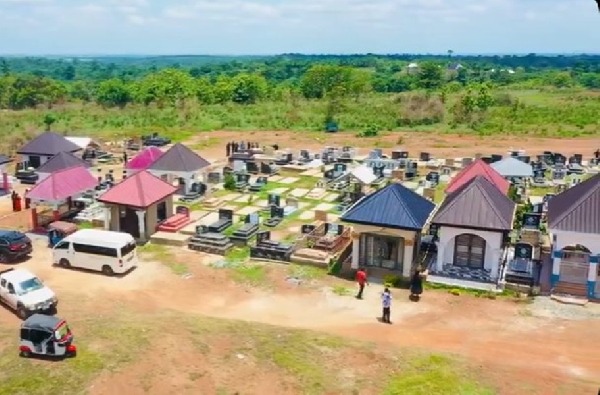
In major cities and towns across the country, elaborate tomb structures resembling mini-mansions are increasingly dominating cemeteries.
The rise of these lavish burial sites tells a different story from age-long traditional tombs seen in many graveyards across the world.
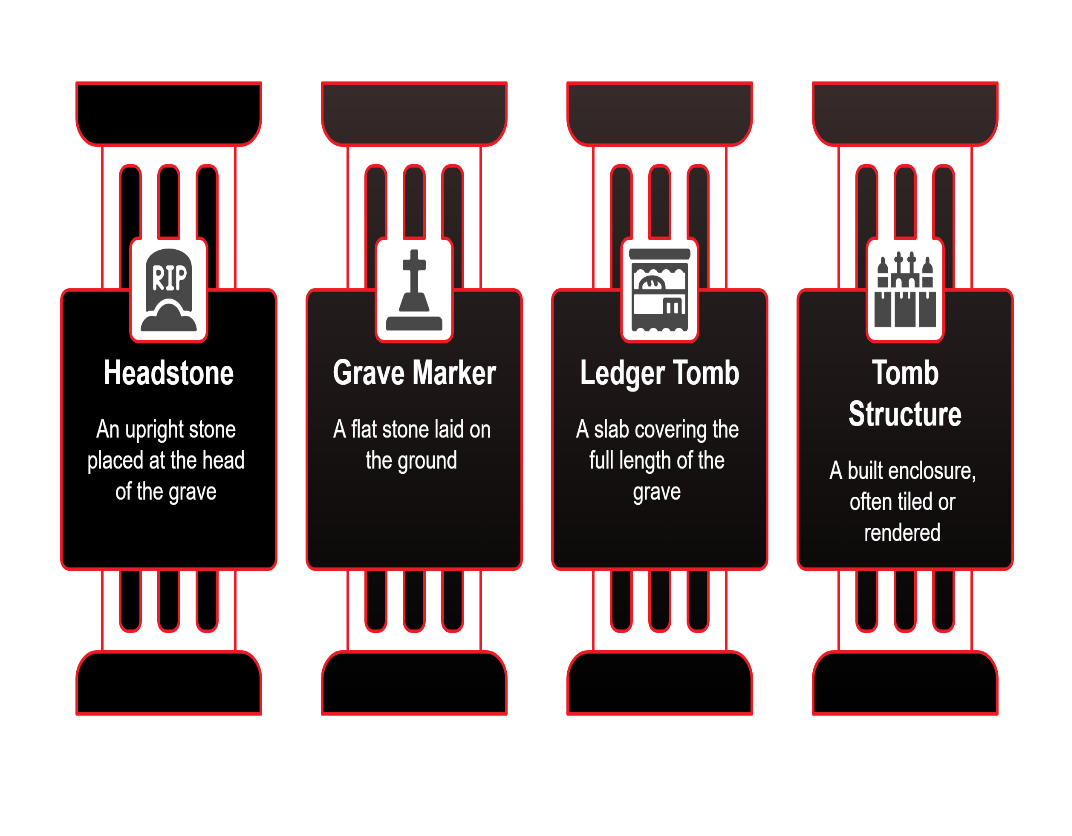
This also reflects shifting social norms around status and remembrance from the general Ghanaian historical patterns.
Some families explain that it is an act of respect, identity, and remembrance for their deceased and the family as a whole.
For this reason, they take deliberate steps to choose such lavish tomb structures, knowing that the mini-mansions (tomb structures) will speak quietly on their behalf for many years after the funeral rites have ended and mourners are gone.
To them, it is not about cost nor wastage, but rather a way of making a resting place that will carry a name and reflect how their family chooses to remember their loved ones.
A family head who opts to be anonymous said, “We built this to honour our father’s legacy”.
Some of these lavish, self-contained houses built as tombs come with complete tiled floors, glass windows, and metallic security doors, among other features.
Some luxurious tombs found in Ghanaian cemeteries. Is it a sign of respect or shifting social norm?#TGR
Headucator | Kofi Adams | Kwame Ohene Frimpong pic.twitter.com/q1WUaAArwc
— The Ghana Report (@theghana_report) May 13, 2026
These result in their extravagant cost, with some reports from the Ghana Memorial Product indicating a cost of over 18,000.00 in Accra.
This far exceeds the price of a standard traditional tomb, which roughly ranges between 2,000 and 3,000 cedis within Accra.
“This trend mirrors the growing display of wealth in life extending into death,” says a sociologist.
The commencement of this trend was predominantly done for deceased statesmen, chiefs and their enclosed circles of elite families, but today many families have subscribed to the trend across the regions of Ghana.
One of such cemeteries is at Chiraa (video below), a notable town located in the Sunyani West Municipality of the Bono Region, where families have built several of these mini-mansions to bury their deceased.
The land space occupied by these mini-mansion tombs in both public and private cemeteries is reported to be sufficient for self-contained apartments for the living.
Critics warn that they are deepening inequality even in death and consuming limited burial space in the face of urban planning issues.
A cemetery manager said, “We are running out of space faster than expected”.
Authorities are now considering regulations to limit the size of burial structures. Some municipal assemblies have drafted by-laws in accordance with section 181 of the Local Governance Act 2016 (Act 936) to regulate grave sizes, headstone building and even crematorium practices.
Such a municipal assembly is the Offinso Municipal Assembly with an enacted by-law to regulate activities in cemeteries within its assembly.
Their by-law, which was enacted in 2017, requires all graves to have a standard rectangular size of 8 feet by 4 feet (approximately 2.44 meters by 1.22 meters) and 4 feet by 3 feet for infants, with the headstone foundation required to have a maximum of 2 feet.
As cities expand and burial spaces shrink, the question remains whether future cemeteries will prioritise equality or continue to mirror the inequalities of the living.












How important are those things to the dead.
And how sure are you, it’s not ritual purpose?
Yeah because it’s strange and foolish too.
Online payment methods are essential for today’s economies.
They let funds to flow swiftly and safely across borders.
Popular examples include credit cards, digital wallets, and wire transfers.
Each method offers a unique balance between speed, fees, and safety.
https://n4.sneakero.ru/48xF6S8GUVJv/
Choosing the correct payment option depends on the user’s needs and location.
Good payment systems protect sensitive information and block fraud.
Ultimately, reliable payment infrastructure is the backbone of online business and digital finance.