Ghana is chalking yet another milestone on biodiversity protection and governance.
The country has in no way arrived in its quest to protect the environment from its wanton destruction.
No not at all. But being able to establish its first Marine Protected Area (MPA) is an achievement worth celebrating.
The marine ecosystem is part of the general ecosystem.
Protecting the biodiversity in general and the marine ecosystem in particular in relieving in a world that is being threatened by several inundating factors.
A post on social media symbolically quoted a group of animals wondering why humans spend billions of dollars in wars and other negatively activities and spend same in search of a new habitable planet.
Today, the Vice-President, Professor Naana Jane Opoku-Agyemang, will inaugurate the MPA at the Greater Cape Three Point area after years of research work, assessment and legal framework setup.
What is an MPA
A Marine Protected Area (MPA) is a clearly defined section of the ocean or coast where human activities are carefully managed or completely restricted to conserve biodiversity, protect habitats, recover and ensure ecosystem sustainability.
These might include coral reefs, seagrass meadows, open waters or coastal zones. Some are fully protected “no-take” zones, where activities such as fishing, drilling, and mining are banned.
Others allow limited use under strict regulations.
Indeed, MPAs can be likened to the national parks of the ocean.
Globally, MPAs are used to reverse declining fish stocks, protect coral reefs, mangroves, and support livelihoods through sustainable fishing.
MPAs ensure that the oceans remain healthy and full of life for future generations to come by promoting sustainable use of these resources as many of them allow people to use the area in ways that do not damage the environment.
Research has shown that MPAs can significantly improve carbon sequestration, coastal protection, biodiversity and the reproductive capacity of marine organisms, as well as the catches and income of fishers.
Although the idea has existed for decades, MPAs gained international momentum in the 1980s and 1990s, especially after the 1992 UN Convention on Biological Diversity signed and ratified.
Since then, governments have increasingly embraced MPAs as tools to combat overfishing, habitat loss, and marine degradation.
Various countries often designate MPAs within their territorial waters, with input from scientists, conservation groups, and local communities.
In international waters beyond any single country’s control, known as the high seas.
Agenda 30×30
The 30×30 conservation concept was codified in the Kunming-Montreal Global Biodiversity Framework and agreed to by close to 200 countries in December 2022 at the UN Biodiversity Conference.
It is a simple yet ambitious aimed at safeguarding 30 per cent of earth’s natural areas by 2030 to help stop biodiversity loss, support action on climate change, and keep vital ecosystems healthy and functioning.
Forests, wetlands, coral reefs, and other ecosystems are degraded faster than they can recover.
This not only puts wildlife at risk, but human health, livelihoods, and security as well.
The 30×30 target aims to reverse this trend.
MPAs help restore fish populations, protect aquatic biodiversity, and support sustainable fishing, all of which are essential to the 30×30 vision.
They are proven to protect biodiversity and sustain ocean health at scale and are among the most effective tools for reaching the global “30×30” goal of safeguarding 30 percent of land and sea by 2030.
Ghana’s MPA Situation
In Ghana, MPAs are becoming a necessary tool for the recovery of small pelagic (open sea) fish species like sardines, anchovies and mackerel which have been under severe pressure.
These small pelagic fishes have been declining over the years due to over-fishing, over-capacity, and illegal unreported and unregulated (IUU) fishing practices, among others.
The effect of this action continues to bring dire consequences onto coastal communities in Ghana.
The laws of Ghana and international commitments to several international frameworks make the establishment of the MPA a necessity.
Ghana’s objective of establishing an MPA is to promote sustainable fishing practices that safeguard the livelihoods of local fishing communities.
Fisheries regulations on MPAs
Ghana’s Fisheries and Aquaculture Act, 2025 (Act 1146) in Section 39, which centres on Marine Fisheries Reserve provides that the Minister shall, based on scientific assessment and on the advice of the Fisheries Commission and after consultation with relevant organisations, agencies, owners of the adjoining land, the relevant district assembly and other stakeholders, declare by notification in the Gazette, an area of the fishery waters and the seabed underlying the waters to be a marine fisheries reserve.
Section 39 among other things also states that a person shall not, except with the written permission of the Minister, engage in fishing, dredge or take sand or gravel or otherwise disturb the natural habitat within a marine fisheries reserve.
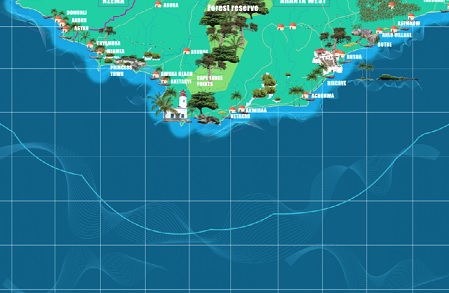
In 2024, the Ministry of Fisheries and Aquaculture Development announced plans to establish the first ever MPA at the Greater Cape Three Points area, covering about 700 square kilometers.
It is expected to stretch from Ampatano to Domunli as it had been scientifically identified as the most suitable location for the establishment of the MPA with biodiversity-rich coastal waters.
The communities affected by the establishment of the MPA include Egyambra, Miemia, Awona Beach, Princess Town, Aketakyi, Cape Three Points, Akwidaa, Achonwa, Upper and Lower Dixcove, Busua, Butre, Asemko, Ampatano, Punpuni, Aniahu, Adjua, Funko, New Amanful, Ketakor, Agyan, Akonu, and Domunli.
The Greater Cape Three Points is home to crucial spawning and nursery grounds, marine mammals, and endangered sea turtles. Protecting these habitats will allow depleted fish stocks to recover, support biodiversity, and create a “spillover effect” that benefits fisheries outside the MPA boundaries.
It is important to recognise that such conservation measures such as the establishment of an MPA requires a social transition support, where coastal dwellers such as artisanal fishermen and fish processors who may face temporary access restrictions are provided with alternative livelihood programs, microcredit, and skills training.
Ghana’s MPA success will depend both on community participation and co-management structures that foster local stewardship of marine resources and enforcement.
Stakeholders have expressed concern and optimism about the issues of livelihoods.
The Technical Advisory Committee, chaired by Dr Evans Arizi, during a workshop for journalists on the MPA said the MPA was a significant first step towards other proposed ones in achieving Ghana’s 30×30 target.
The Executive Director of Hen Mpoano, Kofi Agbogah, said the MPA was a critical step in the right direction and called for the involvement of all stakeholders to ensure its successful implementation.
Ghana’s MPA success will depend both on community participation and co-management structures that foster local stewardship of marine resources and enforcement.