I recently spoke with a retired partner of a Washington, D.C. law firm who has become a friend and mentor. He once led the firm’s public interest litigation practice. As we discussed my professional interests and past work, our conversation naturally drifted to my cocoa advocacy, which he had come across online. He asked a question many friends and colleagues have privately asked me over the past few months: How did you become so invested in reforming Ghana’s cocoa law?
A quiet conviction
The truth is, I have no pecuniary interest in cocoa. I do not own a cocoa farm, nor do I have any stake in the cocoa value chain or the artisanal chocolate industry. But cocoa is woven into my family’s story. Long before I was born, my paternal grandfather owned tens of acres of cocoa farms in Ghana’s Ahafo Region. By all accounts, he was a prosperous cocoa farmer.
Like many families in cocoa-growing communities, cocoa was the lifeblood that sustained his family. Yet, for reasons still recalled in fragments and contradictions within family memory, he lost those farms under “strange” circumstances. He died before I was born. Perhaps one day I will tell my grandfather’s story and its full impact on me, maybe in a memoir, if life grants me the time to write one. So no, my advocacy is not driven by personal gain or profit. It is rooted in a quiet conviction that the people whose labor built much of this country, including my grandfather, deserve dignity and justice.
The travails of cocoa farmers
Farmers are among the most hardworking and resilient people you will ever meet, and cocoa farmers perhaps most of all. The President of Ghana, John Dramani Mahama, himself would understand this well. He is a farmer too.
Cocoa cultivation is incredibly challenging. Farmers endure years of hardship before earning a single harvest. They must first secure land, often through fragile tenancy arrangements such as abunu or abusa, then spend 3 to 5 years clearing, planting, pruning, spraying, and tending cocoa trees, all without income from the crop.
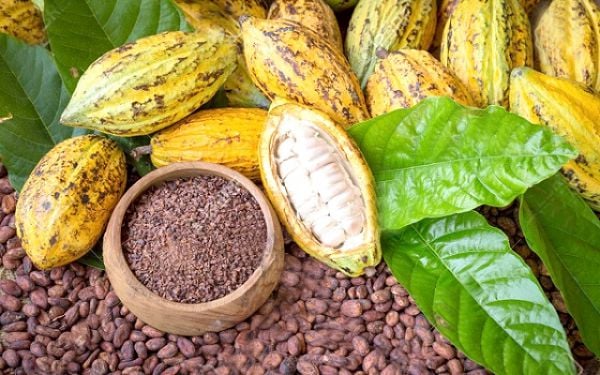
During that time, they rise before dawn in villages with limited roads, healthcare, and electricity, while still struggling to feed their families and keep their children in school. Climate change has made this life even harder: higher temperatures reduce yields, longer rains fuel disease and pests, and increasingly erratic weather deepens uncertainty. And when the harvest finally comes, the labour continues, as pods are split by hand and beans are painstakingly fermented, dried, and bagged for export.
Despite these sacrifices, a 1984 law, whose antecedents date back to the colonial period, denies cocoa farmers the right to freely negotiate prices and sell their property to buyers of their choice. Instead, they are forced to sell exclusively to the Ghana Cocoa Board (COCOBOD) at below-market prices set entirely by the State. Trading outside this monopsony is a criminal offence.
Imprisoning someone for at least five years simply for trading their own property violates basic civil rights and natural law. Over the 30-year period between the 1990/1991 and 2020/2021 cocoa seasons, cocoa farmers have earned, on average, just 55.8% of the global cocoa price, according to our preliminary analysis of data from the International Cocoa Organisation (ICCO). In the 1993/1994 cocoa season, the farm gate price paid to farmers was as low as 32% of the world price.
The operation of this law, therefore, effectively reduces cocoa farmers to a form of servitude. No other trade, occupation, or vocation is subject to this kind of treatment. Even minimum wage laws entitle covered wage-earners to a wage above what they would otherwise earn for their labour in a free labour market. Why, then, has this egregious cocoa law never been amended or challenged in court? The inequities and injustices embedded in this cocoa marketing framework have never sat well with me. It is a conviction deeply shared by my colleagues, Kwadwo Gyan and Sybil Efrima Sam.
What reform should look like
To be clear, we are not advocating for a sudden liberalisation of the market, nor are we calling for the abolition of the Ghana Cocoa Board. We are not asking for a complete deregulation of the sector, nor do we demand that the State abandons its vital roles in quality control, buyer licensing, export infrastructure, research, or the development of the “cocoa roads” program.
Our argument is far more fundamental. We are simply asking that the State stop taking the property of vulnerable cocoa farmers. The hard-earned fruit of a farmer’s labour should not be subjected to a forced sale to a state-designated buyer at a unilaterally determined, below-market farm gate price without the “prompt, fair and adequate compensation” explicitly required by the Ghanaian Constitution.
Cocoa farmers should be free to sell to whichever buyer they want and negotiate prices. The State can participate in the enterprise if it chooses, through a commercial entity, however described. If the state entity offers a preferable price in a given cocoa season, farmers will sell to the state. However, if another buyer offers a better price, it should not be a crime to sell to that buyer. The state can mobilise revenue through income taxes, export levies, buyer license fees, penalties on non-compliant participants in the value chain, cocoa tourism, etc.
The Abandoned Medium-Term Cocoa Development Strategy of 1999
Before the British colonial government introduced the Ghana Cocoa Board’s statutory monopsony, the Gold Coast’s cocoa sector operated through a competitive market system with multiple buyers, organised farmer cooperatives, and prices determined through negotiation rather than by State fiat. The proposal is therefore not for the Government of Ghana (GoG) to experiment with an unknown model, but to restore a market structure closer to what existed before colonial intervention distorted the sector.
Ghanaian cocoa farmers should be allowed to act collectively and trade their own produce in their own economic interest. It is worth noting that the Government of Ghana itself, at the highest level of executive decision-making, accepted and approved the case for cocoa sector reform.
In the 1990s, acting on advice from the International Monetary Fund and after broad stakeholder consultations, the Cabinet approved reducing State involvement in cocoa marketing. This position was later reflected in the Medium-Term Cocoa Development Strategy of 1999. In other words, the decision was already made; it was simply never implemented. That fact disposes of any suggestion that what we now seek is radical, foreign, or untested in Ghanaian governance.
Ghana should not be an outlier
Ghana is today the only major cocoa-producing country in the world that retains a full statutory monopsony over the purchase of cocoa from smallholder farmers. Every major producer has, in some form, liberalised. Even our neighbours, Côte d’Ivoire (the world’s largest producer), now operates what may fairly be described as a hybrid system.
A regulatory body, the Conseil du Café Cacao, sets a guaranteed minimum farm gate price each season and supervises the sector. Within that price floor, however, a plurality of licensed private buyers, exporters and cooperatives compete to purchase cocoa from farmers.
The state retains a meaningful role in “protecting” farmers from price volatility and ensuring sectoral stability, but it does not stand between farmer and buyer as the sole purchaser. Beyond Côte d’Ivoire, there are valuable best practices across other cocoa-producing countries that offer useful guidance. Ghana would benefit from recognising its place within a broader global industry and thoughtfully drawing on these shared experiences to strengthen and improve its approach.
The cocoa industry is projected to be worth $146 billion by 2035. There is no reason to shortchange the poor cocoa farmer who sustains the industry. With thoughtful and creative approaches to structuring the industry, it should be possible to ensure that value is distributed more fairly, allowing all stakeholders–government, regulators, farmers, and other participants across the supply chain–to benefit.