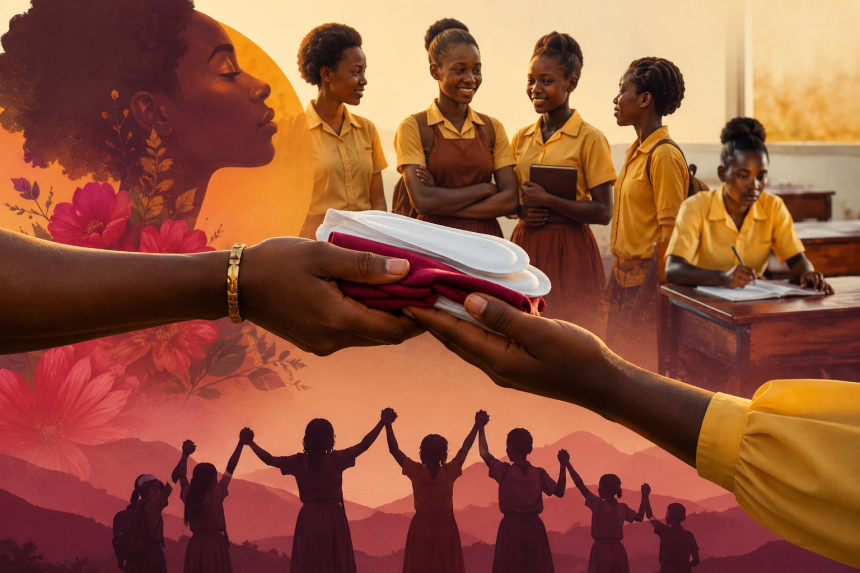
Every month, millions of Ghanaian girls and women experience menstruation, a natural biological process that should never prevent anyone from pursuing education, work, or social activities.
Yet for many, menstruation is accompanied by anxiety, shame, and financial hardship because they cannot afford sanitary products or access proper menstrual hygiene facilities. This challenge, known as period poverty, continues to undermine the health, dignity, and future of many girls across Ghana.
Imagine a 14-year-old girl in a rural community who misses school every month because her family cannot afford sanitary pads. Instead, she resorts to using old cloth, tissue paper, or other unsafe materials, exposing herself to infections and discomfort. After missing several days of lessons each month, her academic performance declines, and eventually, she may lose confidence in her education altogether. This is the lived reality of thousands of girls in Ghana.
Period poverty extends beyond the inability to purchase sanitary products. It also includes inadequate access to clean water, sanitation facilities, private toilets, and accurate menstrual health education. Deep-rooted cultural myths and taboos surrounding menstruation often discourage open conversations, leaving many girls uninformed and embarrassed about a normal aspect of life.
The consequences are far-reaching. Girls who lack menstrual hygiene products are more likely to miss school, while women may miss work or withdraw from community activities. Poor menstrual hygiene practices can also increase the risk of reproductive and urinary tract infections. Beyond the physical effects, many girls suffer emotional distress, low self-esteem, and social isolation because they fear being ridiculed or stigmatized.
Fortunately, Ghana has witnessed encouraging efforts from government agencies, civil society organizations, schools, faith-based organizations, and development partners to address this challenge. Menstrual health campaigns, pad donation exercises, community education programmes, and advocacy for tax reductions on sanitary products are helping to raise awareness. Some organizations have also introduced reusable sanitary pads and menstrual education programmes in underserved communities, providing sustainable solutions for vulnerable girls.
However, much more remains to be done. Ending period poverty requires a collective national commitment.
The Government of Ghana can play a leading role by making sanitary products more affordable through tax relief or subsidies and ensuring that public schools have adequate water, sanitation, and hygiene (WASH) facilities. Schools should integrate comprehensive menstrual health education into health and life-skills programmes so that both boys and girls understand menstruation and help eliminate stigma.
Parents also have a responsibility to create safe spaces for open conversations at home. Girls should grow up understanding that menstruation is healthy and natural, while boys should be educated to respect and support their female classmates and siblings rather than mock them.
Communities, traditional leaders, and religious institutions can challenge harmful myths and cultural misconceptions that portray menstruation as something shameful or unclean. By promoting open dialogue, communities can create supportive environments where girls feel confident and accepted.
The private sector also has an important role to play. Manufacturers and corporate organisations can support menstrual health through corporate social responsibility initiatives by donating sanitary products to schools, supporting local production of affordable pads, and investing in menstrual hygiene education.
The media, too, can amplify the conversation. Through documentaries, feature stories, radio discussions, and social media campaigns, journalists can educate the public, highlight success stories, and advocate for policies that prioritise menstrual health. Accurate and sensitive reporting can help normalise conversations around menstruation and encourage positive behavioural change.
Individuals are not left out. Every Ghanaian can contribute by supporting pad donation drives, mentoring young girls, volunteering in menstrual health campaigns, or simply speaking openly to break the silence surrounding menstruation.
Ending period poverty is not merely a women’s issue—it is a human rights, health, education, and development issue. Every girl deserves the opportunity to attend school confidently without worrying about managing her period. Every woman deserves access to safe, affordable menstrual products and hygienic facilities.
As Ghana strives to achieve the Sustainable Development Goals, particularly SDG 3 (Good Health and Well-being), SDG 4 (Quality Education), SDG 5 (Gender Equality), and SDG 6 (Clean Water and Sanitation), tackling period poverty must remain a national priority.
Through collective action, stronger policies, education, compassion, and sustained investment, Ghana can build a future where no girl misses school because of her period, no woman is denied dignity because of menstruation, and menstrual hygiene becomes a basic right enjoyed by all.
When we end period poverty, we do more than provide sanitary pads; we restore dignity, unlock opportunities, and empower generations of girls and women to reach their full potential.
………………………………………..
This “Ending Period Poverty” campaign is led by some M.A. Development Communication students of the University of Media, Arts and Communication (UniMAC).