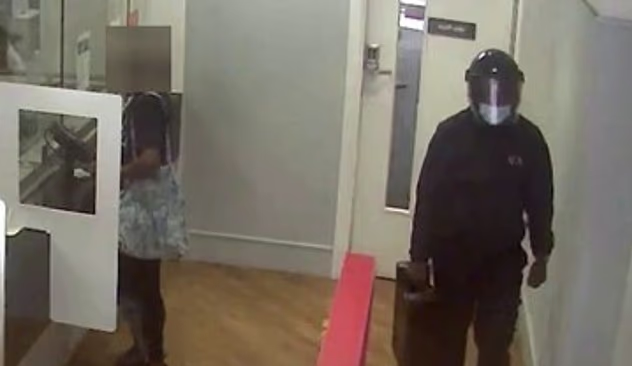
A former Ghanaian security guard has been sentenced to three years and four months in prison in the United Kingdom after impersonating a cash collection officer, stealing more than £117,000 from a London bank and fleeing to Ghana, where he remained for nearly four years before his arrest upon returning to Britain.
The convict, Kwabena Kissi, 40, admitted to fraud by false representation after carrying out the elaborate deception at a Santander bank branch in Brixton, south London, on July 5, 2022.
He was sentenced at Snaresbrook Crown Court on Wednesday.
Court proceedings heard that Kissi, who had worked for G4S between 2019 and 2020, exploited his insider knowledge by wearing his former security uniform, along with a crash helmet and face covering, to convince bank staff that he was the legitimate cash collection officer.
Believing he was carrying out a routine collection, unsuspecting employees escorted him into a secure area and handed over bags containing £117,200 in cash.
Although one employee remarked that he had arrived earlier than expected, Kissi reportedly replied that he was working “a new route,” which allayed suspicion.
The fraud was only uncovered when the genuine G4S cash collection officer arrived later than scheduled for the pickup.
After leaving the bank, CCTV footage showed Kissi changing out of his uniform, transferring the stolen cash into a bin bag and leaving the area in an Uber that he booked using his own name and mobile phone number—a mistake that later proved crucial to the investigation.
The following day, he boarded a flight to Accra, where he remained for almost four years. His lawyer told the court that he had travelled to Ghana to care for his seriously ill mother, who later died from heart failure.
However, sentencing Judge Rosa Dean rejected that explanation as the primary reason for his departure.
“You exploited your inside knowledge,” the judge told Kissi, adding that his actions left bank employees “extremely upset.”
She also pointed to the irony that ultimately led to his downfall.
“You tripped yourself up by booking an Uber in your own name with a phone number known to police.”
Kissi returned to the UK on March 26, 2026, and was immediately arrested by detectives waiting for him at Gatwick Airport.
Detective Constable Stuart Ponder, who led the investigation, said officers had feared Kissi might never return to Britain after leaving the country shortly after the robbery.
“We identified Kissi as our suspect thanks to extensive CCTV enquiries and phone evidence that linked him to the minicab he used as his getaway vehicle,” he said.
“We kept our eyes on him and officers were at the airport to arrest Kissi off the plane when he returned earlier this year. When they searched him, he still had the same phone he’d been using when he committed his heist in 2022.”
Kissi initially denied involvement, claiming police had mistaken his identity. Investigators, however, matched the mobile phone recovered during his arrest with evidence gathered during the original investigation, linking him directly to the offence.
He pleaded guilty to fraud by false representation in April, while a separate charge of possessing criminal property was later dropped.
The case has been described by investigators as an example of how careful police work, CCTV analysis and digital evidence can eventually bring fugitives to justice, even years after a crime has been committed.