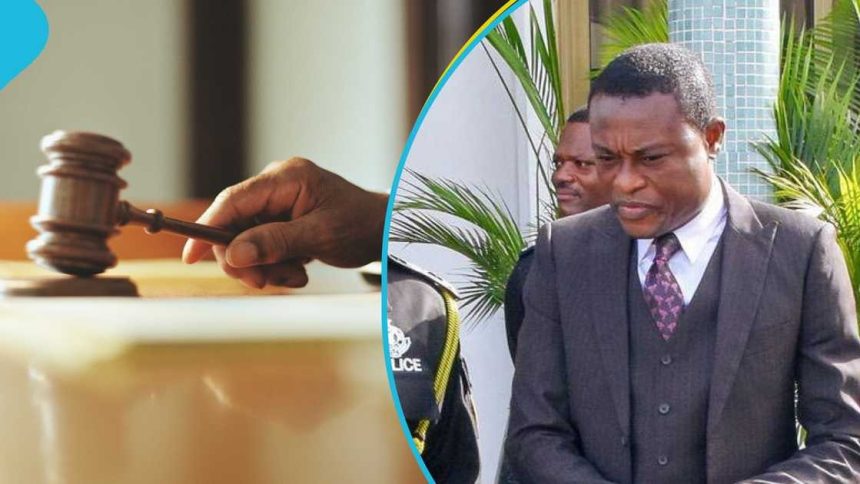
The High Court in Accra has thrown out an application by the Office of the Special Prosecutor (OSP) that sought to pause the enforcement of a ruling limiting its ability to prosecute cases without approval from the Attorney General.
Justice Eugene John Nyante Nyadu of the High Court’s General Jurisdiction Division 10 delivered the decision on Monday, June 15. The court refused to grant the OSP’s request and allowed the earlier ruling to remain active.
The OSP had asked the court to suspend the effect of a previous judgment that questioned its power to independently bring criminal charges. The judge, however, declined the request, leaving the earlier decision in force.
Following the ruling, the OSP announced that it would quickly file another application for a stay of execution at the Court of Appeal.
The office is also pursuing separate appeals at both the Supreme Court and the Court of Appeal to challenge the same decision.
At the centre of the dispute is whether the OSP can prosecute cases on its own under the 1992 Constitution or whether only the Attorney General holds that authority under Article 88.
The controversy began with a High Court judgment delivered on 15 April 2026. The court ruled that the OSP can investigate corruption and related offences, but it cannot prosecute cases without approval from the Attorney General.
The court further ordered that all cases initiated by the OSP must be handed over to the Attorney General’s Department. It also declared past prosecutions without that approval invalid.
Special Prosecutor Kissi Agyebeng has rejected the ruling. He argues that the court went beyond its powers and effectively struck down parts of the Office of the Special Prosecutor Act, 2017 (Act 959).
The OSP insists that its legal mandate under the Act remains valid and continues to apply.
Meanwhile, the matter is also before the Supreme Court in a separate constitutional case filed by private citizen Noah Ephraem Tetteh Adamtey. The case challenges whether the OSP should have independent prosecutorial powers at all.
The Attorney General, who is the nominal defendant in that case, has supported the plaintiff’s argument. The Attorney General maintains that Parliament overstepped its constitutional limits by giving the OSP independent prosecution powers.
The Supreme Court has allowed 14 civil society groups, including CDD Ghana and Transparency International, to join the case as interested parties. They are expected to help the court address the constitutional questions involved.
The final outcome of these cases could reshape how the Office of the Special Prosecutor operates and may significantly affect Ghana’s broader anti-corruption framework.