Organised Labour has raised concerns over what it describes as the increasing use of court injunctions by the National Labour Commission (NLC) to halt strike actions, arguing that the practice undermines workers’ constitutional and internationally recognised right to industrial action.
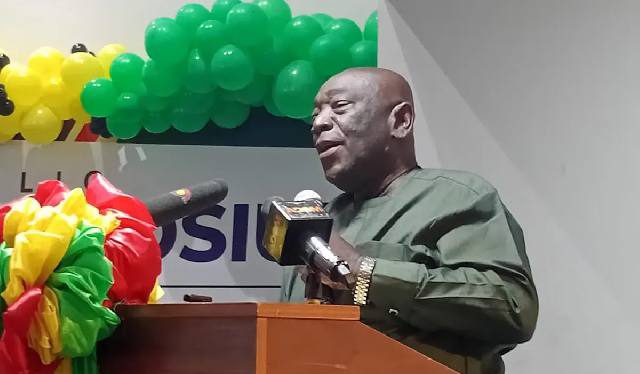
The concerns were expressed by the Secretary-General of the Ghana Trades Union Congress (TUC) and spokesperson for Organised Labour, Joshua Ansah, during a forum held to assess the National Labour Commission’s performance over the past 20 years.
According to Mr. Ansah, labour unions are becoming increasingly worried about what they see as the Commission’s tendency to seek court injunctions whenever workers declare their intention to embark on strike action, even after meeting the legal requirement of notifying the authorities.
He stressed that the right to strike is recognised under international labour conventions and should not be restricted without justifiable reasons.
He explained that organised labour only resorts to industrial action after exhausting all available channels for dialogue and negotiation with employers or the government.
Mr. Ansah warned that the continued use of injunctions to prevent strikes could weaken confidence in Ghana’s labour relations system and create unnecessary friction between employers and employees.
He also expressed concern over growing reports of job losses and dismissals across several sectors, describing the trend as worrying for the country’s workforce.
However, former Executive Secretary of the National Labour Commission, Justice Asuman-Adu, defended the Commission’s actions, insisting that court injunctions are not issued arbitrarily but are based on provisions contained in Ghana’s labour laws.
He explained that where employers or state institutions fail to implement directives issued by the Commission, labour unions are expected to return to the NLC for further intervention rather than immediately declaring a strike.
According to Justice Asuman-Adu, if unions fail to follow that process and proceed with industrial action, the Commission is empowered by law to apply to the courts for an injunction to stop the strike.