The Foundation for Security and Development in Africa (FOSDA) has called on governments worldwide to demonstrate stronger political commitment and take decisive steps to curb the diversion of small arms and light weapons (SALW) into illicit markets, warning that the trend continues to fuel insecurity across the globe.
The appeal was made by the Executive Director of FOSDA, Madam Theodora Williams Anti, during the Ninth Biennial Meeting of States (BMS9) on the United Nations Programme of Action on Small Arms and Light Weapons (UNPoA) and the International Tracing Instrument (ITI).
The meeting is taking place against a backdrop of rising global instability driven by armed conflicts, terrorism, violent extremism, and organised crime.
Madam Anti noted that despite years of international cooperation and the existence of robust regulatory frameworks, the diversion of legally manufactured weapons into illegal circulation remains a persistent and dangerous challenge.
She questioned how non-state armed groups, criminal organisations, and terrorist networks continue to access weapons even under existing national, regional, and international controls.
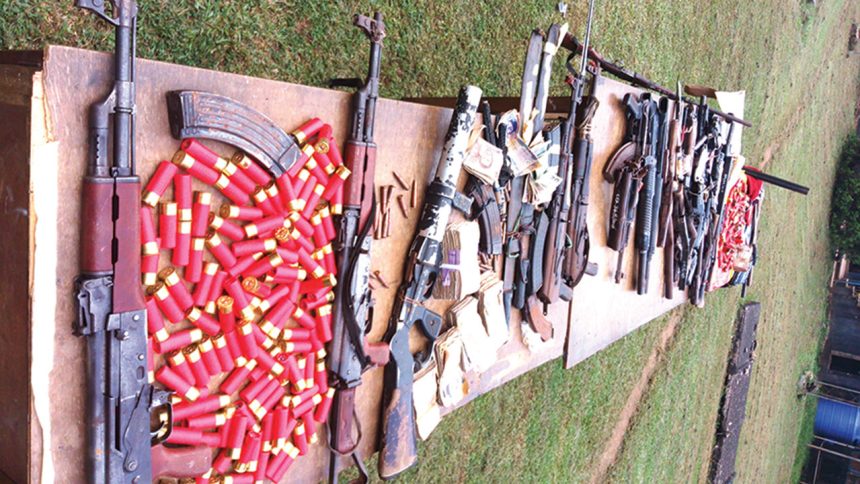
According to her, most illicit weapons are not produced illegally but are diverted from legal sources, including manufacturing systems, lawful transfers, or state stockpiles before ending up in the hands of unauthorised users.
“This leakage from legal to illicit channels continues to undermine peace efforts, fuel conflicts, and strengthen criminal networks,” she said, stressing that addressing diversion must be treated as a priority in global arms control efforts.
Across Africa, the impact of illicit small arms is particularly severe. Weapons trafficking continues to drive conflicts in regions such as the Sahel and the Gulf of Guinea, where armed groups exploit weaknesses in border security, stockpile management, and regulatory enforcement.
The consequences, she said, are far-reaching—communities are displaced, livelihoods are destroyed, development gains are reversed, and public trust in state institutions is weakened.
FOSDA emphasised that tackling the diversion of arms is not only a security issue but also a development and governance imperative. It is central to achieving long-term peace and stability on the continent and aligns with the African Union’s Silencing the Guns initiative.
The organisation also highlighted the importance of strengthening implementation of global and regional instruments such as the UNPoA, ITI, and ECOWAS Convention, which provide frameworks for improving accountability, regulation, and control of arms transfers.
Madam Anti further drew attention to emerging technological threats, including 3D-printed firearms and modular weapons, which are reshaping the landscape of illicit arms production. She called for increased investment in research, capacity building, and collaboration with the private sector to ensure technology supports, rather than undermines, arms control efforts.
She urged states to strengthen export risk assessments, end-user verification, post-shipment checks, and stockpile management systems to close loopholes in the arms supply chain.
Ultimately, she stressed that the success of global arms control efforts will not be measured by declarations or meetings, but by a tangible reduction in weapons reaching criminals and armed groups, and improved safety for communities worldwide.