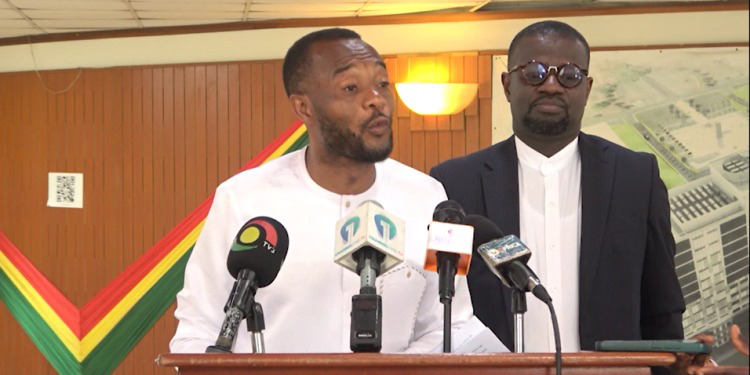
NPP MP for Weija-Gbawe, Jerry Ahmed Shaib, has accused the Mahama administration of ineptly handling Ghana’s Domestic Gold Purchase Programme, asserting that the government has transformed a viable policy into a substantial financial liability.
Shaib stated that the programme, which was initiated under the leadership of Nana Addo Dankwa Akufo-Addo, was a prudent decision aimed at utilising Ghana’s gold to bolster reserves and safeguard the cedi.
He acknowledged former Vice President Dr Mahamudu Bawumia as the “brain behind its design” and noted that the initial policy was visionary.
“The problem is the sheer incompetence with which this government has managed it since taking over,” Shaib remarked in a social media post.
He referenced the IMF’s Ghana: Selected Issues report, which he claimed indicated that the gold programme incurred losses exceeding $1.7 billion in 2025 alone, equating to approximately 1.5 percent of Ghana’s GDP.
Shaib pointed out that these losses have contributed to the Bank of Ghana’s severe negative equity position.
He also mentioned the World Bank’s August 2026 Ghana Economic Update, which he said characterized GoldBod-related operations as “a significant and insufficiently monitored risk” to the economy.
According to Shaib, the World Bank further expressed concerns regarding the tracking of gold reserves under the programme in comparison to other reserves and identified GoldBod and delays in reforms as ongoing risks.
He emphasized that these concerns should be considered alongside vulnerabilities in certain banks and specialized deposit-taking institutions, COCOBOD’s financial challenges, and Ghana’s susceptibility to fluctuations in gold prices.
Shaib underscored that his critique was not aimed at the original policy.
“This is not a case against Bawumia’s original vision,” he stated, contending that the issue lies with the current government’s oversight of the programme.
He urged the government to clarify why a policy designed to enhance Ghana’s reserves has instead led to such considerable losses.