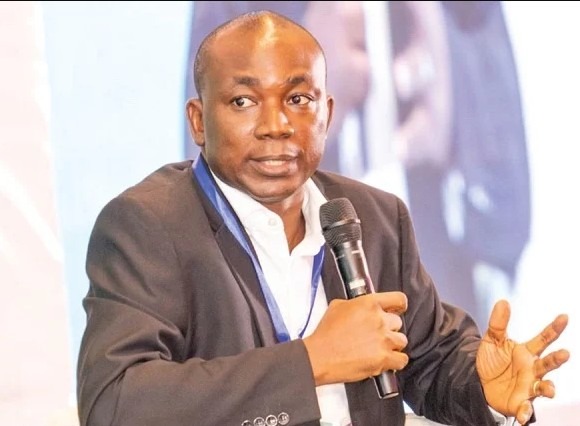
Economist Professor Godfred Bokpin has warned that Ghana is showing signs of becoming a failed state, pointing to prolonged power outages and persistent infrastructure deficits as evidence of weakening state capacity.
He cautioned that these challenges are increasing the cost of doing business and eroding investor confidence.
His remarks follow the widespread power outage that affected parts of Accra on Wednesday, July 29, 2026.
Speaking at the Prudential Bank Business Seminar on Transforming Cross-Border Trade, Professor Bokpin described the lengthy blackout in the national capital as unacceptable.
“We are becoming a failed state. Can you imagine in a serious country, your capital has been without power for almost six hours? That is not something we should talk about as theory. That is serious,” he said.
Professor Bokpin questioned Ghana’s readiness to deal with such disruptions, warning that an unreliable electricity supply makes it difficult for businesses to plan and discourages potential investors.
“What is the backup? What is the plan? How do we move forward with this? How do investors plan with this? How do investors do their business model with this? We should not allow this to continue,” he stated.
He argued that when the state fails to provide essential public services such as electricity, water, healthcare and education, the private sector is forced to step in at a much higher cost, placing additional financial pressure on businesses and households.
“When the state fails on the provision of basic services like water, education, health, the private sector steps in at a higher cost and that is why there’s a reason why the state cannot fail and the state should not fail because it is the reason why the state is conceptualized as a tax state,” Professor Bokpin remarked.
“The state must provide reliable power,” he stressed, adding that delivering basic public services remains a fundamental responsibility of government.
Professor Bokpin also called for increased investment in infrastructure, estimating that Ghana needs to invest at least US$10 billion annually over the next decade to bridge its infrastructure gap.
He urged the government to rely more on public-private partnerships (PPPs) to finance major infrastructure projects instead of depending solely on public funds.
“The state should not try to do all roads in this country. We should leverage on private capital… PPP. That’s the only way to go,” he said.