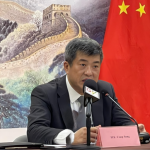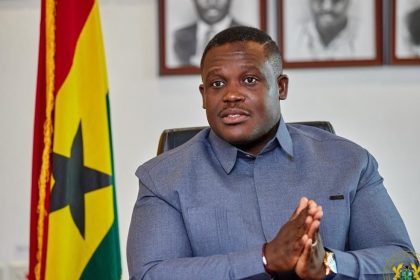
The opposition New Patriotic Party (NPP) has petitioned members of the diplomatic community in Ghana over what it says is increasing political intimidation and suppression of free speech under President John Dramani Mahama’s administration.
In a petition released on Tuesday, May 19, 2026, the party accused the government of using state institutions to target political opponents, journalists, activists, and social media users who criticise the government.
The petition was signed by NPP General Secretary Justin Kodua Frimpong and Minority Leader Alexander Afenyo-Markin. They warned that Ghana’s democratic image is being threatened.
“The Ghanaian people are increasingly witnessing a deliberate and systematic weaponisation of state institutions against political opponents, journalists, social media commentators, and dissenting voices,” portions of the petition stated.
According to the NPP, the country is slowly returning to what it described as a “culture of silence,” where fear, intimidation, and politically motivated court cases are allegedly being used to silence critics and opposing voices.
The party also claimed that the government is indirectly bringing back criminal libel laws through Sections 207 and 208 of the Criminal Offences Act, even though Ghana repealed the Criminal Libel and Seditious Laws in 2001 under former President John Agyekum Kufuor.
“Today in Ghana, opposition political communicators, journalists, activists, ‘Facebookers’ and ‘ TikTokers ‘ are increasingly being arrested, detained, prosecuted, and intimidated for comments critical of government officials or state institutions.
“The state’s response to political criticism has shifted from democratic engagement to criminal prosecution,” the petition said.
The NPP pointed to the recent arrest and prosecution of its Bono Regional Chairman, Kwame Baffoe, over comments he allegedly made about the judiciary.
The party argued that in a democratic country, people should be free to criticise public officials, including judges.
“Criticism of public officials, including members of the judiciary, is not a crime in a constitutional democracy,” the party said.
The NPP also accused state security agencies such as the Bureau of National Investigations (BNI), Economic and Organised Crime Office (EOCO), and the Ghana Police Service of carrying out politically motivated arrests and intimidation.
According to the petition, some opposition members have faced “Rambo-style arrests, midnight raids, dawn invasions of private residences, and prolonged detentions under onerous and punitive bail conditions”.
The party also expressed concern about judicial independence following the removal of Chief Justice Gertrude Torkornoo. The NPP claimed the situation has created fear among judges and legal professionals.
“There is now a growing public perception that judges who render decisions unfavourable to the Executive risk professional victimisation or political retaliation,” the petition stated.
The NPP is therefore calling on diplomats, development partners, and international human rights groups to closely watch developments in Ghana and support freedom of expression, judicial independence, due process, and multi-party democracy.