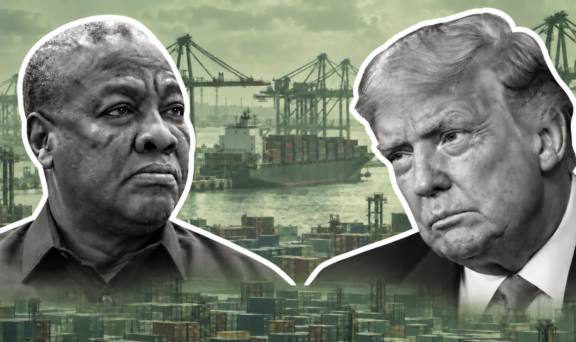
Ghana’s decision to pursue partner status in the BRICS economic bloc has sparked concerns about potential trade consequences following repeated tariff threats by US President Donald Trump against countries associated with the grouping.
Foreign Affairs Minister Samuel Okudzeto Ablakwa has confirmed that Cabinet has approved Ghana’s move to become a BRICS partner, with full membership being considered as a future goal.
Mr Ablakwa said he had communicated the decision to India’s External Affairs Minister, Dr Subrahmanyam Jaishankar, and that other international partners had also been informed. He maintained that Ghana’s foreign policy would remain non-aligned and focused on national interests.
According to the minister, Ghana’s interest in BRICS predates the current administration, with a Cabinet-appointed committee recommending membership in 2023.
The government believes closer engagement with the bloc could attract investment, expand development partnerships and support industrialisation. Four of Ghana’s five largest export destinations in 2025—China, India, South Africa and the United Arab Emirates—are BRICS members.
However, Trump has previously threatened a 100% tariff against BRICS countries that attempt to replace the US dollar in international trade. In July 2025, he also warned of an additional 10% tariff against countries pursuing what he described as the bloc’s “anti-American policies”.
It remains unclear whether either threat would apply to Ghana. The two warnings have different conditions and do not automatically establish that seeking BRICS partner status would trigger the tariffs.
The debate has gained further relevance following arrangements that allow Ghanaian importers to pay Chinese suppliers in cedis while payments are received in yuan. Stanbic Bank is piloting the service, with GCB expected to introduce a similar facility.
Meanwhile, questions remain over reported tariff concessions Ghana may have offered China in exchange for improved market access. Although cheaper machinery and raw materials could benefit local businesses, reduced tariffs on competing finished goods could put domestic manufacturers under pressure.
The government is therefore being urged to publish the policy paper underpinning its BRICS decision, explaining the expected economic benefits, potential risks and measures to protect local industries and Ghanaian exporters.