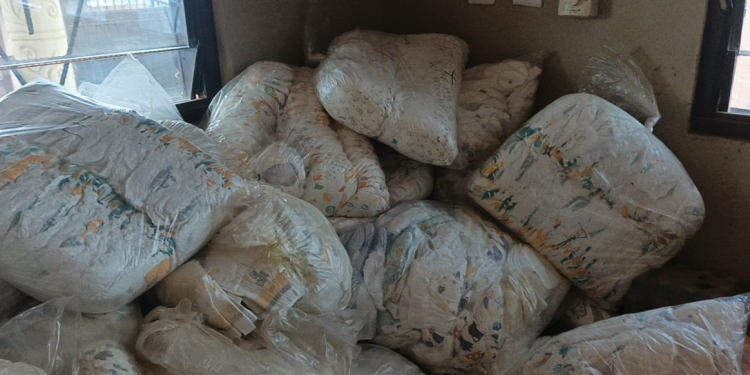
The Consumer Protection Agency (CPA) has commended the Food and Drugs Authority (FDA) for intercepting and destroying 28 bales of second-hand and low-quality diapers, popularly known as “bale diapers”.
The agency described the operation as a significant step towards safeguarding infants and protecting consumers from potentially unsafe baby-care products.
Nana Prempeh Okogyeabour Aduhene, Executive Director of Mediation and Arbitration at the CPA, praised the FDA for its swift enforcement action, stressing the importance of preventing unhygienic products from entering the Ghanaian market.
The 28 bales of diapers were discovered in a 40-foot container and subsequently destroyed through incineration at Shai Hills as part of the FDA’s nationwide crackdown on unwholesome baby-care products.
READ ALSO: FDA, CPA confiscate over 4m fake baby diapers across Ghana
The destruction follows growing concerns about the sanitary conditions under which second-hand diapers are handled, stored and transported before reaching consumers.
According to the FDA, bale diapers are often transported in loose packaging, exposing them to potential contamination from moisture, dust and pests.
These conditions could encourage the growth of harmful bacteria and fungi, posing health risks to infants, who are particularly susceptible to infections.
The Authority also revealed that some importers had allegedly attempted to evade regulatory checks at the ports by falsely declaring containers carrying the prohibited diapers as ordinary tissue paper.
It warned that individuals involved in importing the banned products would face legal and regulatory sanctions.
The FDA further indicated that importers of the prohibited diapers would be responsible for the cost of their safe disposal.
Commending the Authority’s efforts, Mr Aduhene urged consumers to exercise caution when purchasing baby-care products and avoid items whose safety and quality cannot be guaranteed.
He encouraged the public to patronise only products that have undergone the necessary regulatory checks and received approval from the FDA.
The CPA emphasised that sustained cooperation among regulatory agencies, consumer advocacy groups and the general public would be crucial in preventing unsafe products from entering the market.
It added that collective efforts were necessary to strengthen consumer protection and ensure that products available to the Ghanaian public meet the required safety standards.