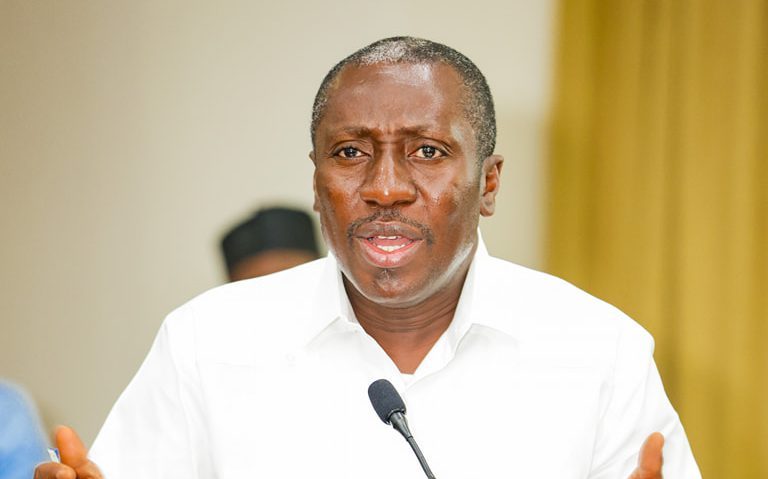
Minority Leader Alexander Afenyo-Markin has said Ghana’s growing youth unemployment problem could have been handled better if the government had continued or expanded the One District One Factory (1D1F) programme.
According to him, stopping the industrialisation policy introduced under the administration of Nana Addo Dankwa Akufo-Addo has created a big gap in efforts to support businesses, create jobs, and encourage entrepreneurship.
During his interview today, May 12, Mr. Afenyo-Markin said he was disappointed that the government had not focused on the right priorities, even though it inherited an economy that was beginning to recover.
“I think that the government did not take advantage of the goodwill that greeted it upon assumption of office. There was a huge goodwill, and supporting pillars of the economy had been well put in place,” he said.
He explained that one of the most important policies under the previous government was the 1D1F initiative, which encouraged private companies to invest in factories through tax incentives and government support.
“The 1D1F was one key policy decision that they should have sustained because in Ghana today, our main problem is unemployment,” he stated.
Mr. Afenyo-Markin also said the government has not clearly explained what new policy has replaced the programme after it was discontinued.
He revealed that during a recent meeting between the Minority Caucus and the Association of Ghana Industries (AGI), some business leaders complained about projects under the 1D1F initiative that have stalled.
According to him, the AGI President mentioned a watermelon processing factory in Walewale that is said to be about 90% complete, but has stopped because of a lack of government support.
He added that the Minority Caucus has filed a parliamentary question asking the Minister for Trade to explain the government’s plans for supporting the private sector and to clarify what alternatives have been introduced after ending the 1D1F programme.