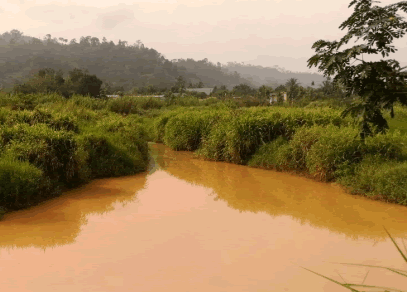
Ghana could be forced to import water in the future if urgent measures are not taken to protect the country’s rivers and other water sources, a scientist at the Council for Scientific and Industrial Research-Water Research Institute (CSIR-WRI) has warned.
Dr. Franco Enobrenaco, a scientist with the Groundwater and Geoscience Division of CSIR-WRI, said about 60% of Ghana’s water bodies are currently polluted.
He disclosed this during a presentation at the CSIR-WRI Mid-Year Review 2026, held under the theme, “Can Ghana Heal Her Waters? Toward Sustainable Remediation of Polluted Water Bodies.”
Dr. Enobrenaco identified illegal mining, popularly known as galamsey, as one of the major causes of pollution affecting Ghana’s rivers and groundwater.
He warned that the situation could become more serious as the country’s population continues to grow, putting increasing pressure on the remaining water resources.
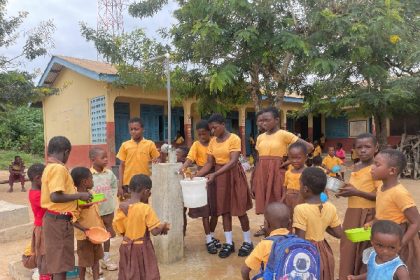
According to him, protecting the estimated 40% of water bodies that remain relatively less polluted should be treated as an urgent national priority because continued pollution could further reduce Ghana’s access to safe water.
He proposed a two-pronged approach involving a reduction in illegal mining and strict enforcement of mining laws.
He also called for alternative livelihoods for people who depend on illegal mining to prevent them from returning to the activity.
Dr. Enobrenaco stressed that efforts to clean polluted water would have limited impact if pollution continues at the source.
He also advocated the use of different treatment methods rather than relying on a single technology to restore contaminated water bodies.
The scientist noted that polluted water poses risks to public health, agriculture and industry. Crops irrigated with contaminated water, he explained, could absorb harmful substances that may eventually enter the human food chain.
He further pointed to the high cost of treating polluted water and warned that industries and energy production could also be affected.
However, Dr. Enobrenaco said Ghana could still reverse the damage, citing the restoration of the Thames River in the United Kingdom as an example.