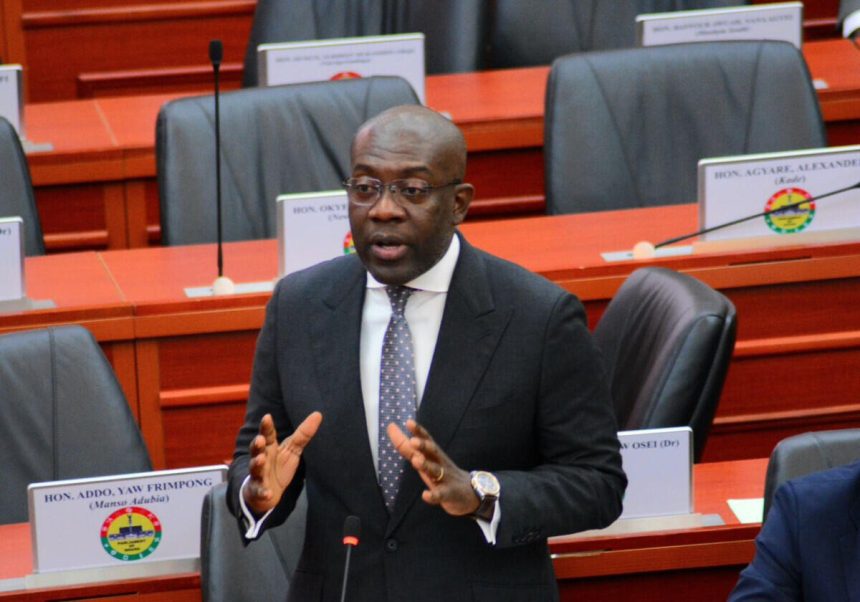
The Member of Parliament for Ofoase-Ayirebi, Kojo Oppong Nkrumah, has called for a major rethink of Ghana’s strategy for addressing youth unemployment, warning that training young people without clear job pathways could worsen frustration among the youth population.
Speaking during parliamentary discussions on unemployment, the former minister outlined a five-point reform agenda aimed at improving the effectiveness of government interventions in job creation.
He argued that Ghana’s current approach often focuses heavily on training and skills development, but fails to ensure that beneficiaries actually transition into employment or income-generating opportunities.
According to him, this gap between training and employment must be urgently addressed to prevent rising disillusionment among young people.
A key part of his proposal is the introduction of transparent monitoring systems for all job creation programmes.
He suggested that the government should regularly publish performance scorecards showing how many jobs are actually created under each initiative, to improve accountability and public trust.
Oppong Nkrumah also recommended a clear separation between skills training programmes and direct job creation schemes. He explained that both are important, but they require different funding models and implementation strategies to be effective.
He further called for stronger private sector involvement in tackling unemployment.
Instead of relying mainly on public sector hiring, he urged the government to focus on creating a stable and attractive business environment that encourages private investment and job expansion.
In addition, the lawmaker highlighted apprenticeship as a key solution to youth joblessness.
He proposed the development of a structured national apprenticeship system supported by certification, shared funding between government and employers, and clear pathways into formal employment or entrepreneurship.
Oppong Nkrumah also stressed the importance of reliable labour market data. He suggested the establishment of a national employment information system that tracks job vacancies, skills shortages, and employment trends across districts.
Such data, he said, would help the government design more targeted and effective policies.
He concluded by urging policymakers to move beyond political discussions and focus on practical, measurable solutions that deliver real jobs for young people.
According to him, only a coordinated, data-driven approach can address Ghana’s growing unemployment challenge in a sustainable way.