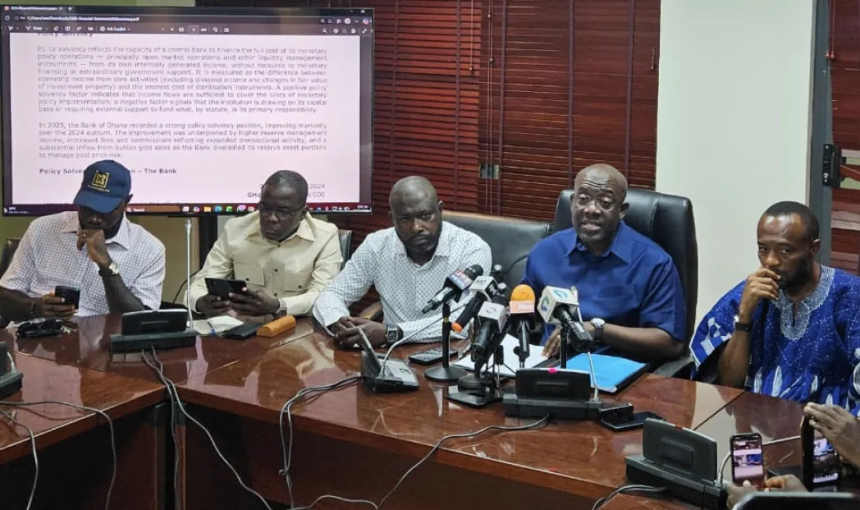
The Minority in Parliament has criticised the decision to hold a meeting between Members of Parliament and the Governor of the Bank of Ghana (BoG), Dr. Johnson Asiama, behind closed doors, describing the move as a threat to transparency and parliamentary accountability.
The disagreement arose after the Majority requested that the Committee of the Whole sitting be conducted in camera.
First Deputy Speaker Bernard Ahiafor approved the request and directed journalists to leave the chamber before the engagement began.
Speaking to journalists after the ruling, Ofoase/Ayirebi MP and former Information Minister, Kojo Oppong Nkrumah, questioned the basis for excluding the media, arguing that previous appearances by Bank of Ghana governors before Parliament had been open to public coverage.
He maintained that there was no justification for holding the meeting in private, especially since the Governor’s written responses to parliamentary questions had already been published on Parliament’s Order Paper and were therefore accessible to Members of Parliament.
According to Oppong Nkrumah, the issues to be discussed were already in the public domain and should have been explained openly to Ghanaians rather than behind closed doors.
He further claimed that the Governor’s responses indicate the Bank of Ghana has not used its foreign exchange reserves to support the cedi since August 2024.
Instead, he alleged, the central bank has relied on proceeds from its domestic gold purchase programme to intervene in the foreign exchange market.
The Minority said it had intended to seek further clarification from the Governor on the Bank’s interventions in the currency market, its financial position and other figures contained in its reports.
In protest against the decision to exclude the media, the Minority announced its withdrawal from the Committee of the Whole sitting.
However, Oppong Nkrumah said the caucus leadership would continue engaging parliamentary authorities in the hope of having the proceedings reopened to the public.
He stressed that Parliament has a duty to conduct its oversight responsibilities transparently, particularly when dealing with state institutions such as the central bank, whose decisions directly affect the country’s economy.