Ghana could soon witness a major shift in local governance following Cabinet’s approval of sweeping decentralisation reforms aimed at giving citizens a greater role in choosing their local leaders.
The proposed changes include plans to end the presidential appointment of metropolitan, municipal and district chief executives (MMDCEs) and replace the system with the direct election of district chief executives on a non-partisan basis.
The government also intends to review the Local Governance Act and introduce stronger accountability measures at the local level.
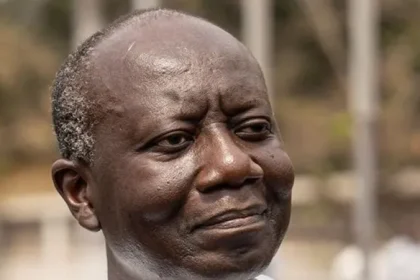
The Executive Secretary of the Inter-Ministerial Coordinating Committee on Decentralisation (IMCCoD), Dr. Gameli Kewuribe Hoedoafia, revealed the plans in an interview while discussing the National Decentralisation Policy and Strategic Framework (2026-2030).
According to him, the reforms are designed to deepen democratic participation, improve service delivery and strengthen local governance.
He noted that the current crop of MMDCEs appointed by President John Dramani Mahama may be the last under the existing constitutional arrangement.
Dr. Hoedoafia explained that the reforms seek to amend Article 243(1) of the 1992 Constitution, which currently allows the President to appoint MMDCEs subject to assembly approval. Under the new proposal, voters would choose district chief executives directly.
“There shall be a district chief executive for every district who shall be elected by the people,” he said.
He added that the government opted for a non-partisan model after nationwide consultations showed many Ghanaians preferred local elections to remain free from party politics.
Activities related to constitutional amendments and referenda are expected to take place between 2027 and 2029.
Dr. Hoedoafia also disclosed that authorities are reviewing the Local Governance Act, 2016 (Act 936), with a new bill expected to reach Parliament soon.
“Soon, we will have a new local governance law. The current one, Act 936, is being reviewed, and it is captured in the policy,” he said.
“By the end of this year, we should have something in Parliament, and, if possible, by the first quarter of 2027, we will have a new law,” he added.
He said the reforms would also streamline planning functions at the assembly level, improve coordination and help address challenges related to zoning, permitting and land use.
To strengthen transparency, the government plans to establish a local accountability platform where MMDCEs and other public officials will explain how they use public resources.
“We want duty bearers to explain to the people at the local level how resources have been used,” he said.
The policy further proposes increasing the constitutional minimum allocation to the District Assemblies Common Fund from five per cent to 7.5 per cent to boost local development and improve governance outcomes.