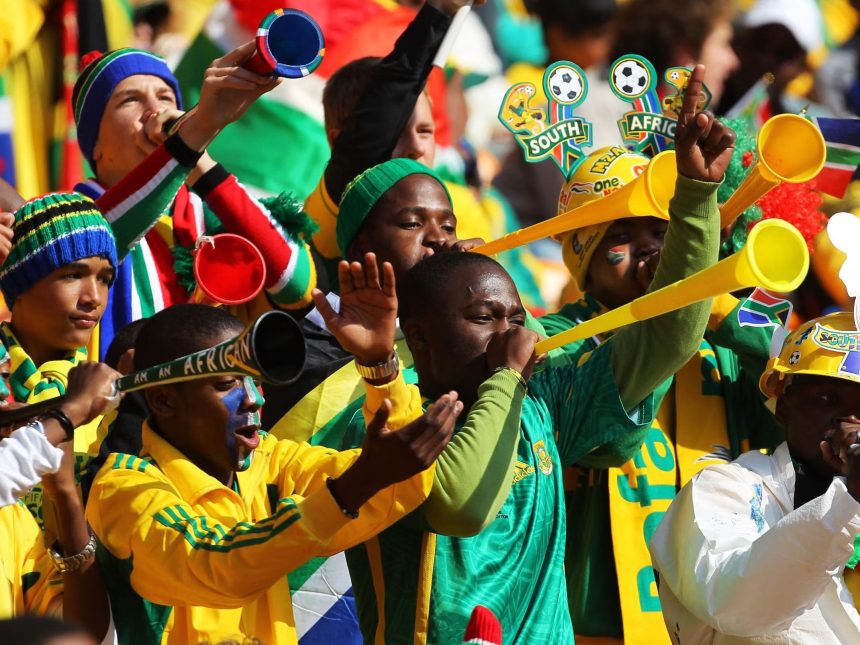
FIFA has officially banned vuvuzelas, air horns, whistles, and other loud noise-making devices from all stadiums hosting matches at the 2026 FIFA World Cup.
The decision is part of FIFA’s updated Stadium Code of Conduct for the tournament, which will be jointly hosted by the United States, Canada, and Mexico.
The governing body says the move is aimed at reducing excessive noise that could disrupt players on the pitch, affect spectators’ enjoyment, and interfere with television and broadcast coverage of matches.
Vuvuzelas became globally famous during the 2010 FIFA World Cup in South Africa. The long plastic horns created a constant buzzing sound that many fans considered part of the tournament’s unique atmosphere.
However, they also drew widespread criticism from players, coaches, commentators, and television viewers, who argued that the noise made communication difficult and sometimes drowned out the excitement inside stadiums.
Under the new regulations, all 16 World Cup venues will prohibit vuvuzelas, air horns, whistles, and similar devices capable of producing excessive noise.
FIFA has also warned that spectators who violate the rules could be denied entry or removed from stadiums.
The ban is part of a broader set of security and fan-conduct measures introduced ahead of the expanded 48-team tournament. FIFA’s updated code also restricts laser pointers and several other items considered safety risks inside stadiums.
The decision has generated mixed reactions among football supporters. While some fans believe the ban will improve the match-day and television viewing experience, others argue that instruments such as vuvuzelas contribute to the colour, culture, and atmosphere that make football unique.