Ask anyone in Accra’s Makola Market whether they know someone who has lost money to mobile money fraud. You will not wait long for an answer. A trader whose savings were wiped out overnight by someone using a SIM card registered under a stolen identity. A driver who received a call from a number that turned out to belong to someone who had registered it using another person’s Ghana Card. A family woke up to find their mobile wallet emptied, with no legal trail to follow and no institution able to tell them who held the SIM that did it.
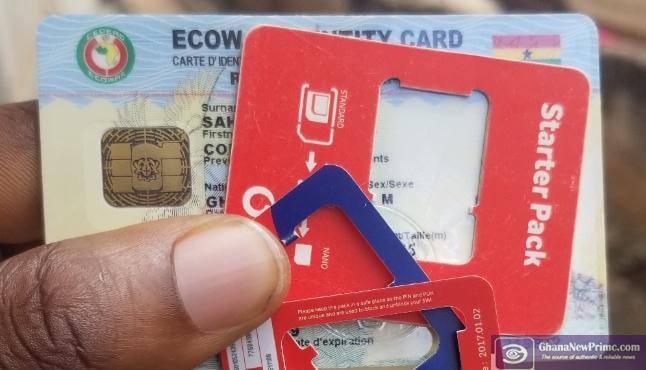
These are not isolated incidents. They are the predictable consequence of a broken system. And the reason that the system is broken, specifically, is that for fifteen years and across three successive re-registration exercises, Ghana has never once properly linked a SIM card to a verified human identity.
That sentence deserves a moment of stillness. Three exercises. Hundreds of millions of cedis spent. Millions of Ghanaians were queuing, presenting their documents, submitting to the process, trusting that it would be worth it. And at the end of all of it, according to an official audit of records collected in the 2021 to 2023 exercise, there were zero successful biometric matches against the National Identification Authority database. Not a low number. Not a worrying percentage. Zero.
The equipment telcos used during the 2022 exercise could not even speak the same technical language as the NIA’s database. Contactless scanners were deployed by telcos whose data was to be matched against a system built on contact scanners. It is like pouring water into a container with no bottom and wondering why nothing is being stored. The entire exercise, as audited, produced nothing that can be legally relied upon.
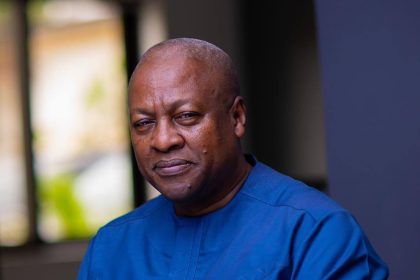
This is what Communications Minister Samuel Nartey George has inherited. This is why the 2026 re-registration exercise is not a punishment of citizens or a bureaucratic obsession. It is the only honest response to evidence that the work was never properly done.
What Is Different This Time
Critics, and there are credible ones, have argued that this is simply another round of the same failed cycle. The civil society think tank IMANI has raised pointed questions about procurement transparency, the adequacy of the legal framework and the technical contradiction between USSD self-service channels and biometric verification requirements. These are serious questions, and they deserve serious answers, not reassurances.
But set beside the three previous exercises, the 2026 framework has structural differences that matter. First, biometric verification involving real-time facial recognition and fingerprint authentication will be validated directly against the NIA database, making the NIA the single source of truth on identity. This did not happen before. Second, Sam George has explicitly stated that this is not a sole-sourced procurement, that telecommunications companies will bear the cost, and that no financial burden will fall on the Ghanaian taxpayer. Third, a new Legislative Instrument is being prepared that will, for the first time, formally govern data custody, inter-agency responsibilities and citizen rights under the exercise.
MTN Ghana, the country’s largest telecom operator, has publicly supported the exercise and committed to funding its participation within existing budgets. The company’s chief executive has confirmed that biometric verification, including fingerprint and facial recognition, will be central to the process, and that structured digital appointment systems will prevent the chaos that defined previous rounds.
The Real Problem That This Fixes
There is a specific fraud that Ghanaians rarely discuss openly because it is embarrassing and widespread. People have registered SIM cards using Ghana Cards that do not belong to them. Registered SIMs linked to identities they do not hold. In some cases, agents at registration points registered multiple SIMs under a single individual’s identity without that person’s knowledge. In other cases, SIM cards were registered using stolen or photocopied ID documents, creating a class of active mobile numbers that cannot be traced to any real, verifiable person.
This is not a small category of exceptions. It is a structural gap that fraudsters, scammers, and criminals have deliberately and systematically exploited. Until every active SIM in Ghana is linked to a verified, biometrically authenticated individual, the mobile money ecosystem will remain a hunting ground for people who wish to steal from it.
The human cost of this is not abstract. Farmers who save through mobile money lose everything. Small business owners whose working capital is wiped out by a transfer they did not authorise. Women who run market stalls and have no bank account, only a mobile wallet, which disappears because someone registered a SIM under a name that was never really theirs. The SIM re-registration is, at its core, a consumer protection exercise.
Ghana’s Digital Economy Depends on This
According to the Bank of Ghana, the value of transactions passing through Ghana’s mobile money infrastructure runs into hundreds of billions of cedis each year. This is not a peripheral financial product. For millions of Ghanaians, mobile money is the bank. It is how remittances arrive. It is how school fees are paid. It is how small traders settle with suppliers.
That entire ecosystem rests on trust. Investors in Ghana’s digital economy, fintech companies weighing whether to build here, international financial institutions assessing risk, all of them look at whether the identity infrastructure underpinning mobile transactions is reliable. A Ghana where SIM cards are properly linked to verified identities is a Ghana where fintech can grow with confidence, where financial inclusion deepens, and where the digital economy becomes genuinely competitive.
A Ghana where three successive registration exercises produced nothing usable is a Ghana with a credibility problem; it cannot afford to carry into the next decade of digital development.
What Citizens Should Demand, and What They Should Do
The critics are right that the government must answer specific technical questions before the exercise proceeds. How will USSD self-service channels satisfy biometric verification requirements? What legal provisions in the new Legislative Instrument will prevent biometric data from being transferred to telco vendors? Who will bear accountability if data custody fails again? These are not hostile questions. They are the conditions of a trustworthy process.
Citizens should also be clear about their own role. When the exercise opens, participate only through the officially designated channels. Do not hand your Ghana Card to an agent you do not know. Do not allow someone to register a SIM on your behalf through informal means. Report any registration point where someone is attempting to register multiple SIMs under a single identity. Accountability flows both ways.
Samuel Nartey George has said this exercise is seventy-five per cent communication and twenty-five per cent technology. That framing matters. It is an acknowledgement that Ghanaians do not simply need to be processed through a system. They need to trust it. They need to understand why it exists, what it will protect and what will be different when it is done.
The mobile money fraud that has drained savings from market traders and stolen working capital from small businesses is not inevitable. It is the result of a system that was never properly built. This is Ghana’s opportunity to build it properly. The cost of getting it wrong again is not another audit report. It is another decade of fraud, another generation of eroded trust, and another lost window to build the digital economy this country deserves.