Parliament has approved a 20-year Public-Private Partnership (PPP) concession agreement to pave the way for the reintroduction of road and bridge tolls through a fully electronic collection system.
The agreement, between the Ministry of Roads and Highways and a Special Purpose Vehicle (SPV) to be established by Rock Africa Limited, is expected to introduce a nationwide digital tolling infrastructure aimed at generating revenue for road development and maintenance.
The approval follows a report by Parliament’s Roads and Transportation Committee, which considered the benefits and implications of restoring road toll collection after it was suspended in November 2021.
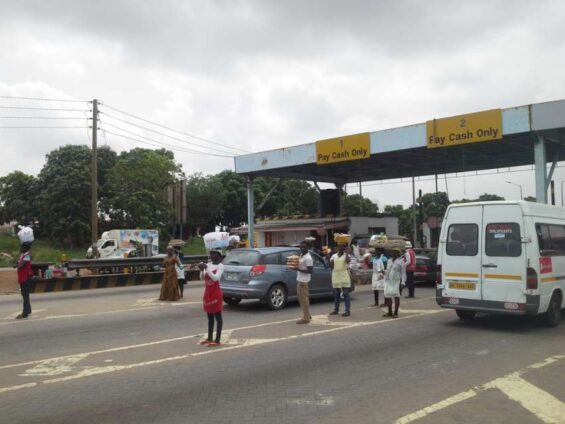
Under the new arrangement, motorists will no longer be required to stop at toll booths, as payments will be processed electronically through automated systems designed to reduce traffic congestion, improve efficiency and minimise revenue losses.
During the debate, Bimbilla MP and former Defence Minister Dominic Nitiwul explained that the previous government abolished road tolls because it did not want to impose additional financial pressure on Ghanaians following the introduction of the Electronic Transfer Levy (E-Levy).
“The second reason, Mr Speaker, is that we abolished the road tolls for one simple reason. We did not want to burden Ghanaians with both the e-levy and the road tolls,” he said.
However, Mr Nitiwul backed the return of tolls under an electronic system, arguing that technology would address challenges associated with the former manual collection process.
“If the government decides that they will bring the road tolls, but it will be electronic, like what I have seen in South Africa, I think that I will support it,” he stated.
He added that the electronic system would make payments easier for motorists because they would not have to stop at toll points.
“If it’s electronic and it’s 20 years, I think it’s a good deal that Ghanaians should take. Because you will not even realise that there are road tolls. You pass, there will be a beep, and then you go; at the end of the month, they bring you a bill, and then you pay,” he said.
Government has argued that the initiative will provide a reliable funding stream for road projects, improve road maintenance and create a more efficient toll collection system compared to the previous manual approach.