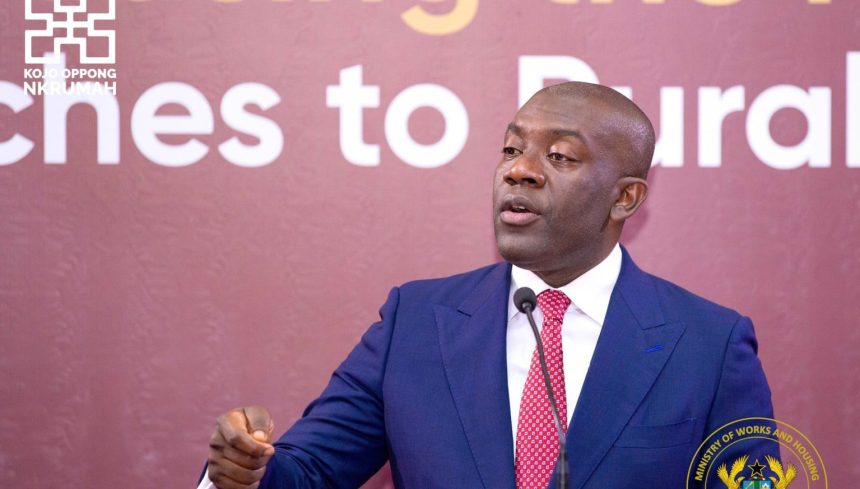
The Member of Parliament for Ofoase Ayeribi, Kojo Oppong Nkrumah, has questioned whether the National Democratic Congress (NDC) government has truly reduced the cost of running the state, pointing to the creation of multiple Deputy Ambassador and Deputy High Commissioner positions as evidence of continued public spending.
The debate follows government claims that a reduction in the number of ministers has significantly cut the cost of governance.
However, critics argue that while the size of the Cabinet may have reduced, overall government expenditure has simply been shifted to other areas, particularly Ghana’s diplomatic missions abroad.
According to Kojo Oppong Nkrumah, several senior political figures who were not appointed as ministers in 2025 have instead been assigned to foreign postings as Deputy Heads of Mission.
He argues that this does not reduce the financial burden on the state but rather relocates it from domestic government structures to overseas postings funded by taxpayers.
He made reference to information obtained through a Right to Information (RTI) request filed in January 2026, which was only responded to in June after he reportedly threatened legal action.
The response, he says, contains official details from the Ministry of Foreign Affairs on the cost structure of these diplomatic roles.
Per the disclosed figures, each Deputy Ambassador or Deputy High Commissioner receives a monthly basic salary of about US$3,639.58, along with a US$150 clothing allowance.
This amounts to approximately US$45,475 annually, or about GH¢537,000 per officer, excluding additional benefits.
In addition to these core payments, the Ministry confirmed several allowances, including child support for up to three children, quarterly education grants, and warm clothing allowances for officers posted to colder countries.
Other benefits include foreign service allowances, fully furnished state-provided accommodation, official vehicles with drivers and fuel, full medical cover for the officer and immediate family, and domestic staff support.
Read Also: Mahama’s presidential staff wage bill surges by 148%
Although these benefits were acknowledged in the RTI response, the Ministry did not assign monetary values to several of them, making the full cost per officer difficult to determine.
However, estimates suggest that when housing, transport, and other benefits are factored in, the total cost rises significantly.
Based on 18 newly created Deputy Head of Mission positions, total annual expenditure is estimated to range between about GH¢9.7 million at the lower end and over GH¢25 million at the upper end.
Kojo Oppong Nkrumah argues that these recurring costs raise serious questions about the government’s claim of reducing expenditure, insisting that spending may have been moved rather than eliminated.