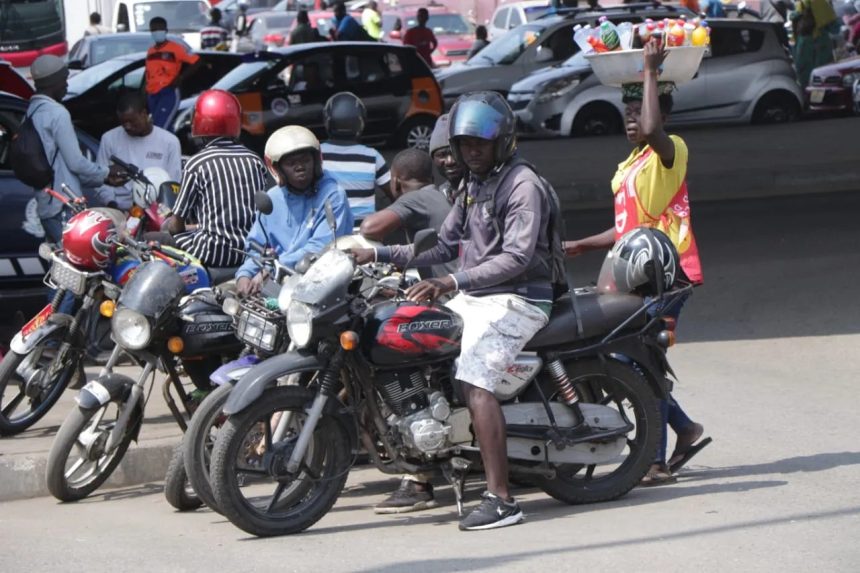
Some commercial motorcycle operators, popularly known as Okada riders, in Accra have accused officers of the Motor Traffic and Transport Directorate (MTTD) of demanding money from them during traffic enforcement operations.
The riders claim that in some cases, they are stopped by officers but are not given clear reasons for the alleged traffic offences before being asked to pay money.
One rider said that the amounts demanded vary depending on the circumstances.
According to him, officers sometimes ask for GH¢100, while in other instances, the amount could rise to GH¢200.
The allegations have raised concerns about how traffic laws are enforced and whether some officers are abusing their authority during roadside operations.
Ghana’s traffic laws are governed by the Road Traffic Regulations, 2026, L.I. 2519, which outline offences and penalties for motorists, commercial transport operators, motorcycle and tricycle riders, passengers and pedestrians.
Among the offences covered by the regulations are speeding, drink driving, running red lights, using mobile phones while driving and failing to use the required safety equipment.
However, some Okada riders allege that enforcement sometimes goes beyond the application of the law. They claim that after being stopped or arrested, officers do not always explain the offence involved. Some further allege that money is demanded at police stations before their motorcycles are released.
The riders say such payments place an additional burden on them because their motorcycles are their main source of income. They are therefore calling for greater transparency and fairness in traffic enforcement.
The allegations come amid broader concerns about bribery within the police service. Data from the Ghana Statistical Service released in August 2026 showed that the MTTD recorded a 54.6% bribery interaction rate, the highest among police units.
Seven Accra police officers were also recently interdicted over allegations that they demanded an illicit payment from a citizen.
Anti-corruption campaigner Bright Ofori has called for stronger disciplinary measures and the increased use of body cameras to improve accountability.