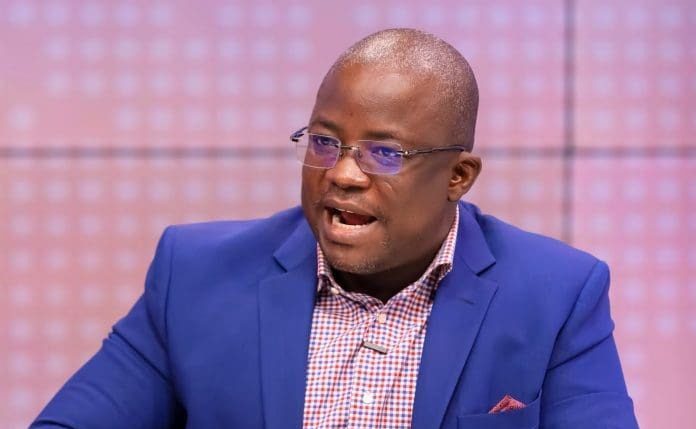
President John Dramani Mahama’s decision to dissolve the governing boards of nine state institutions has sparked criticism, with political science lecturer Dr. Joshua Zaato describing it as a “show of force” and a possible “power grab”.
Dr. Zaato said the government has not clearly explained why the boards were dissolved. He questioned whether the decision was based on poor performance or political reasons.
On Wednesday, 3 September 2026, President Mahama dissolved the boards of the Ghana National Petroleum Corporation (GNPC), Bulk Oil Storage and Transportation Company (BOST), Volta Aluminium Company (VALCO), Consolidated Bank Ghana (CBG), Ghana Post Company Limited, TDC Ghana Limited, the Road Maintenance Trust Fund, Prestea Sankofa Gold Limited and the National Sports Authority.
The Presidency said new boards would be appointed “in due course” but did not give specific reasons for the move.
Dr. Zaato said it was difficult to blame the decision on poor financial performance, especially because recent reports have shown improvements in some state-owned enterprises.
“If these companies are actually done in two years, it is a promotion, not a fact,” he said.
He argued that institutions that had moved from making losses to making profits would normally be considered to be performing better.
“Either the numbers are lying, or the numbers are true, but this is just pure, brute politics that has no benefit on them,” he said.
His comments follow the State Interests and Governance Authority’s (SIGA) 2025 State Ownership Report, published on August 28, 2026.
Dr. Zaato said that because the government has not explained its decision, people are free to interpret it politically.
“Legally the president does not owe us an explanation,” he said. “But if you don’t owe us an explanation and then you just give us this information, then we are also entitled to interpret it the way we want.”
He also warned that the mass removal of boards could create fear among directors still serving in government institutions.
“You create a situation of cynicism and of suspicion and of fear among these political appointees,” he said.
He said directors may become afraid to disagree with government proposals because they could lose their positions.
“If you are going to sack people, just sack them, replace them, they will move on,” he said.
“But now, I mean, think about it: you are a board chairman, and today a proposal or something is brought to your board. Will you have the balls… to say no?”
Dr. Zaato also criticised the practice of using state-owned enterprise positions as rewards for political supporters, saying it could weaken good corporate governance and shift attention away from competence and national development.