Ghana’s year-on-year inflation rate rose to 5.0% in August 2026, from 4.6% in July, according to the latest data from the Ghana Statistical Service (GSS).
The 0.4 percentage-point increase marks the second consecutive monthly rise in inflation, putting some pressure on the country’s recent disinflation gains.
However, the August rate remains below the 5.5% recorded in August 2025.
The latest figures show that inflationary pressures are increasingly coming from domestic costs, particularly housing, transport, utilities, education and other services, while imported inflation remains relatively low.
Food and non-alcoholic beverages inflation eased slightly to 3.0% in August, from 3.1% in July. However, prices of some food items recorded sharp increases.
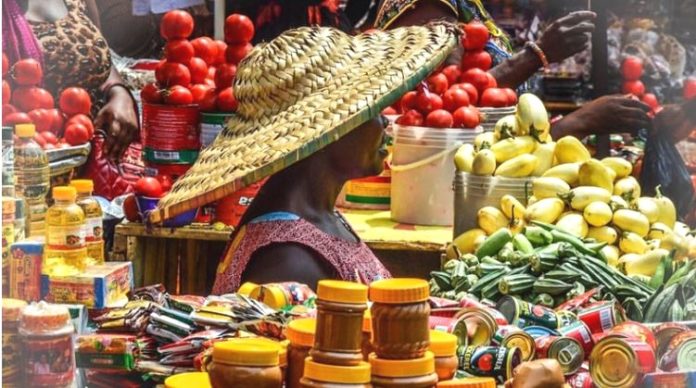
Fresh tomatoes recorded the biggest year-on-year increase, rising by 458.3%, followed by ginger at 128.3%, shrimp at 67.1% and mangoes at 57.7%.
Other notable increases included parking services (40.0%), fresh coconut (38.0%), charcoal (35.6%), green pepper (30.5%) and cabbage (29.8%).
On the other hand, prices of some food items fell. Lime recorded the largest decline at 33.7%, followed by maize at 31.3%, while cocoyam leaves, sweet apples, fried fish and pawpaw also recorded significant price reductions.
Fresh tomatoes were also the largest contributor to overall inflation, accounting for 21.4% of the total contribution. Rent payments contributed 14.7%, while ginger accounted for 12.2%.
Non-food inflation increased slightly to 6.8%, from 6.7% in July, and accounted for 70.9% of total inflation, compared with 29.1% for food.
Among the major spending categories, transport inflation stood at 10.5%, while housing, water and energy recorded 10.2%.
Clothing and footwear recorded 8.0%, education 6.6%, and restaurants and hotels 4.3%.
Services inflation also increased to 8.6%, from 8.5%, while goods inflation rose to 3.8% from 3.6%.
Meanwhile, inflation for locally produced items increased to 6.1%, compared with 5.9% in July. Imported inflation remained much lower at 2.2%, up slightly from 2.1%.
Locally produced items and services accounted for 86.2% of total inflation, highlighting the growing role of domestic cost pressures.
Despite the rise in annual inflation, the general price level fell by 1.0% month-on-month in August.
Regionally, the Central Region recorded the highest inflation at 11.1%, followed by Ashanti at 8.7%. Greater Accra matched the national rate of 5.0%.
Bono East recorded the lowest inflation at 3.3%, followed by Volta at 3.6% and Upper East at 3.7%.
Overall, the figures suggest that while Ghana continues to benefit from relatively low food and imported inflation, rising domestic costs particularly housing, transport, utilities and services remain a major challenge to sustaining the disinflation trend.