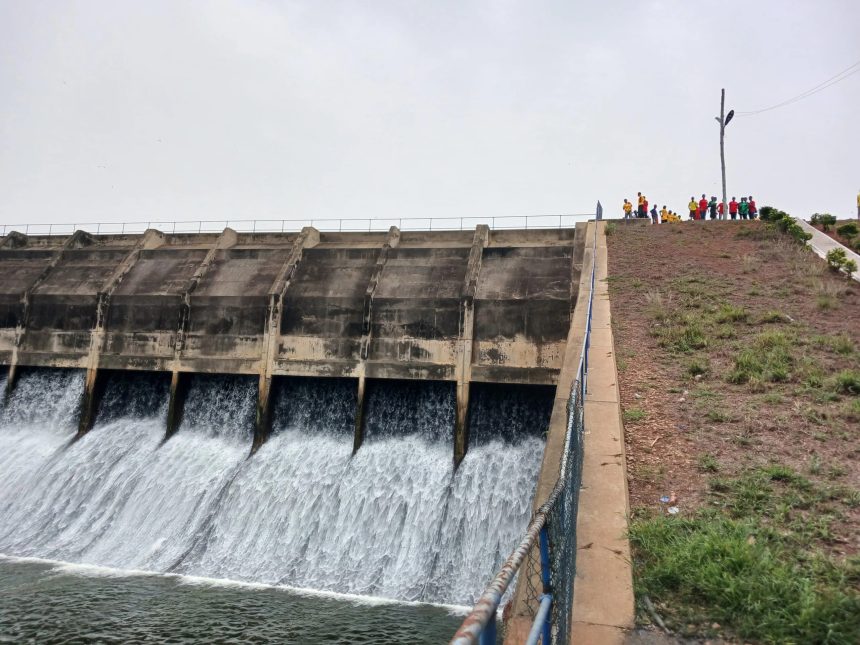
Ghana Water Limited (GWL) has raised serious concerns over increasing environmental degradation around the Barekese Dam in the Ashanti Region, warning that the situation poses a major threat to water supply in the Greater Kumasi metropolis.
According to the utility company, more than half of the forest cover surrounding the dam has been destroyed due to human activities, leading to heavy siltation and a significant reduction in the dam’s storage capacity.
estimate that the reservoir has lost nearly 30% of its capacity as a result.
The Barekese Dam remains a critical source of potable water, supplying over 22 million gallons daily to Kumasi and nearby communities. However, GWL says the long-term sustainability of the facility is now under pressure.
The degradation has been linked to several activities within the dam’s catchment area, including illegal logging, farming along buffer zones, bush burning, sand mining, and the expansion of settlements into protected areas.
Officials explain that the destruction of vegetation has increased soil erosion, causing large amounts of sediment to flow into the reservoir.
This has affected the quality of raw water, increased turbidity and contributed to eutrophication, which complicates water treatment processes.
Hanson Mensah Akutteh, Chief Manager of GWL’s Ashanti Production Region, warned that without urgent intervention, the dam could face severe operational challenges in the future.
He noted that continued degradation could even risk the complete collapse of the water source if left unchecked.
In response to the growing threat, Ghana Water Limited has partnered with the Forestry Commission and the Atwima Nwabiagya South District Assembly to launch a large-scale reforestation exercise around the dam’s catchment area.
As part of the initiative, staff, local authorities, and students from Barekese Senior High School planted over 5,000 seedlings of both indigenous and commercial tree species, including mahogany, cedrela, and ofram, on degraded lands surrounding the reservoir.
Dr. Akutteh explained that restoring the forest cover will help reduce erosion, improve water quality through natural filtration, and lower evaporation rates. He added that the project will also strengthen climate resilience by helping regulate local temperature and rainfall patterns.
The Forestry Commission has stressed the need for stronger collaboration between institutions and local communities to protect the dam’s catchment area.
Abraham Essel, Nkawie District Manager of the Commission, warned that without collective action, Kumasi could face a major water crisis in the coming years.