Heads of Senior High Schools (SHSs) in Central Region are calling for a structured system that collects and publishes disciplinary records across school houses and classes, saying such an approach would strengthen behaviour management and improve accountability in schools.
According to the school leaders, making discipline-related data publicly available within schools would help identify recurring behavioural patterns, allow targeted interventions, and make it easier to assess the effectiveness of corrective measures over time.
They explained that when discipline trends are clearly documented and shared, house leaders and teachers are better positioned to apply focused strategies to address specific challenges rather than relying on generalised approaches.
The heads further argued that publishing inter-house disciplinary figures would encourage healthy competition among houses, create constructive peer pressure, and transform behaviour management from abstract expectations into measurable targets that can be monitored and improved.
They added that such a system would also strengthen ownership of discipline outcomes among house leaders, ensuring that responsibility for student behaviour is more clearly defined and actively managed at the unit level.
The proposals were contained in a joint statement delivered by Linda Appiah, Headmistress of the Holy Child School, Reverend Dr Patrick Appiah, Headmaster of the St Augustine’s College, and John Arthur, Headmaster of the Edinaman Senior High School.
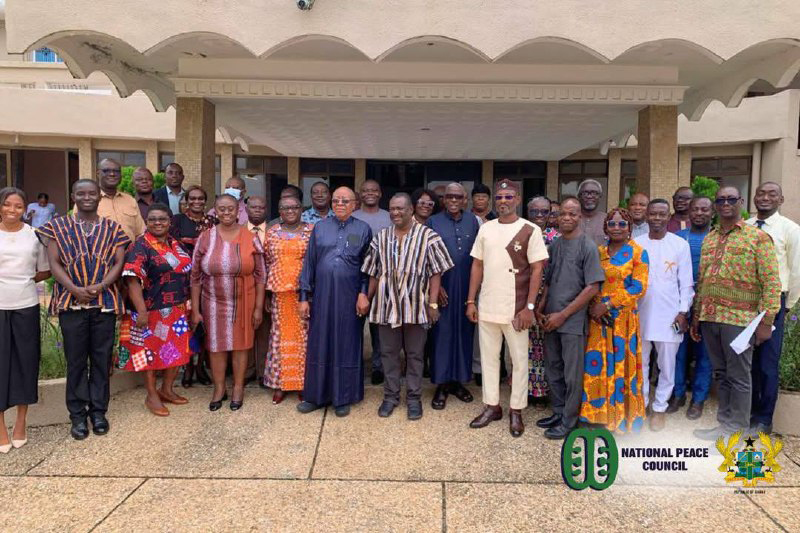
The statement was presented during a one-day workshop organised by the National Peace Council in Cape Coast, aimed at strengthening peacebuilding, religious tolerance, and discipline management in senior high schools.
The forum comes in the wake of increasing concern over viral incidents involving student misconduct, including bullying, sexting, and acts of violence circulating on social media.
Participants said these developments highlight the urgent need for stronger preventive systems in schools.
Beyond data publication, the school heads also recommended that Guidance and Counselling Units be given greater autonomy and resources to better support student behaviour management and promote positive school culture.
They noted that effective counselling systems would help improve relationships among students, between students and teachers, and within the wider school community, ultimately reducing triggers of indiscipline such as peer pressure, overcrowding, unresolved conflicts, and inadequate supervision.
Read Also: Teacher injured during WASSCE after chaos broke out at Bawku SHS
Another key recommendation was the stronger involvement of parents in disciplinary procedures.
According to the heads, parental engagement and follow-up at home significantly reduce repeat offences and reinforce behavioural correction efforts undertaken by schools.
The Regional Director of Education, Dr Juliette Dufie Otami of the Ghana Education Service, commended the National Peace Council for its continued efforts in promoting religious tolerance within schools.
She described it as essential to building a peaceful, inclusive, and values-based education system.
She emphasised that education should go beyond academic achievement to include character formation, civic responsibility, and respect for diversity.
Dr Otami further noted that Ghana’s schools reflect the country’s rich religious and cultural mix, stressing that this diversity must be managed as a strength rather than a source of division.
She reaffirmed the Ghana Education Service’s commitment to ensuring safe, inclusive, and equitable learning environments for all students and staff, regardless of religious or cultural background.
“Promoting religious tolerance is not just an educational goal but a national necessity for social cohesion and peaceful coexistence,” she said, urging educators to model empathy, fairness, and mutual respect.
Also speaking at the workshop, Mrs Janet Dedei Sarney-Kuma, Director for Capacity Development and Outreach at the National Peace Council, reminded participants that Ghana’s 1992 Constitution guarantees freedom of worship, and therefore students of different faiths must learn to coexist peacefully.
She emphasised that Christian and Muslim students are not adversaries but individuals expressing different religious traditions, and schools must actively foster inclusion rather than segregation.
She also encouraged stronger collaboration among students, staff, and parents, noting that external influences often fuel tensions, while parental involvement helps reduce indiscipline and promote harmony within schools.