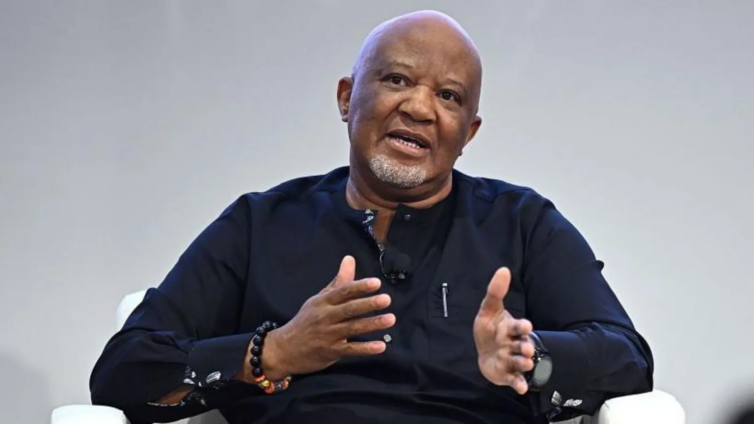
MTN Group Chairman Mcebisi Jonas has strongly criticised South Africa’s growing anti-foreigner sentiment, arguing that foreign nationals are being unfairly blamed for problems caused by poor governance, inequality, unemployment and weak state institutions.
Speaking at the funeral of Zimbabwean-born activist and public servant Thokozani Damasane, Jonas said xenophobic rhetoric distracts from the country’s real challenges and threatens South Africa’s relationship with the rest of Africa.
Reflecting on Damasane’s life, Jonas said belonging should be defined by humanity rather than nationality.
“I was thinking, what is home to Damasane?”
“Because I understand, and I understood very early in life, that home is where humanity is. Home is about humanness. It is about the good of humanity and striving for the good of humanity.”
He praised Damasane for dedicating his life to serving South Africa despite being born in Zimbabwe.
“He immersed himself deeply into the struggles, into the pains of South Africans, and he became one of us.”
Jonas rejected claims that removing foreign nationals would solve the country’s socioeconomic problems.
“Foreigners can leave tomorrow, inequality will be with us.”
“Foreigners will leave tomorrow, unemployment will be with us. Foreigners will leave tomorrow, our police will remain corrupt. Foreigners will leave tomorrow, our politicians will still be concerned with one thing: being elected and re-elected.”
He insisted that South Africa’s biggest challenge is poor governance rather than immigration.
“The problem is the failure of the state. The state doesn’t manage immigration. It doesn’t manage its borders. It doesn’t enforce law enforcement. It doesn’t manage education. What are you expecting?”
Jonas also warned against ethnic nationalism, describing tribal divisions as a colonial legacy that continues to fuel discrimination and violence.
“Identity politics, we must banish them in our country. Ethno-nationalism is something that in this country we must banish.”
Calling for greater African unity, he stressed that South Africa’s future is closely tied to the continent.
“We are a nation embedded in Africa. And without Africa, our growth as a country, economically, our fortune is intertwined with the growth of Africa. South Africa is nothing without Africa. And Africa is nothing without South Africa.”
Quoting anti-colonial thinker Frantz Fanon, Jonas concluded: “Each generation must, out of relative obscurity, discover its mission, fulfil it, or betray it.”
“Damasane understood the mission. And he did not betray it.”