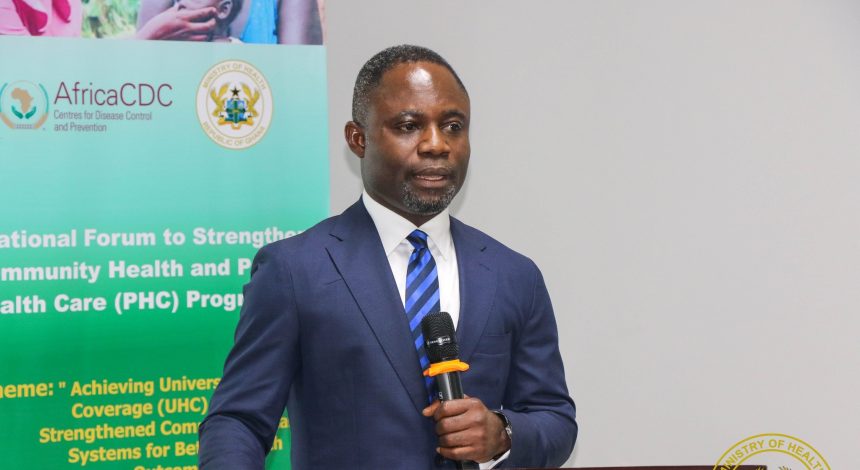
Minister for Health, Kwabena Mintah Akandoh, has clarified the scope of the government’s Free Primary Healthcare policy, stressing that citizens should not expect free primary care services at district, regional, or teaching hospitals.
According to the Minister, the free healthcare package is currently limited to lower-level facilities such as Community-based Health Planning and Services (CHPS) compounds, health centres, and polyclinics.
He explained that many people misunderstand the policy and often travel to higher-level hospitals expecting to receive free treatment, which is not covered under the current arrangement.
“Don’t go to district hospitals expecting free primary healthcare. It is currently limited to CHPS compounds, health centres and polyclinics,” the Minister stated.
Health policy analysts say the clarification is important as Ghana continues to roll out reforms aimed at improving access to basic healthcare while reducing pressure on major hospitals.
The policy is designed to strengthen preventive care, early diagnosis, and treatment of minor conditions at the community level.
Under the Free Primary Healthcare initiative, services such as basic consultations, preventive care, maternal health support, and minor treatments are expected to be provided at no cost at designated primary facilities.
However, more advanced medical cases that require referral will still fall under the National Health Insurance Scheme (NHIS) or other payment arrangements.
The Ministry of Health has consistently maintained that the policy is part of a broader effort to move Ghana’s healthcare system away from over-reliance on tertiary hospitals, which are often overcrowded with cases that could be handled at lower levels.
The clarification also comes amid ongoing public discussions about what exactly is covered under the Free Primary Healthcare programme, with many citizens seeking clearer guidance on where they can access services without payment.
The minister has urged Ghanaians to familiarise themselves with the structure of the health system and to use the appropriate facilities for their medical needs.
He added that public education will be intensified as the policy expands, to ensure that citizens fully understand where free services apply and how referrals to higher-level hospitals will be handled.