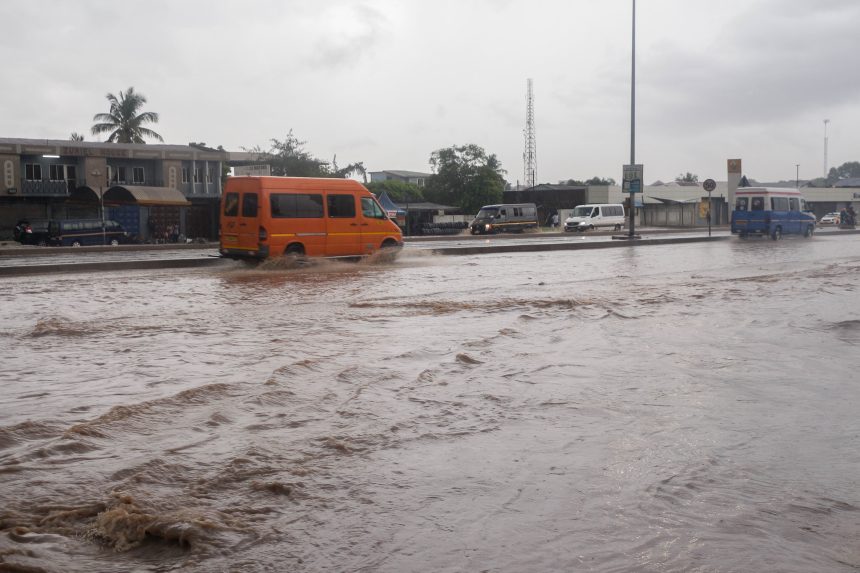
The Chairman of the National Development Planning Commission (NDPC), Dr. Nii Moi Thompson, has warned that the excessive concentration of economic activities, population and investment in Greater Accra are worsening flooding and other urban challenges in the capital.
He explained that Greater Accra Region currently contributes about 38 per cent of the country’s Gross Domestic Product (GDP) and attracted approximately 86 per cent of the country’s foreign direct investment (FDI), despite occupying only about 1.4 per cent of the nation’s land area.
Dr. Thompson described the situation as a “perfect storm” in which economic opportunities, investments and population growth had become heavily concentrated in a limited geographical space, placing enormous pressure on infrastructure and the environment.
Appearing before the Parliamentary Committee on Economy and Development in Accra on Tuesday, June 9, 2026, Dr. Thompson stated that the region had become the most populous region in the country, with a population density of about 1,680 people per square kilometre compared to roughly 300 people per square kilometre in the Ashanti Region.
“You cannot put the bulk of your population in the smallest land area. Greater Accra, even though it is the smallest region in terms of land area, is now the most populous region among the 16 regions.
“That is like the perfect storm, where every contradiction you can imagine has been put in this little space, and those are the consequences we see; the flooding, the collapsing buildings and everything,” he said.
Context
The country has experienced renewed flooding particularly in Accra and its suburbs, where floodwaters submerged homes, disrupted transportation, damaged businesses and displaced residents.
The flooding has also coincided with a series of building collapses in Accra, including incidents at Adenta New Site and Avenor, where rescue operations were mounted to save trapped occupants and fatalities were recorded.
The situation has reignited concerns about poor drainage systems, choked gutters, unregulated construction in waterways and weak enforcement of urban planning regulations, which experts continue to identify as key drivers of the country’s recurring flood disasters.
Committee sitting
Dr. Thompson appeared before the committee at a public sitting together with the Deputy Minister of Finance, Thomas Nyarko Ampem, and senior officials from the Ministry of Finance (MoF) and its agencies, including the Government Statistician, Dr. Alhassan Iddrisu; a Director at MoF, Samuel Danquah Arkhurst; Director, Policy Coordination Monitoring & Evaluation at the MoF, Kwasi Adu; and a Deputy Controller and Account General, Emelia Boatemah Osei Derkyi.