The ongoing national discussion surrounding the proposed renewal of Gold Fields’ Tarkwa mining lease has evolved beyond a simple argument over foreign ownership. At its core, the debate raises a far more strategic question: Does Ghana currently possess the full institutional and financial capacity to independently sustain a world-class large-scale mining operation without exposing the economy to significant risk?
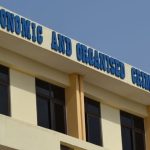
The Institute of Economic Affairs (IEA) has argued that Ghana should reject the proposed lease extension and instead pursue greater Ghanaian ownership and control of the Tarkwa Mine. The argument is rooted in economic sovereignty, local participation, and the belief that Ghanaian professionals now possess the technical expertise to operate major mining assets.
While this position appeals strongly to national sentiment, Ghana must tread cautiously, as large-scale mining is not sustained alone by technical expertise. It depends on a broader system of financial institutions, insurance support, regulatory oversight, environmental governance, and international compliance mechanisms.
A modern multinational mining operation such as Tarkwa is integrated into complex global systems involving project finance, trade finance, political risk insurance, environmental liabilities, export guarantees, Environmental, Social, and Governance (ESG) compliance, anti-money laundering frameworks, and international reporting obligations. The question, therefore, is not whether Ghanaian engineers and geologists can operate the mine — many already do — but whether Ghana’s broader institutional architecture can independently support the mine at the scale required by global mining standards.
One critical area: financial capacity
Large-scale mines require enormous working capital and long-term financing arrangements running into hundreds of millions of dollars. Such funding is typically provided by international banks with strong balance sheets and high credit ratings. Ghanaian banks, though improving steadily, may face limitations in underwriting very large mining exposures without syndication support from foreign financial institutions.
The issue becomes even more critical during commodity price volatility, operational disruptions, or environmental incidents. International mining firms typically rely on sophisticated treasury systems, foreign exchange hedging arrangements, and access to global capital markets to absorb shocks. Ghana must carefully assess whether local financial institutions currently possess sufficient liquidity depth and risk appetite to sustain such operations independently over the long term.
Insurance capacity presents another major challenge
Mining operations require extensive insurance coverage for plant and equipment, tailings storage facilities, environmental liabilities, worker safety, business interruption, and catastrophic risks. Many of these risks are ultimately reinsured through international insurance markets in London, Europe, and other global financial centres. If Ghana seeks greater local ownership, the country must assess whether domestic insurers and reinsurers possess the capital adequacy, technical underwriting expertise, and international credibility necessary to support such large and high-risk operations. Without strong insurance backing, mining operations could become financially vulnerable in the event of major accidents or environmental failures.
International regulatory compliance is equally important
Global mining companies operate under strict international standards for environmental management, tailings governance, anti-bribery compliance, anti-money laundering regulations, sustainability reporting, and investor disclosure obligations. Increasingly, access to international capital depends heavily on ESG performance.
Failure to maintain internationally accepted governance standards can trigger investor withdrawal, financing restrictions, reputational damage, and even trade barriers. Ghana must therefore ensure that any transition toward greater local ownership does not weaken credibility in the eyes of international regulators, lenders, and institutional investors.
The issue of tailings management alone illustrates the magnitude of this responsibility. Following several catastrophic tailings dam failures globally, international oversight of mine waste facilities has become extremely stringent. Compliance now involves advanced geotechnical monitoring, independent technical reviews, environmental auditing, emergency-preparedness systems, and continuous reporting obligations. These systems require both technical competence and institutional discipline.
This is why Ghana must avoid framing the Tarkwa debate purely in political nationalism.
Resource sovereignty is important; however, sustainable resource governance requires strong institutions, deep financial systems, credible regulatory enforcement, and internationally trusted governance frameworks. Without these supporting structures, rapid localisation could unintentionally increase operational and financial risk.
At the same time, the concerns raised by the IEA cannot simply be dismissed. Ghana is justified in demanding greater national benefit from its mineral wealth. The country must continuously expand local participation, local financing, technology transfer, procurement opportunities, and indigenous corporate capacity.
However, the transition must be gradual, strategic, and institutionally supported.
Rather than pursuing abrupt disengagement from multinational operators, Ghana may achieve better long-term outcomes through structured partnerships that progressively strengthen local ownership while preserving international technical support, financial credibility, and regulatory confidence.
The Tarkwa lease debate is therefore not merely about who owns the mine. It is about whether Ghana’s entire economic and regulatory ecosystem is fully prepared to carry the immense responsibilities that accompany ownership of a globally significant mining asset.