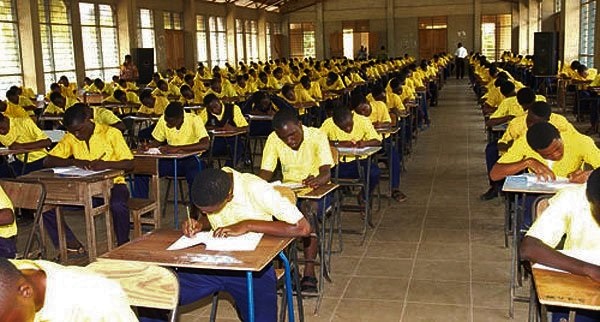
Just a couple of weeks ago, candidates of the 2006 Basic Education Certificate Examination (BECE) prayed for their success as they began writing the exam.
Schools and teachers said special prayers, and so did parents and even some churches, as 509,862 candidates across the country buckled up to write their first major examination that would decide their next level of education.
Our information is that, out of the total, 225,274 were boys, while 284,588 were girls. One is learning that these figures show an overall increase of 10.4 per cent over the 2025 figures.
Regrettably, for over a decade and a half or so since this competitive examination for basic education students, there has seemed to be one controversy or another, with examination malpractices coming up each year. Such misconduct was quite rampant in the early stages with the candidates. Of recent times, however, the principal actors have shifted to teachers, invigilators and other officials.
Each time examination malpractices happen, the West Africa Examinations Council (WAEC) and the Ghana Education Service (GES), go through specific actions of deterrent to ensure that there would not be recurrences in ensuing years. We have seen punitive measures, including the cancellation of papers, sometimes a whole school’s results, or even prosecutions of identified culprits.
Unfortunately, technology seems to be ahead of it all, and misdemeanours get the upper hand, with mobile phone technologies, ChatGPT, and Artificial Intelligence (AI) overtaking efforts to maintain sanity and order.
Examination malpractices
Last year, malpractices in the basic examination escalated across the country, with widespread outcry from the general public. Some even called for the prosecution of invigilators and teachers who were found culpable.
The GES quickly responded and took many steps, including issuing warnings and even prosecuting invigilators and teachers who were liable. Unfortunately, the measures the Service put in place as forms of punishment have not seemed to be deterrent enough.
It is shocking to know that the just-ended 2026 BECE has presented even more malpractices across the country. It seems that as our world gets even more sophisticated with technology, the miscreants move many steps ahead.
According to a Graphic online publication on May 13, as many as 44 teachers, invigilators and supervisors have been intercepted in connection with examination violations at the just-ended BECE, across the country.
The infractions have been confirmed by the Public Affairs Officer of WAEC in an interview with a reporter from Graphic Online. As he admitted, almost all of the cases were mobile phone-related. Those officials caught in wrongdoing were either using mobile phones to take photos of the examination questions to be solved or using ChatGPT to secure answers to the examination questions.
It is gratifying to note that swift action has been taken by the authorities against the 44 caught in the cheating that took place across the country.
The Graphic online report indicates that those arrested were from seven regions, with the Ashanti Region topping the list with 17 cases, followed by the Western Region with nine cases, the Greater Accra Region with six cases, and the Central and Eastern Regions with five and four, respectively. The Bono Region had two cases, while Bono East had one case.
Action has already commenced in one case in Twifo Praso, Central Region, where four teachers are reported to have been convicted and fined GH¢3,000 each after admitting guilt when arraigned before the Twifo Praso District Magistrate Court. If they failed to pay the fines, they will spend one year in jail.
Ethics
The WAEC and GES have taken many steps, year after year, to bring ethical practices and normalcy to the conduct of examination supervision, but it seems none of their measures is sufficiently deterrent.
If they were, the number of those officials who engaged in the malpractices would not have risen from 35 in the previous year, as confirmed by the Director General of GES, to 44 cases this year
As a country, we should be worried that there seems to be no end to these examination misdemeanours despite the education, warnings, prosecutions and other punishments being meted out.
Are those officials engaged in such professional misconducts see no wrong and hear no wrong in what they are doing? They are compromising their own integrity; they are inculcating in the children the wrongful act of cheating their way to the top and sowing the seeds of corruption.
What future would the children who are being introduced to cheating in examinations have as responsible public servants, entrepreneurs, leaders, wives, husbands and parents?
Perhaps we have reached the stage where names must be called out, followed by dismissals from any public service and from working with children. Once they are caught, the noble professions they have nurtured for themselves become non-essential to them anymore.
But above all, the question that needs to be asked is whether, for all that has gone on and is still going on, we need BECE at all? Why can we not use continuous assessment to evaluate and place students in Senior High Schools?
We need to help preserve our children’s morality at all levels of the educational ladder and not give room for sowing seeds of corruption and cheating at that early age.