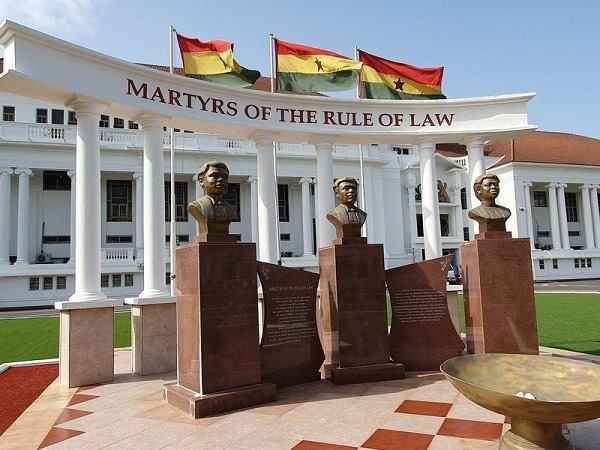
The Supreme Court is set to deliver a major ruling on July 29, 2026, in the constitutional case filed by private citizen and lawyer Noah Ephraem Tetteh Adamtey, who is challenging the legal authority of the Office of the Special Prosecutor (OSP) to independently investigate and prosecute corruption-related offences.
At the centre of the dispute is whether Parliament acted within the limits of the Constitution when it passed the Office of the Special Prosecutor Act, 2017 (Act 959), which granted the institution independent investigative and prosecutorial powers.
Mr Adamtey argues that the 1992 Constitution reserves prosecutorial authority for the Attorney-General under Articles 88(3) and 88(4).
In his view, Parliament cannot create a separate prosecutorial body that operates outside the Attorney-General’s constitutional supervision.
Through the suit, filed as case number J1/3/2026, he is asking the Supreme Court to invalidate sections of Act 959 that allow the OSP to function independently of the Attorney-General.
He is specifically challenging provisions that empower the OSP to investigate corruption cases, conduct searches, seize property and recover assets suspected to have been acquired through corrupt activities.
In January 2026, the Supreme Court unanimously rejected an application by the OSP to join the proceedings as a party.
The OSP had argued that the lawsuit directly targeted some of its key powers, particularly those contained in Sections 4 and 33 of Act 959, and therefore, it should be allowed to defend its interests before the court.
However, the judges ruled that the constitutional issues raised in the case could be adequately addressed between the plaintiff and the Attorney-General.
As a result, the Attorney-General remains the only defendant in the matter.
While the OSP was denied participation, the court later approved an application by 14 Civil Society Organisations (CSOs) seeking to join the proceedings.
The organisations told the court that they played important roles in advocating for the establishment of the OSP and could offer useful perspectives on the constitutional questions under consideration.
The Attorney-General raised no objection to their participation, paving the way for the organisations to submit their arguments before the court.
The OSP began operations in 2018 after Parliament established it under Act 959. The institution was created to investigate and prosecute corruption cases, especially those involving public officials and politically exposed persons.
Lawmakers designed the OSP to operate independently to strengthen accountability and reduce concerns about conflicts of interest that may arise from the Attorney-General’s dual role as both a political appointee and the state’s chief prosecutor.
If the Supreme Court agrees with Mr Adamtey’s arguments, some of the legal provisions supporting the OSP’s independence and prosecutorial powers could be struck down.
On the other hand, a ruling in favour of the Attorney-General would strengthen the legal foundation of the institution and confirm Parliament’s power to establish specialised prosecutorial agencies.
Beyond the immediate case, the judgment is expected to provide important guidance on the limits of prosecutorial authority, the separation of powers and the constitutional framework governing Ghana’s anti-corruption efforts.