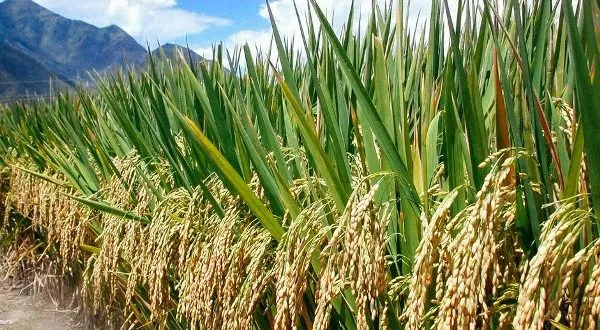
Rice farmers and processors in Ghana are calling on the government to impose a six-month ban on rice imports to help protect local production and reduce financial losses in the sector.
According to the farmers, the market is currently flooded with imported rice, making it difficult for locally produced rice to compete.
They say many farmers are struggling to sell their produce, leaving large quantities of rice unsold across the country and putting pressure on their incomes.
Industry groups estimate that about one million metric tonnes of locally produced rice remains in storage, worth billions of cedis.
Farmers and millers argue that this situation has forced some processing companies to reduce operations or temporarily shut down due to weak demand.
Ghana is one of the largest rice-consuming countries in West Africa, with annual demand estimated at between 1.5 million and 2 million metric tonnes.
However, local production still cannot meet total national demand, which has led to continued reliance on imports to fill the gap.
Despite this, local producers believe a short-term import ban would give them breathing space to sell existing stocks and recover production costs.
They also say it would encourage consumers to buy locally grown rice, which they insist has improved in quality over the years.
The farmers are also calling for broader reforms to strengthen the rice industry. These include better access to irrigation, affordable farm inputs, mechanisation support, improved storage systems, and a more structured market for local rice.
Some stakeholders have also proposed the introduction of import quotas and guaranteed minimum prices for locally produced rice to stabilise the market and improve farmer incomes.
However, experts caution that any import restriction must be carefully managed. They warn that since local production still falls short of national demand, a sudden ban could lead to shortages and possible price increases for consumers.
The government is yet to respond officially to the call. But the debate continues as stakeholders weigh the need to protect local farmers against the need to ensure a stable rice supply for the country.