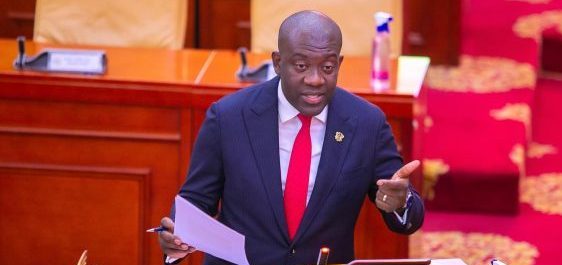
Member of Parliament for Ofoase-Ayirebi, Kojo Oppong Nkrumah, has filed a case at the Supreme Court challenging directives by the Chief Justice for some judges to hear selected criminal cases during the legal vacation.
In the suit, filed under the original jurisdiction of the Supreme Court, Oppong Nkrumah is asking the court to declare the directives unconstitutional and therefore null and void.
The former Minister for Information is challenging the warrants issued by the Chief Justice directing selected judges to sit during the legal vacation to conduct criminal trials in certain cases.
According to the writ, the arrangement is inconsistent with several provisions of the 1992 Constitution, including those relating to equality before the law, administrative fairness, the right to work and the exercise of discretionary powers.
Oppong Nkrumah argues that prioritising what have been described as “special criminal cases” while other criminal cases are not given similar attention amounts to selective justice.
He is therefore asking the Supreme Court to declare the practice unconstitutional, arguing that it violates the principle of equality under Article 17 of the Constitution.
The MP is also challenging the impact of the directive on lawyers and members of the Judicial Service. He argues that requiring some judges and legal practitioners to work during the legal vacation affects their right to health and is inconsistent with constitutional protections relating to working conditions.
The suit further challenges Order 79 Rules 1(1) and 2 of the High Court (Civil Procedure) Rules, 2004 (C.I. 47), to the extent that the provisions allow the Chief Justice to select cases for hearing during the legal vacation.
Oppong Nkrumah is asking the Supreme Court to declare those provisions unconstitutional if they permit such selective hearings.