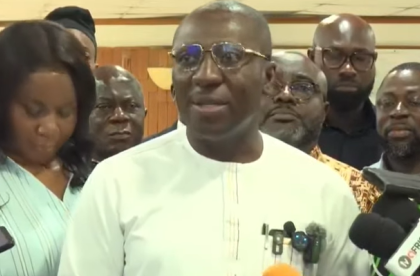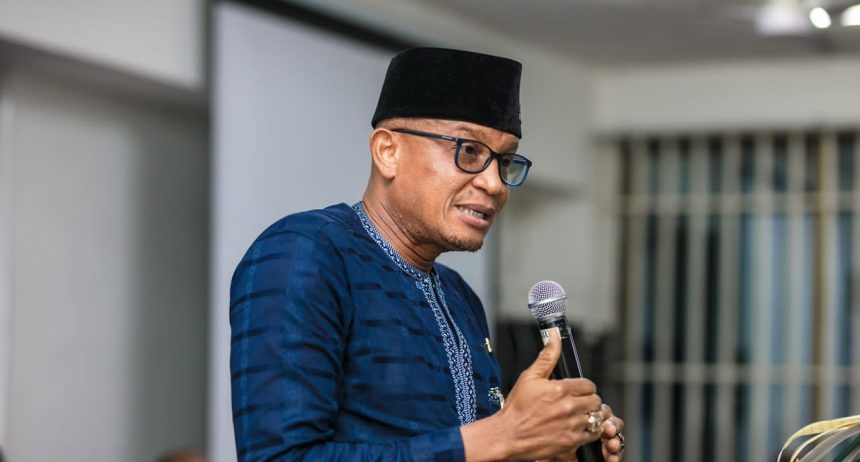
Aspiring New Patriotic Party (NPP) First National Vice Chairman Mustapha Abdul-Hamid has rejected claims that there is an attempt to Islamise Ghana, saying the country’s political history and voting patterns show a strong culture of religious tolerance.
Speaking at the Danquah Institute’s 2026 Liberty Lecture on Tuesday, August 25, Mustapha Hamid argued that the 2024 general election provided clear evidence that religion does not largely determine how Ghanaians vote.
He pointed to the presidential candidacy of Dr Mahamudu Bawumia, who became the first Muslim presidential candidate of a major political party in Ghana. According to Mr Hamid, if Muslims were seeking to promote an agenda to turn Ghana into an Islamic state, Dr Bawumia’s candidacy would have provided a strong opportunity for them to vote along religious lines.
However, he noted that several constituencies with large Muslim populations voted strongly for President John Dramani Mahama, a Christian, instead of Dr Bawumia.
Mr Hamid mentioned Ayawaso East, Ayawaso North, Asawase, Ejura, Tamale North, Tamale Central, Tamale South and Sagnarigu among the constituencies where the voting pattern did not support the argument that Muslims vote mainly based on religion.
He said the results demonstrated that Ghanaians generally separate their religious beliefs from their political choices.
His comments come amid discussions about issues such as the proposed introduction of Arabic as an optional language in basic schools and plans involving interest-free banking. Some critics have linked these developments to concerns about a possible Islamisation agenda.
Mr Hamid, however, dismissed such concerns, insisting that Ghana’s political and social environment does not support the claim.
He also stressed the importance of protecting the country’s longstanding tradition of peaceful coexistence between Christians, Muslims and people of other faiths.
According to him, attempts to create fear around religious differences could threaten Ghana’s unity and peaceful relations.