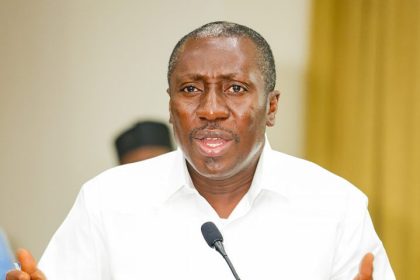
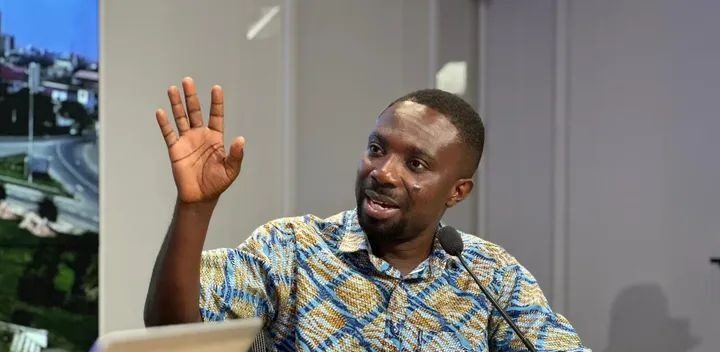
The Director of Communications for the Bawumia Campaign Team, Dennis Miracles Aboagye, has criticised the Mahama administration for failing to provide a clear plan to address Accra’s long-standing flooding problem.
Speaking in an interview today, June 8, 2026, Mr. Aboagye said the government appeared to be complaining about the situation rather than giving residents practical solutions and reassurance.
He explained that leaders are elected to protect citizens, improve their lives, and ensure their safety and wellbeing. According to him, governments should be held accountable for fulfilling those responsibilities.
“A country entrusts its resources, freedoms, and rights to a select few so that they can guide the people and lead them towards prosperity, growth, and safety.
“So when the leaders we have given that responsibility are merely lamenting to us, it becomes a serious problem,” he said.
Mr. Aboagye argued that although the government is aware of Accra’s flood challenges, it has failed to explain how it intends to solve them.
“They have failed to tell the people of this country what their roadmap is in solving flooding in Accra. A clear-cut roadmap. We are in a hopeless situation,” Mr. Aboagye said.
He also rejected the idea that the current administration is only now discovering how serious flooding in Accra has become.
He pointed out that President John Dramani Mahama has served as president before and is already familiar with the issue.
“This government should not pretend as if they just came into office and all of a sudden they are realising how Accra is,” he stated.
Mr. Aboagye recalled the June 3, 2015, disaster, which caused major flooding, loss of lives, and widespread destruction in Accra.
He said the tragedy should have provided important lessons that could help prevent similar disasters in the future.
“Our president has been president before. In fact, one of the most devastating flood disasters this country has seen in its history happened under his presidency during his first term,” he said.
He noted that after the disaster, former President Mahama announced plans to re-engineer Accra and set up a committee to address flooding. However, he questioned what became of those efforts.
According to Mr. Aboagye, the fact that severe flooding continues to affect the capital raises concerns about whether the measures introduced after the disaster achieved their goals.
He said many Ghanaians voted for President Mahama because they believed his previous experience in office would help him solve long-standing national problems more effectively.
“One of the reasons why a lot of Ghanaians went to vote for His Excellency John Dramani Mahama was because they felt that he would have learned something from the experience he had in the past,” he said.
Mr. Aboagye added that experience was one of the key messages of President Mahama’s campaign and played a major role in gaining public support.
He said the president’s large election victory showed the high level of trust and expectation many Ghanaians had for him.
“People were very hopeful. A 1.7 million vote difference speaks a lot. It is a huge mandate,” he observed.
Mr. Aboagye also questioned why the government is still identifying flood-prone areas after being in office for a considerable period. He argued that such work should have been completed much earlier, especially given the president’s previous experience.
“A president that some people believed in and voted for on the back of your experience, you spend one and a half years out of your few years in office identifying hotspots. That is where the problem is,” he said.
He urged the government to stop focusing on blame and instead provide clear solutions, timelines, and actions to prevent future flooding. He said residents want to know what concrete steps are being taken to improve the situation.
Mr. Aboagye concluded by saying that preventing flooding and ensuring proper urban planning are responsibilities of state institutions. He called on the government to present a clear strategy and measurable actions to address Accra’s recurring flooding problem.