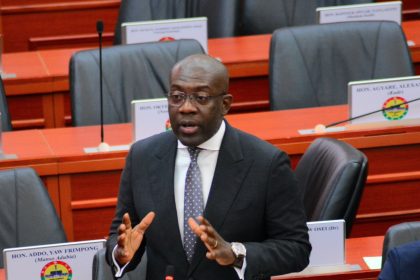
The government has suspended the implementation of the regulation prohibiting preaching and hawking in moving commercial vehicles, sources indicate.
The move follows growing public debate over the restriction, with religious leaders and other stakeholders raising concerns about its implications for religious expression and evangelism on public transport.
The suspension is expected to allow further consideration of the regulation and concerns surrounding its enforcement.
However, the government has yet to publicly explain the reasons for the decision or indicate when it will announce its next steps.
The regulation is contained in the Road Traffic Regulations, 2026 (L.I. 2519), which prohibit causing or permitting a nuisance, including preaching and hawking, on public or commercial vehicles while they are in motion.
Under Regulation 141, offenders face a fine of between 10 and 50 penalty units, imprisonment for up to eight months, or both.
With each penalty unit valued at GH¢12, the fine ranges from GH¢120 to GH¢600.
The provision affects activities commonly seen in tro-tros and commercial buses, including evangelism and the sale of goods to passengers while vehicles are moving.
Although the regulation has attracted renewed attention, the prohibition is not new.
Regulation 116 of the previous Road Traffic Regulations, 2012 (L.I. 2180), also prohibited preaching and hawking on moving public or commercial vehicles as forms of nuisance.
The major change under L.I. 2519 is the punishment for offenders. While the previous rules provided for a fine of up to 50 penalty units, imprisonment or both, the new regulation specifies a prison term of up to eight months.
The government has been intensifying efforts to improve road discipline and safety across the country.
In September, Transport Minister Joseph Bukari Nikpe launched a nationwide public education campaign to familiarise road users and transport operators with the Road Traffic (Amendment) Act, 2025 (Act 1153), and L.I. 2519.
According to the Ministry of Transport, the broader reforms are intended to strengthen road safety, improve enforcement and ensure that road users understand their responsibilities.
Other measures include automated traffic enforcement, a demerit-point system linked to driving licences and tougher penalties for certain traffic offences.
The restriction applies to preaching and hawking in moving public or commercial vehicles, regardless of the religion involved.
It also covers the sale of goods to passengers while a vehicle is in motion.
The provision has sparked debate about religious freedom, the longstanding practice of evangelism on public transport and the government’s responsibility to enforce traffic regulations.
The suspension is expected to provide an opportunity for further consideration of these concerns, although the government has not yet announced a timeline for communicating its final decision.
Until further official details are provided, questions remain about how the government intends to proceed with the regulation and its enforcement.