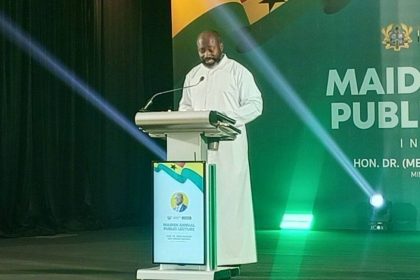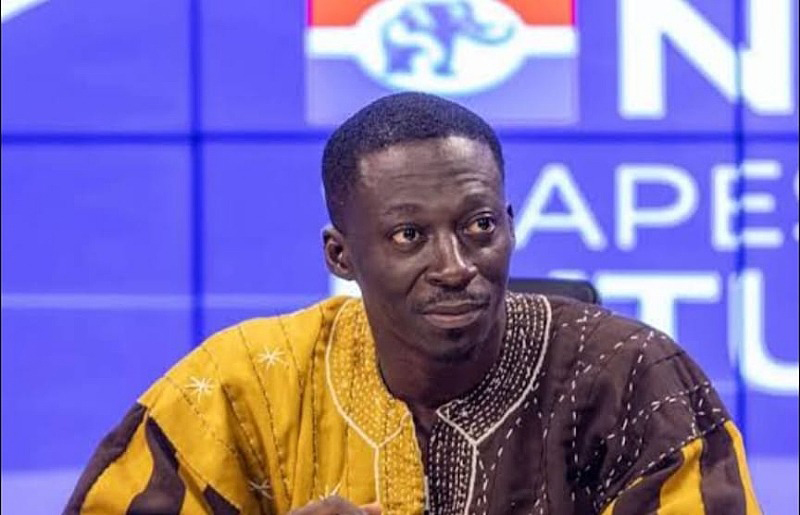
Private legal practitioner Austin Brako Powers has clarified that the recent High Court order freezing the assets of Dennis Miracles Aboagye should not be interpreted as proof that the former government official has committed a criminal offence.
His explanation comes after the Accra High Court ordered the freezing of five bank accounts and four landed properties linked to Miracles Aboagye as part of an ongoing investigation by the Economic and Organised Crime Office (EOCO).
The probe centres on alleged financial and procurement irregularities involving approximately GH¢55 million.
The court’s directive prevents any withdrawals or transactions from the affected bank accounts and bars the sale, transfer or disposal of the listed properties until investigations are completed.
Speaking in an interview, Mr. Brako Powers stressed that the court’s decision is simply a legal step to support ongoing investigations and does not amount to a finding of guilt.
According to him, the order only confirms that EOCO is investigating Mr. Aboagye over suspected offences against the state and should not be viewed as evidence that any crime has been committed.
He explained that under Ghanaian law, investigative agencies such as EOCO have the authority to temporarily freeze assets they suspect may be connected to criminal activity. However, such action must be endorsed by the High Court before it can take effect.
The lawyer also pointed out that Dennis has legal options available to challenge the order. He said the former official can apply to the High Court to vary or set aside the freezing order if he is able to provide convincing evidence that the affected funds and properties are unrelated to the matters under investigation.
Mr. Brako Powers noted that the purpose of freezing assets is to preserve them while investigators establish the facts of the case.
This, he said, helps prevent the disposal or movement of assets that may become relevant to any future legal proceedings.
He added that once EOCO concludes its investigations, the findings will likely be forwarded to the Attorney General, who will determine whether there is sufficient evidence to initiate criminal prosecution.
Until then, he emphasised, the freezing order remains a precautionary legal measure rather than a declaration of wrongdoing.