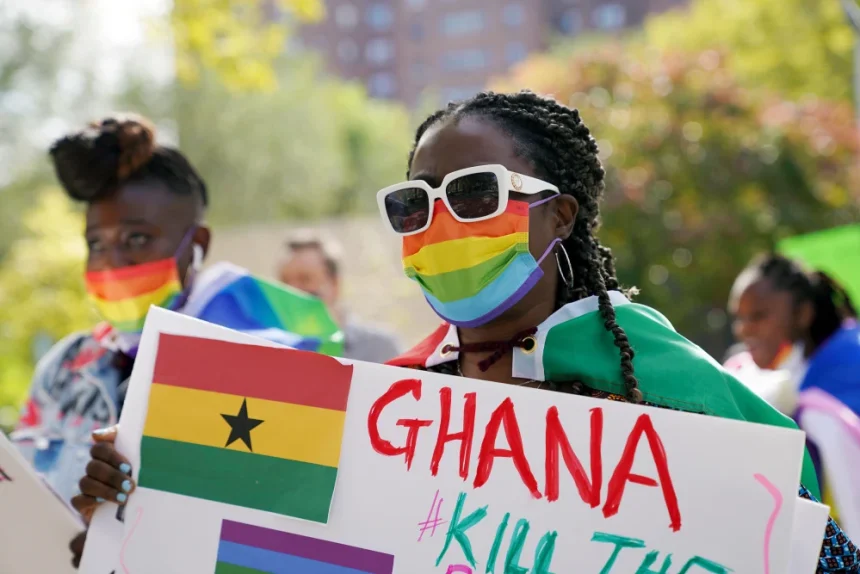
When Parliament passed the Human Sexual Rights and Family Values Bill again last week, many Ghanaians assumed it was simply bringing back the same legislation that dominated national debate in 2024.
But while the Bill’s central mission remains unchanged, lawmakers have quietly introduced changes that could significantly affect how it is applied if it eventually becomes law.
The legislation, popularly known as the anti-LGBTQ+ Bill, was approved by Parliament on May 29, 2026, after an earlier version failed to complete the legislative process before the end of the last Parliament.
The original Bill had been passed in February 2024 but never received presidential assent due to court challenges and constitutional concerns.
This time around, Parliament has returned with a revised version that still seeks to outlaw LGBTQ+ activities in Ghana while promoting what lawmakers describe as traditional family values.
However, the biggest story may not be what the Bill keeps, but what Parliament has changed.
The law still keeps its tough core
For supporters of the Bill, there is little doubt that its central purpose remains intact.
The legislation continues to criminalise same-sex sexual relations, prohibit LGBTQ+ organisations, and ban activities considered to promote or sponsor LGBTQ+ causes.

It also maintains restrictions on adoption and fostering arrangements involving persons covered by the law and continues to reject certain marriages involving same-sex couples.
In short, the foundation of the Bill remains largely the same as the version that sparked a heated national debate two years ago.
A new focus beyond LGBTQ+ persons
One of the noticeable shifts in the revised Bill is its broader focus.
The legislation now pays greater attention to individuals, groups and organisations accused of supporting, funding, advocating for or promoting activities prohibited under the law.
Supporters say this closes potential loopholes that could allow indirect promotion of LGBTQ+ causes.
Critics, however, argue that such provisions could still create uncertainty about what constitutes support or advocacy.
The amendment dividing even supporters
Ironically, the most controversial changes are not coming from opponents of the Bill but from some of its strongest backers.
Parliament introduced a series of exemptions designed to protect professionals carrying out legitimate duties.
Under the revised version, journalists reporting on LGBTQ+ issues, lawyers representing clients, doctors providing treatment, researchers conducting studies and public health officials carrying out HIV and AIDS programmes would be exempt from prosecution under certain circumstances.

The exemptions were included after concerns that the earlier Bill could unintentionally criminalise professional work and public-interest services.
Yet not everyone is pleased. Some supporters believe these protections weaken the legislation and reduce its effectiveness.
Lead sponsor Rev. John Ntim Fordjour has publicly argued that the exemptions remove much of the Bill’s deterrent power, particularly regarding advocacy and promotion.
Why Journalists and Health workers are paying attention
For many media practitioners, lawyers and health professionals, the exemptions represent one of the most significant developments in the new Bill.
Under the previous version, concerns were raised that reporting on LGBTQ+ matters, offering legal representation or conducting public health campaigns could expose professionals to legal risks.
The revised legislation attempts to address those fears by creating clearer protections for work carried out in the public interest.
Supporters of the amendments say Ghana cannot enforce the law in a way that undermines journalism, healthcare delivery, legal representation or academic freedom.
Parliament also changed the marriage clause
Another less-publicised amendment involves how the Bill treats marriages covered by its provisions.
The previous wording stated that such marriages would be “unenforceable.”
The new version goes further by declaring them “not recognised.”
Legal observers say the difference may appear small, but could have wider implications because recognition and enforcement are treated differently under the law.
What happens now?
The Bill’s journey is not over. Before it can take effect, it must receive presidential assent. That next step could prove just as contentious as the parliamentary debates that preceded it.
Both supporters and critics are already preparing for what could become another major national conversation involving constitutional rights, public policy, healthcare, freedom of expression and Ghana’s cultural values.
The real difference this time
Despite the headlines, Parliament did not dramatically rewrite the anti-LGBTQ+ Bill. The criminal provisions that attracted attention in 2024 remain largely intact.
What has changed is the introduction of safeguards for journalists, lawyers, health workers, researchers and other professionals whose work intersects with issues covered by the legislation.
Whether those exemptions strengthen the Bill or weaken it has now become the latest battle in Ghana’s long-running debate over one of its most divisive laws.